
The Daily Carnage
The savvy marketer's hub for industry news, insights, resources, and culture.
Today’s Issue
Trending
Issues
View All
How to Write a Killer Blog Post in 7 Steps
MARCH 17, 2020Blogging isn’t diminishing in popularity. In fact, websites with blogs have 434% more indexed pages and 97% more inbound links. Wowza!
And for good reasons too. For one, blogging gives you the chance to rank higher in Google Search Engine results, which boosts your credibility. Luckily for you, DirectLync has a few steps to up your blogging endeavors.
- Research is the most critical part of your blog. Be able to answer the questions your audience is asking. A good start is to check out Reddit and search for your industry to see what pertinent discussions people are having.
- Determine your keywords. Use Google’s Keyword Planner to search words/phrases related to your products or offerings. This will give you an idea of what people are searching for.
- Create an outline. It can be intimidating at first to write an entire blog. Break it down to organize your general ideas and sections. Use headline tags for format planning (H1 – Page Title, Large; H2 – new sections within the article, medium; H3 – sub-points, small).
- Fill in the gaps! You have your outline, now convey your points in full sentences. Use research to back your points and build credibility. Pew Research is a great source for this. Lastly, the optimal length of your blog post will generally fall in the 2,250 to 2,500-word range.
- Include add-ins like images, CTA’s, and comment sections to break up the content. Make it visually appealing while creating interactive elements by means of sharing and discussion!
- Touch up that content. Use Grammarly to eliminate errors and improve your writing. Be sure you’ve hit all critical points and add backlinks to ensure that Google recognizes your reliability.
Last, but equally important is promotion. Head over to Directlync to see how they suggest moving forward once your content piece is totally finished.
25 Tips for Updating Old Blog Posts for SEO & Boosting Organic Traffic
MARCH 16, 2020Perfecting SEO with minimum effort, oh yeah! Databox asked over 100 marketers how to approach a content refresh and here are some of those tips.
- Consolidate mid-performing content. Round up old blog posts with similar topics and combine them. This tactic adds non-fluff length to the original post, eliminates duplicated content, and strengthens quality.
- Update meta tags for keywords with a low CTR. Click-through-rate explains how many people see your content and are compelled to click on it. If the CTR is low, try re-writing the title and meta description with more attractive language.
- Improve your search intent match. Does your content fully answer questions a searcher could ask in Google?
- Link to new research studies. Outdated resources ages blog content like milk sitting out on a hot day. Update your content with the latest data reports to maintain relevance.
- Change the alt text of your images by keeping the description under 125 characters and about the actual image. This isn’t a space for keyword stuffing. Alt text improves accessibility and image SEO.
- Avoid making too many drastic changes. The point of a content refresh is to add on to its value. Try updating small segments of a content piece at a time instead of an overhaul.
- Add expert quotes. Capitalize on expertise by adding credibility to the post with external links, authoritative quotes, and relevant stats.
- Remove brand-specific mentions. The brand example you used to show off a strategy may have worked at the time, but can become another way for your piece to look outdated. Update those brand examples or look for something more generalized.
- Repromote your updated blog post. Go ahead and repost your content on social media or try to get it shared by other sources.
We barely scratched the surface on this one. Click through to get the goods!
WFH: the 411
MARCH 15, 2020Working from home sounds fabulous. You get to roll out of bed, no worries about traffic, and the best perk… no pants!
What most people don’t tell you about working from home is the isolation and demand for discipline. If you’re not used to working from home day in and day out, it’s quite the adjustment. Hang in there though because it’s not impossible!
The Carney team is working from home for the next few weeks until things with COVID-19 become less uncertain. Here are our five tips for a productive week.
- First, we get it, no pants sounds awesome. But it’s best to maintain your normal morning routine. This means get a shower, make your coffee, and dress like you’re going to see people. Sticking to your usual work routine will help the transition back when it’s time to do so.
- Make yourself a designated workspace. The goal here is to separate work from home, limit distraction, and set boundaries with household members.
- Do you live on a busy street or next to a noisy dog? Find what works best for you to block out distracting noises. This could mean creating a work playlist, using a tool like Coffitivity, or investing in noise-canceling headphones.
- Set timers to move around. Sitting at your desk and staring at your computer day in and day out will get you on the fast track to crazy train. Doing something as simple as taking time to stretch, walking around the room, or getting some water can actually increase productivity.
- Last but not least, when you accomplished your to-do list for the day put the work away. Take the opportunity to decompress your mind with a hobby, learn something new, or spend more time with family.
Web design is about more than just looks [Interview]
MARCH 11, 2020Whoa, the webpage design interview beat out the food subscription article by twenty votes! And we gotta say, we were a bit surprised. Anyway, here is a link to “6 Food Subscription Box Marketing Tactics that Any Business Can Use” in case you want to check it out yourself.
Impact interviewed their senior UX Designer to help debunk all those misconceptions with webpage design. We’re diving straight in with the highpoints of this awesome interview.
- Design is about more than aesthetics. There’s a deeper strategy in designing a site than the pretty aesthetics your eyes see like user experience, user interaction, content interpretation and call to actions. Pretty is nice, but functionality pays off.
- Your homepage is not your only point of entry. Take a holistic approach to your site. Design your website like it could be the first piece that someone interacts with. Ask yourself – Will a newbie understand the business if they come in on a page other than the homepage? Do you take new visitors on a clear journey throughout your site?
- How clients can help the design process. Step one is setting up a brainstorming session and encourage the client to bring inspiration or example sites.
- How to handle fresh design trends. Trends are tricky because they come and go. Focus on being clear and concise with a great experience for your audience. The last thing you want is to invest a lot for a new, trendy site only for the trend to be distasteful in 3 months.
- Beware of this dated design element. Good grief, stop with the long shadow illustration – aka the icons with really long shadows.
- Timeless elements to take advantage of. Heavy, bold typography is being used to help communicate headers and other important ideas that create a hierarchy. Doing this guides visitors through the pages on your site and communicates messaging clearly. Another element here to stay is utilizing white space.
Catch the full interview by clicking through!
The State of SaaS Landing Pages in 2020
MARCH 10, 2020SaaS landing pages have undergone many changes in the past decade. In 2020 it’s necessary to explain software complexities in simplified and interesting ways, use authentic visuals, and target the right audience at the right time.
Unbounce did a review of 200 SaaS campaigns to compile some high-level trends. Additionally, their data scientists used machine learning to analyze over 34,132 landing pages and 19.2 million conversions.
One of the key findings is that on average, SaaS landing pages convert 10.46% lower than the overall conversion rate baseline. Some of this can be attributed to complex and intangible offerings for very specific niches in ever-changing industries, but the key to improving landing page conversions is to optimize each page before and after publishing.
Here are some findings from the 200-campaign review:
- 42% of landing pages offered Demo/Consultation
- 24% of landing pages were Sign-Up Pages
- Average headlines were 44 characters (5-8 words)
- 40% of landing pages featured images of software in the Hero sections.
- Only 54% of the sampled landing pages featured testimonials
Ready to crush your next SaaS campaign?
To make your next landing page a high-converting one, don’t just set it and forget it. Talk to your customer about the problem that you solve for; not the product itself. Get a glowing testimonial to include. Keep iterating. And if you need more advice, then there’s much to learn from the experts over at Unbounce.
10 Google Ranking Factors You Shouldn’t Ignore
MARCH 9, 2020Winner, winner chicken dinner. Y’all decided to learn more about Google ranking and Ahref’s has the details. There are hundreds of ranking factors Google takes into consideration. Instead of losing your mind by attempting to cater to every single factor, Ahref made a list of the top 10 that deserve your attention.
Here are the adjustments you should make to rank higher in Google Search.
- Backlinks. Reference other content that is highly relevant to your own and assists with authority. Moz has a free tool that allows you to check Domain Authority for free!
- Freshness. This factor varies based on search query. For example, searching “best standing desk” isn’t dictated by time-sensitive info like “News on COVID-19.” When researching keywords or phrases, consider the need for time-sensitive information.
- Topical authority. Google’s SEO starter guide recommends to “cultivate a reputation for expertise and trustworthiness in a specific area.” Aka…keep your content tightly focused.
- Search intent. Wording matters. “How to…” search queries are in the learning or information gathering stage whereas “affordable…” search queries are most likely ready to buy. Examine the intent of your consumers at each stage of your buying process to speak their language better.
- Content depth. You shouldn’t focus on wordcount hitting the thousands. Instead, strive toward covering what’s important to the searcher. Get inspiration by reviewing commonalities from content delivered by top-ranking pages. As well as including phrases and questions from “related searches” or “People also ask” boxes when it makes sense.
Ahref’s covers five more factors. Click over to discover the goods!
In case you wanted to learn how to run a killer contest, here’s the link – How to Run Online Contests and Giveaways Like a Pro.
10 B2B Marketing Strategies to Grow Your Presence
MARCH 9, 2020We aren’t going to dilly dally today. Motley Fool Company delivers insights on the best marketing practices for your business to business brand. There are lots to cover and little space to do it. Ready to dig in?
Before getting into the strategies, let’s turn toward what should be considered before developing one.
- Clearly define your offer. This will help shape your tactics, messaging, and channel outreach.
- Position your offer in the market by learning what your audience values. Is there value in just getting the job done or will your audience look for product satisfaction and exceptional customer service?
- Get to know your target audience’s pain points from the inside out.
- Identify your strengths over a competitors to guide messaging, channels, and engagement tactics.
Now, to those strategies:
- Niche-focused perspectives. Providing a specialized solution and unique experience for your prospects is critical to successful B2B marketing. Take advantage of blogging, speaking events, webinars, or podcasts to develop yourself as a thought leader. Then share your content on social to boost awareness and coverage.
- Have a dynamic website. Add consistent and relevant value to returning customers by utilizing landing pages that speak to a specific audience segment, offer a special promotion, or publish new content. TIP: Optimize for mobile, always!
- On-site and off-site Search Engine Optimization. Maximize SEO efforts and help prospects discover you in their search for solutions. Give plug-in tools (Yoast on WordPress) a try to optimize all content that appears on your site.
- Social media for lead generation and engagement. Social platforms offer the chance to join discussions, follow your target audience, share your solutions and gain more prospects. Do it by regularly publish valuable content and manage your reputation by addressing comments asap.
There are ten total strategies. Click over to read the whole shabang.
The Ultimate Guide to Nonprofit Email Marketing in 2020
MARCH 4, 2020It’s not every day that we find solid content for nonprofits. And folks, we found the jackpot. Send Pulse is teaching us the best methods when it comes to utilizing email marketing specifically for nonprofits. Let’s get started!
The Why
Campaign Monitor did a study that reported, “42% of donors prefer hearing from nonprofits via email, and 21% of respondents claimed nonprofit emails inspire them to donate.” If that’s not enough proof, here’s 3 more reasons to love email –
- You own your list of donors.
- Use it as a tool to build a social media following.
- Provide accountability, clarify misunderstandings, and build trust.
Strategies to Skyrocket Donations
- Use offline forms to capture email addresses from visitors at your event. TIP! Add a checkbox that confirms a visitor gives you permission to put their email on your list.
- Test several online techniques to build your list with lead magnets or subscription forms.
- A subscription form is a form placed on your website for prospects to join a mailing list.
- A lead magnet is a freebie like a case study or checklist.
- Choose an email service provider that fits your goals. Consider choosing one that’s accessible and easy to use with customizable email templates, has a drag and drop editor, and has automation capabilities.
- Make the first impression count. Write email copy as if donors/volunteers are next to you. And spend time working on catchy subject lines.
Mistakes to Avoid
- Don’t overlook email on mobile. Consider the length of your subject lines, preheader text, email copy, and master how to position CTAs.
- Do NOT buy a mailing list to bulk up your own. It’s illegal and just bad taste.
This blog is heavily detailed and has great examples. If you’re in the nonprofit game, you’ll want to check this one out!
12 Biggest Content and Web Design Mistakes Marketers Make During a Website Redesign
MARCH 4, 2020Bet y’all didn’t know the average lifespan of a website is 2 years and 7 months. The things ya learn. Orbit Media is bringing to light the most common content marketing mistakes seen in website projects.
We have 12 points to get through so we are jumping right in!
1. Don’t Design without regard to functionality and development. An effective website has the ability to
-
- Rank in search and nudge your visitors toward desired actions
- Seamless functionality and data processing across platforms
- Manage your website post-launch with the ease and flexibility
- Be mobile-friendly
- Bring in target audience traffic and convert potential customers
2. Do check and preserve existing page rankings. Take note of what your website currently ranks for and page performance. Use tools like Ubersuggest, Moz, or SEMRush. Then communicate that info with your content and dev teams to preserve rankings, especially if the URLs change.
3. Do trash underperforming content. Get rid of outdated, under-performing content to eliminate wasting time replicating lame content, and offer only the highest quality content for visitors in your new site.
4. Don’t work on design and copy separately. Design and content (copy) need to be a collaborative effort. For example, long-form blog content may perform better in search, however, core web pages favor punchy copy broken up with visuals. Keep that in mind when planning your content mix and appropriate layouts for pages your site.
5. Don’t underestimate stakeholder input, timelines, and revision rounds. A new website takes seriously serious collaboration. Establish clear goals and a project manager to coordinate the process and adhere to a timeline and budget.
6. Don’t ignore metadata. Every page should have a title, meta description for SEO. This way you’ll rank in search for your target terms and can help convert a searcher to a site visitor.
Okay, so we got through half of the tips from Orbit Media. You know what to do to get the rest!
Insights
View AllStrategy7 MIN READ

The AI SEO Checklist: How to Stay Visible in the Age of AI Search
Ana Toigo
Marketing5 MIN READ

Top Marketing Tools That Offer Nonprofit Discounts (2026)
Rich O'Donnell
Strategy4 MIN READ

Sharpen Your Core Skills: Listening, Remembering, and Note Taking
Rich O'Donnell
Uncategorized4 MIN READ
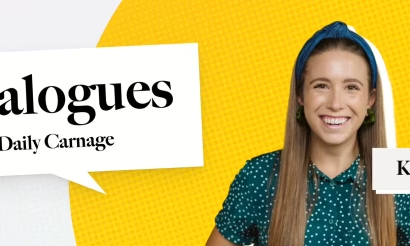
Dialogues: Kimberly Bailey, Head of Marketing at Alpaca
Shannon Sankey
Content2 MIN READ

Know Your Audience: Avian & Saurian Edition
Rich O'Donnell
Content3 MIN READ

Which comes first, the copy or the design?
Rich O'Donnell
Content4 MIN READ

How to Speak Like a Customer—Not Your CEO
Rich O'Donnell
Content4 MIN READ

The New Search Paradigm: How Marketers Can Prepare for SGE
Shannon Sankey
Content2 MIN READ

5 Tips for Marketers Who Hate Writing
Shannon Sankey