The Daily Carnage
The savvy marketer's hub for industry news, insights, resources, and culture.
Today’s Issue
Issues
View All
Creative Principles to Boost Your LinkedIn Ads Strategy
DECEMBER 11, 2024 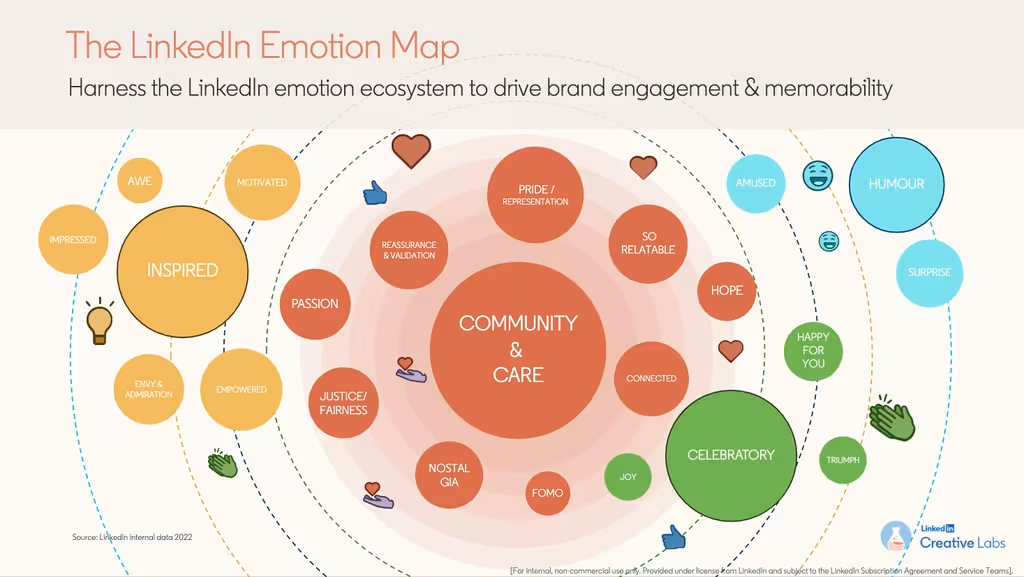
👀 Sponsor this spot to share your content with our community.
LinkedIn has analyzed a year of ad performance to share these data-backed creative principles:
- Be context aware. LinkedIn is a dynamic network of niche communities; for instance, nearly 50% follow sports and 38% are fashion fanatics or auto enthusiasts. Tap into your audience’s interests and create for the context you ad lives in.
- Make an impact. Think aesthetically pleasing, high-contrast, dynamic visuals paired with compelling storytelling or an unexpected perspectives. And remember: vertical content drives 31% higher engagement than horizontal formats.
- Show up distinctively. Only 19% of an audience notices your ad AND correctly attributes it to your brand. Don’t just be different from other brands, be distinctive in your own right, famous for your uniqueness.
- Unify. Work to make your content visually, tonally, and experientially consistent across dimensions, channels, touch points, and funnel stages. That’s how memorable brands are built.
- Get emotional. Content that inspires or amuses—like career challenges and workplace dynamics—resonate and connect with users in powerful ways. Funny content, in particular, drives 65% higher engagement on LinkedIn.
- Give, then take. Don’t be afraid to share future-facing perspectives and helpful information—even if its disruptive—to provide real value to your community. And don’t forget to test each best practice through organic content first.
Check out the full post on the LinkedIn for Marketing blog.
Adobe’s 2025 Creative Trends Forecast
DECEMBER 8, 2024 
It’s gettin’ weird up in here.
These are Adobe’s 4 trends to know for next year:
- Fantastic Frontiers. Think magical, “uncharted” worlds, lots of escapism, a feeling of unrealness, and dreamlike images. Yeah, we’re mostly talking about genAI, but also about how artists are being inspired by genAI to lean into the surreal and uncanny.
- Levity and Laughter. Brands are experimenting with a more casual, playful tone in creative to connect with larger audiences and create more shareable moments.
- Time Warp. Space is getting a lot of good PR these days, so it’s no surprise that retrofuturism is on the rise. Just like science fiction, this visual style juxtaposes historical and vintage elements with an imagined future—supercharged by genAI.
- Immersive Appeal. The cure for screen fatigue. Consumers are craving multisensorial experiences, from art installations and theme parks to experiential shopping. Campaigns are going 360 to build transportive worlds and cinematic universes. #Barbiecore
Spend some time in Adobe’s galleries for each trend.
SparkToro Analyzed 332 Million Google Queries
DECEMBER 4, 2024Search is increasingly rewarding established brands and monopolies, while smaller sites face challenges competing.
SparkToro analyzed 332 million Google queries to better understand how people use the search engine. Here are the key insights:
Search Intent:
- 51% of searches are informational, seeking facts or knowledge.
- 33% are navigational, directing users to specific websites.
- 15% are commercial, exploring products/services without immediate purchase intent.
- Only 0.7% are transactional, targeting purchases or sign-ups.
Branded vs. Generic Searches:
- 44% of queries are branded (e.g., “Amazon,” “YouTube”).
- Branded terms have higher search volumes, but generic searches remain dominant in diversity.
Search Trends:
- Entertainment leads search topics (25%), including movies, celebrities, and games.
- Other significant categories include education, health, and finance, while adult content is only 3.6%.
Concentration of Demand:
- The top 10K query terms account for 46% of total search demand, while the “long tail” (terms with <11 searches/month) represents just 3.6%.
Search Behavior:
- Google is often a post-discovery tool—users search after identifying a need, with discovery shifting to platforms like social media and YouTube.
Zero-Click Dominance:
- Google’s direct answers and AI overviews dominate high-demand categories, impacting traffic for external sites.
Brand Presence:
- One-third of searches are navigational, reinforcing the importance of managing branded search results as a key part of reputation.
Learn how to diversify your strategy to focus on alternative discovery channels at SparkToro.
TikTok’s 10 Tips for Long Videos
DECEMBER 2, 20241. Structure your video. The principles of comedy—setups and punchlines—that make short-form videos so effective apply to long-form videos, too.
2. Keep it dynamic. YouTube creators like Jesser excel in long-form videos by ensuring there’s always a new twist or reveal just around the corner.
3. Grab viewer attention early. The first five seconds of a long-form video are crucial for capturing interest. Movie trailer producers have long mastered this technique—creators should, too.
4. Create a strong hook. Subtle foreshadowing! Tease an exciting moment or highlight from the start to give viewers a compelling reason to keep watching.
5. Avoid static visuals. Change locations or apply creative effects. TikTok encourages dynamic long-form videos, and its expansive effects library is a great tool for adding flair.
6. Provide value through detail. Educational content often ranks high among YouTube’s sponsored videos for precisely this reason.
7. Solve a problem. Tackle common questions or debunk myths to draw interest.
8. Prioritize production quality. Platforms like TikTok reward creators who elevate their content with high production value.
9. Prepare like a director. Plan technical elements before filming. Approach your content with a director’s mindset to streamline production and maximize quality.
10. Be consistent and intentional. Stick to a defined aesthetic or style. Audiences prefer creators who maintain a consistent look and feel across their content.
Take a closer look at Tubefilter.
Understanding Alt Text
DECEMBER 1, 2024Alt text is metadata intended to communicate an image’s purpose—not repeating page content. Users of assistive technology rely on alt text to accomplish a task, so usability is key.
As content creators, we often use images that visualize information already communicated elsewhere in writing (for the benefit of recall for sighted users).
But for folks that use screen readers, is redundant alt text truly helpful? Note these considerations:
- Is the task-related information in the image also found elsewhere on the page? If not, then the image is not redundant and requires alt text.
- If yes, does the page copy directly reference the image? If so, it’s important to provide alt text so screen-reader users can find the relevant image and won’t feel they’ve missed something that sighted users can access.
- Could alt text help users more efficiently complete a task? Include redundant alt text for the sake of efficiency only if it will help with users’ most frequent tasks and use cases.
If alt text is needed, here’s how to do it right:
- Keep alt text concise (under 150 characters).
- Avoid words like “image” since screen readers identify images.
- Mention the image type (e.g., chart) only if helpful.
- Start with the most important details to grab attention.
- Avoid technical jargon and abbreviations unless universally understood.
- Always end with a period for screen reader pauses.
- Include alt text for every image, even if it’s empty (alt=””).
- Reevaluate alt text for each placement to match context.
- Provide translations for all supported page languages.
- Mention identity (e.g., race, gender) only if relevant to the image’s purpose.
Take a closer look at NN/g.
Automate Your Website MGMT with AI
NOVEMBER 24, 2024Manually updating meta descriptions, refreshing outdated content, and generating FAQs for every new page is extremely time-consuming. Most teams can’t keep up, leading to missed SEO opportunities and inconsistent site experiences.
That’s why Deepgram implemented AI workflows to publish 4,000+ new pages, increase organic traffic by 24x, cut out manual tasks, and maintain content standards with human oversight.
Here’s how:
- Start small. Take a measured approach by automating the tasks that bog down your team the most.
- Keep it human. Be careful not to cut out human oversight and review, which is essential before publishing AI output.
- Integrate your CMS. Connect your CMS to push updated content and metadata without manual copying and pasting.
- Focus on your strengths. Maximize your time and talents by identifying the work you love to do—is it creating, strategizing, analyzing?—and automate the repetitive stuff around those tasks.
Check out the overview and webinar at AirOps.
3 Critical Gaps Sabotaging Your Marketing Plan
NOVEMBER 19, 2024Struggling to deliver marketing plans that drive real results? It’s not your budget—it’s these 3 critical gaps holding you back:
- Disconnection. Marketing goals are often disconnected from overarching business priorities, reducing their impact.
- Solution: Anchor your marketing strategy to the company’s top objectives to ensure campaigns contribute to growth.
- Budget misalignment. Reusing last year’s budgets without reassessment leads to inefficient resource allocation.
- Solution: Adopt zero-based budgeting to align spending with current goals and maximize ROI.
- Data neglect. When your plan relies on outdated habits instead of insights from recent performance, you’re wasting resources.
- Solution: Use performance data to guide decisions, ensuring each tactic and campaign is evidence-based.
Take a closer look at Marketing Dive.
16 Copywriting Mistakes
NOVEMBER 18, 2024Avoid these 16 copywriting mistakes to boost engagement and sales.
- Mistake: Listing features. Tie features to customer benefits. For instance, instead of saying “leather lining,” highlight its comfort and durability.
- Mistake: Weak headlines. Use urgency, numbers, or questions to intrigue and engage. Example: “10 SEO Tips to Boost Traffic by 67%.”
- Mistake: Talking about yourself. Focus on the customer, not your brand’s history. Customers care about how you solve their problems, not your background.
- Mistake: Lack of emotion or logic. Buying decisions are emotional but rationalized logically. Use stories and data to appeal to both aspects.
- Mistake: Ignoring SEO. Incorporate keywords in titles, URLs, and descriptions to attract organic traffic and boost visibility.
- Mistake: Overly formal tone. Write conversationally, like talking to a friend. Keep it personal and engaging.
- Mistake: Tone. Match your audience’s style. For example, millennials prefer casual tones.
- Mistake: Assumptions over research. Create buyer personas using surveys, reviews, and data to understand real customer needs.
- Mistake: Too much jargon. Keep language simple to appeal to broader audiences.
- Mistake: No credibility. Add testimonials, stats, awards, or expert quotes to build trust.
- Mistake: No CTA. Include clear CTAs throughout to guide readers toward action.
- Mistake: Too many offers. Focus on one core offer to avoid overwhelming customers.
- Mistake: Poor formatting. Use short paragraphs, headers, and bullet points to improve readability.
- Mistake: No testimonials. Highlight customer reviews to leverage social proof.
- Mistake: No guarantee. Offer guarantees or warranties to reduce purchase risk.
- Mistake: Grammar errors. Proofread thoroughly or use tools like Hemingway to ensure polished copy.
Take a closer look at Carmine Mastropierro’s blog.
How IG Changed in 2024
NOVEMBER 17, 2024Here are four major changes that reshaped Instagram in 2024:
- Reach. Reels are still your best bet for reaching non-followers, and this applies particularly to smaller or newer profiles. That said, Instagram is trying to address creators’ concerns by redistributing reach back to other post formats. For that reason, carousels and photos are performing much better recently.
- #NoMoreHashtags. Hashtags are a breeding ground for spam, which is why social media platforms hate them. They’re hard to manage. Instead of throwing them at the wall to see what sticks, look to optimize your Instagram SEO in order to rank better.
- Links are dead. “Link in bio” and Story links typically don’t perform well—naturally, Instagram would prefer that users stay put. But DM automation has changed the game, connecting leads more directly to your offers.
- Collabs are back. Collabs are the best way to gain targeted traffic organically, lifting your average engagement and boosting account growth. When things slow down, set up a collab.
Check out more from Marketing Harry on IG.
Insights
View AllStrategy7 MIN READ

The AI SEO Checklist: How to Stay Visible in the Age of AI Search
Ana Toigo
Marketing5 MIN READ

Top Marketing Tools That Offer Nonprofit Discounts (2026)
Rich O'Donnell
Strategy4 MIN READ

Sharpen Your Core Skills: Listening, Remembering, and Note Taking
Rich O'Donnell
Uncategorized4 MIN READ
Dialogues: Kimberly Bailey, Head of Marketing at Alpaca
Shannon Sankey
Content2 MIN READ
Know Your Audience: Avian & Saurian Edition
Rich O'Donnell
Content3 MIN READ

Which comes first, the copy or the design?
Rich O'Donnell
Content4 MIN READ
How to Speak Like a Customer—Not Your CEO
Rich O'Donnell
Content4 MIN READ

The New Search Paradigm: How Marketers Can Prepare for SGE
Shannon Sankey
Content2 MIN READ

5 Tips for Marketers Who Hate Writing
Shannon Sankey