
The Daily Carnage
The savvy marketer's hub for industry news, insights, resources, and culture.
Today’s Issue
Issues
View All
How Brands Can Support E-E-A-T
MAY 28, 2024When done correctly, demonstrating author expertise, experience, authoritativeness, and trustworthiness (E-E-A-T) will increase content visibility across Google.
But brands struggle to establish and maintain E-E-A-T, which requires personal motivation from the author and ongoing dedication to a topic as a subject matter expert. And often, authors leave a brand for other opportunities, taking their E-E-A-T with them.
The true role of brands in author E-E-A-T is to:
- Find expertise: Hire SMEs with an established digital footprint in the field or commit to investing significantly in the right person to build it.
- Enable growth: Create a company culture where content creators have ongoing opportunities to grow or showcase their E-E-A-T for compensation.
- Connect the dots: Communicate existing E-E-A-T through detailed, frequently updated author profiles and structured data that incorporates off-site corroborations.
Take a closer look at Search Engine Land.
How To Write a Short-Form Video Hook
MAY 27, 2024If you’re in the short-form game, you know that most viewers drop off around the 3-second mark. It’s frustrating to invest in high-quality content that users are bound to engage with and enjoy—if you could only stop the scroll.
Here’s how to hook ’em long enough for that CTA:
- Start with a (near) universally familiar image as your main graphic. We process images dramatically faster than audio and text, so this is an efficient use of your 3 seconds.
- Make sure your audience knows what you’re talking about. Instead of “how Blackberry built a status symbol,” try “this phone [image] used to be a status symbol before iPhone came along.”
- Use the “but and so” framework—a rapid and organic way of storytelling—to introduce a surprising fact, a thought-provoking question, or a change in camera perspective at the precise moment that attention wanes.
Check out Marketing Examined for the full scoop on hooks.
Pinterest’s Gen Z Insights
MAY 22, 2024Pinterest is where Gen Z finds inspiration and brings their ideas to life. In fact, 42% of Pinterest’s global monthly user base in Gen Z, who are 1.3x more likely to shop online. Here’s how to reach them on the platform, according to Pinterest:
- Appear when they search. Optimize your pin titles and descriptions for search and extend your reach beyond your usual category and audience.
- Build traction for transactions. Use upstream CTAs to build engagement and retargeting to reach people who interacted with your content.
- Make it shoppable. Use carousels and collections to capitalize on visual search, and leverage direct links.
- Stay ahead of the trends. Use Pinterest Predicts and the Pinterest Trends tool to find emerging trends, and try quiz ads to help someone zone in on just the right product or idea.
- Connect them to culture. Run shopping guides with curated products for different needs, and give them new ideas for their online presence, such as gaming avatars or phone backgrounds.
- Don’t forget the people shopping for them. Encourage people to share boards with others in their lives and speak directly to parents with info about Gen Z trends and tastes.
Get the insights from Pinterest’s full report.
Top Influencer & SMM Podcasts
MAY 21, 2024Add these podcasts to your playlist, courtesy of Later:
- Beyond Influence, “the influencer marketing podcast for fans, creators, and brands.”
- The Influencer Podcast, “for all things influence, impact, and next-level visibility.”
- Girlboss Radio, “helping women find success on their own terms.”
- The Shine Online Podcast, “helps you create strategic video content that doesn’t take away from your business.”
- SocialMinds, “business leaders and creators discuss the impact of social media and their unique strategies.”
- Marketing Girly, “successful women in marketing share their best career advice.”
- Her Life By Design, “tips on business, entrepreneurship, influencer marketing, and sponsorships.”
- Savvy Social Podcast, “helps business owners learn how to use social media and build connections.”
- Creator Club Podcast, “a workshop-style show teaching creators and entrepreneurs the latest strategies for SMM and content creation.”
- Social Media Decoded, “for creatives, influencers, business owners, and entrepreneurs.”
GA4: Landing Page Report
MAY 19, 2024If you want to understand which pages are the first ones people see when they visit your website, you’ll need to create a new standard report in GA4. Here’s how.
- In Reports, select Library at the bottom of the reporting menu.
- Click Create New Report > Create Detail Report, and select the option to create a blank report. Name this “Landing Pages.”
- Add the Landing Page dimension, along with these metrics: Users, Engagement Rate, and Average Engagement Time Per Session. Add any additional metrics you need.
- Save the report and add it to the menu by editing a collection.
Check out Loves Data for steps to create an exploration report in GA4.
9 Ways to Spy on Competitor Ads
MAY 15, 2024It’s essential to keep an eye on how your key competitor executes or pivots online advertising strategies.
Here’s how:
- Search for your competitor by name in the Facebook (Meta) Ads Library.
- Go to their website and get retargeted.
- Inspect “why you saw this ad” on Facebook retargeting ads.
- Use an SEO tool, like Semrush’s “Domain Overview” or “Competitor Analysis.”
- Do a Google search of the competitor’s brand name.
- Find competitor ads in the Google Ads Transparency Center.
- Try the TikTok Ads Library.
- Use competitive intelligence tools to locate keywords, traffic share, and more.
- Use ad intelligence tools if you want a comprehensive view.
Get more insights at Wordstream.
What to Do When You’re Out of Ideas
MAY 14, 2024If you’ve exhausted everything on your list of content ideas to knock around, it’s time to do some recon and repurposing.
- Reflect on the questions people ask you most. For example, repurpose a particularly good explanatory email into a blog post.
- Talk to your customers. What insights gained from interviews and conversations can you use for a marketing campaign, a joint webinar, a guidebook, or a survey report?
- Look at what people in your niche are saying online. Browse relevant subreddits. If you can make a thoughtful reply to a Reddit post in your niche, turn that into content.
- Do audience research. Use keyword and social listening tools to understand your target audience’s questions and pain points, and identify competitors gaining traction. Consider all of these content prompts.
Take a closer look at SparkToro.
Know Your Audience: Avian & Saurian Edition
MAY 13, 2024Standing desks are for the birds. (Or are they?) Check out the difference between these two approaches…
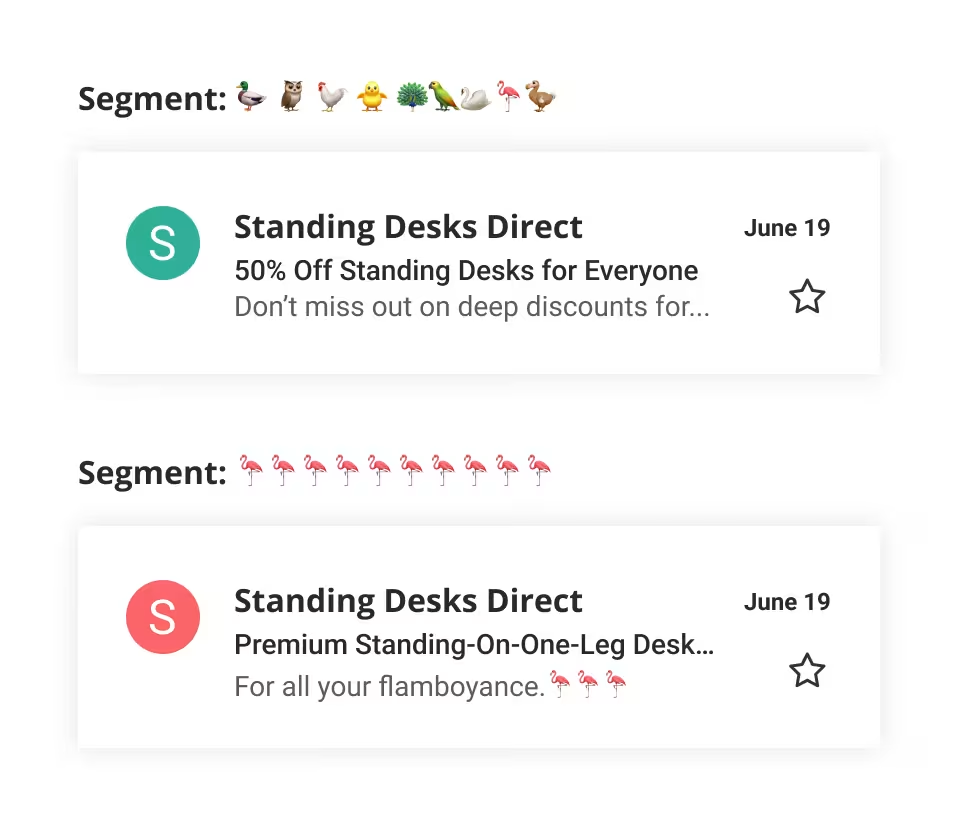
When you don’t understand and segment your audience, you’re diluting the value of your product and are resorting to deep discounts to get attention.
But when you segment your audience and personalize your messaging, you’ve enhanced the value of your product and sold it based on persuasive benefits your audience cares about.
Check out the Carney blog to apply the same principle to an over-arching campaign (with dinos). 🦖🦕
Calculating Content Marketing ROI
MAY 12, 2024No matter what methodology you use to calculate ROI, it’s best to stick to it consistently, and measure change over time. Here are 3 practical methods:
- A complicated but gold-standard method: Conversion analysis.
- Return from content marketing = (new customers from content * average customer value)
- A quick-and-dirty, 30-second method: Lifetime traffic value.
- Return from content marketing = (monthly traffic value * content lifetime in months)
- The best of both worlds approach: Signup attribution.
- Return from content = (% of signups attributed to content * total signup revenue)
Take a closer look at Ahrefs.
Insights
View AllStrategy7 MIN READ

The AI SEO Checklist: How to Stay Visible in the Age of AI Search
Ana Toigo
Marketing5 MIN READ

Top Marketing Tools That Offer Nonprofit Discounts (2026)
Rich O'Donnell
Strategy4 MIN READ

Sharpen Your Core Skills: Listening, Remembering, and Note Taking
Rich O'Donnell
Uncategorized4 MIN READ
Dialogues: Kimberly Bailey, Head of Marketing at Alpaca
Shannon Sankey
Content2 MIN READ
Know Your Audience: Avian & Saurian Edition
Rich O'Donnell
Content3 MIN READ

Which comes first, the copy or the design?
Rich O'Donnell
Content4 MIN READ

How to Speak Like a Customer—Not Your CEO
Rich O'Donnell
Content4 MIN READ

The New Search Paradigm: How Marketers Can Prepare for SGE
Shannon Sankey
Content2 MIN READ

5 Tips for Marketers Who Hate Writing
Shannon Sankey