The Daily Carnage
The savvy marketer's hub for industry news, insights, resources, and culture.
Today’s Issue
Issues
View All
Death to the Static Homepage 💀…What to Do Instead
DECEMBER 18, 2022You only get one shot at a first impression. Where many companies fall short when it comes to making a good impression is their homepage. while you’d hope that your website is so good, people convert immediately, that’s not gonna happen.
So then why are so many companies using basic homepages that do…nothing?

How to Kill and Replace Your Boring, Static Homepage:
- Your design has to be on point. According to a recent study, first impressions are 94% design related. So while imagery, typography, and overall aesthetic are very subjective, it just cannot be boring. Do the visuals convey the feeling you want? Does it inspire the visitor to take action? Does it guide a user’s eyes and scroll appropriately?
- Check your site speed often. Page load times have the biggest impact on your website’s first impression. A 2-second delay can be a deal breaker to the majority of users! Check your server and site health often.
- Focus on the customer experience. Direct users to your critical content and messaging “above the fold” so it’s the first thing they see and can navigate to.
- Avoid flicker. This is tied heavily to you site speed, but “flicker” is when a webpage loads in one state and then quickly transitions to show a different website experience. It’s common for dynamic variations and personalized elements. To avoid this, use strong development practices and optimized image loading.
- Personalize it, even for anonymous visitors. Machine-learning-powered personalization is great for dynamically customizing your message or product or image shown based on firmographic, behavioral and contextual data. So be sure to create dynamic content for visitors that you only know surface-level anonymous data on (often location).
Need help with this? That’s kind of our jam as a digital agency partner.
Check out the full post by Search Engine Land for more tips on creating a great first impression.
17 Types of Content to Be Using
DECEMBER 14, 2022Today we want to throw a little refresher your way about the importance of diversity in your content marketing. You should always test out new formats and channels when the same old content isn’t giving you the desired results.
Times shift and different users go through different ways of absorbing information. Sometimes visuals work best, sometimes it should be gamified.
Before you choose any content type, just be sure it can fulfill the right goals for your brand.
Your content should…
- Provide value
- Promote your brand/product/service
- Be targeted to your specific desired audience
- Actively move customers along the purchasing journey
- Be shareable
So here are the 17 essential types of content you can use for marketing:
- Blogs
- Case Studies
- Checklists
- Reviews or Testimonials
- Ebooks
- Email Marketing
- Guides and How-Tos
- Infographics
- Interactive Content
- Interviews/Q&As
- Listicles
- Podcasts
- Social Media Posts
- User-Generated Content
- Videos
- Webinars
- Whitepapers
Check out the full post by Search Engine Journal for all the deets and examples of each content type.
Making the Most of a Security Breach
DECEMBER 13, 2022It can be extremely difficult to gain the trust back from users if you experience a security breach or crisis. So while obviously the first piece of advise in risk management is to prevent it in the first place, you should also be prepared if it does happen.
Brands should look at it as an opportunity to provide more communication, more collaboration, and more transparency to users. While actively prioritizing better processes and investing in better risk management, turn a negative into a positive.
Here are 3 approaches to bounce back from a breach:
- Pre-Breach Approach. Transparency goes a long way. Public disclosure of security policies and certifications shows your commitment to security. While that can be shown publicly on social media, email communications, or hosted on your website, it is also important to have this up-to-date information available to stakeholders as well.
- Breach Approach. When an incident does happen, make it a rule that you should NOT rush to conclusions. Decide on a small, trusted group of experts PLUS third-party supporters at the ready. Then when it comes to investigating and reporting, be sure to include an executive summary, technical details, and regular updates.
- Post-Breach Approach. Stress ongoing commitment, governance policies, and cyber investment. Don’t be afraid to actively highlight technical threats and vulnerability management processes.
Check out the full sunnyside perspective about breaches and crisis management on the MarTech Series blog.
7 Myths About TV Advertising
DECEMBER 12, 2022Millions of people watch TV every day. And even with the growth of streaming (both ad-free and ad-tiered), traditional TV broadcasts are still some of the most popular and viewed forms of entertainment. And yet, we still hear some misconceptions about TV ads. So let’s break down those myths.
- TV isn’t relevant. TV is still effective for advertising with the right approach. Addressable TV helps advertisers precision-target their ads and deliver more relevant messaging.
- My brand is too small to advertise on TV. A big misconception is that TV ads aren’t targeted. That’s far from the truth as household and cable data targeting has become as nearly precise as IP and online shopping behavior data.
- It’s difficult to measure the ROI. TV now has similar self-service and third-party data tracking as PPC and search campaigns.
- Recessions make TV advertising a bad idea. Investing in your marketing now is critical to ensure your brand stays relevant in the short term and reinforces its value in the longer term. TV advertising could be a crucial part of that investment for your brand.
- It’s all too complicated. You just have to start with a goal in mind. All channels have pros and cons. Once you understand your goal, treat TV like any other channel that requires a budget and assets to support that end goal.
- I can’t afford decent creative. Speaking of assets, you don’t need to be Spielberg to make a TV ad. Thanks to technology, it doesn’t have to be high budget to be high quality. You just have to put effort into your messaging more than production.
- I won’t be able to scale if my ads are too successful. Sounds like a good problem to have, right? Many small brands fear they will grow beyond their capabilities to fulfill business if their ads are too widespread. Advertisers can test their campaign in certain areas plus there are options to pause or cap coverage.
There are some big differences between the old ways of TV advertising. Check out the full post for more info!
Uh-Oh! Your Error Messages are Underwhelming
DECEMBER 11, 2022Error! Try again. Oops! Uh-oh! 404! Something went wrong…
We’ve all encountered errors, redirects, dead ends, and unknown issues on the internet. It can be frustrating. So if your brand’s site, app, or product runs into an issue, what do your users see? These messages can be a big deal for a smooth user experience.
Let’s start with the anatomy of a typical error message:
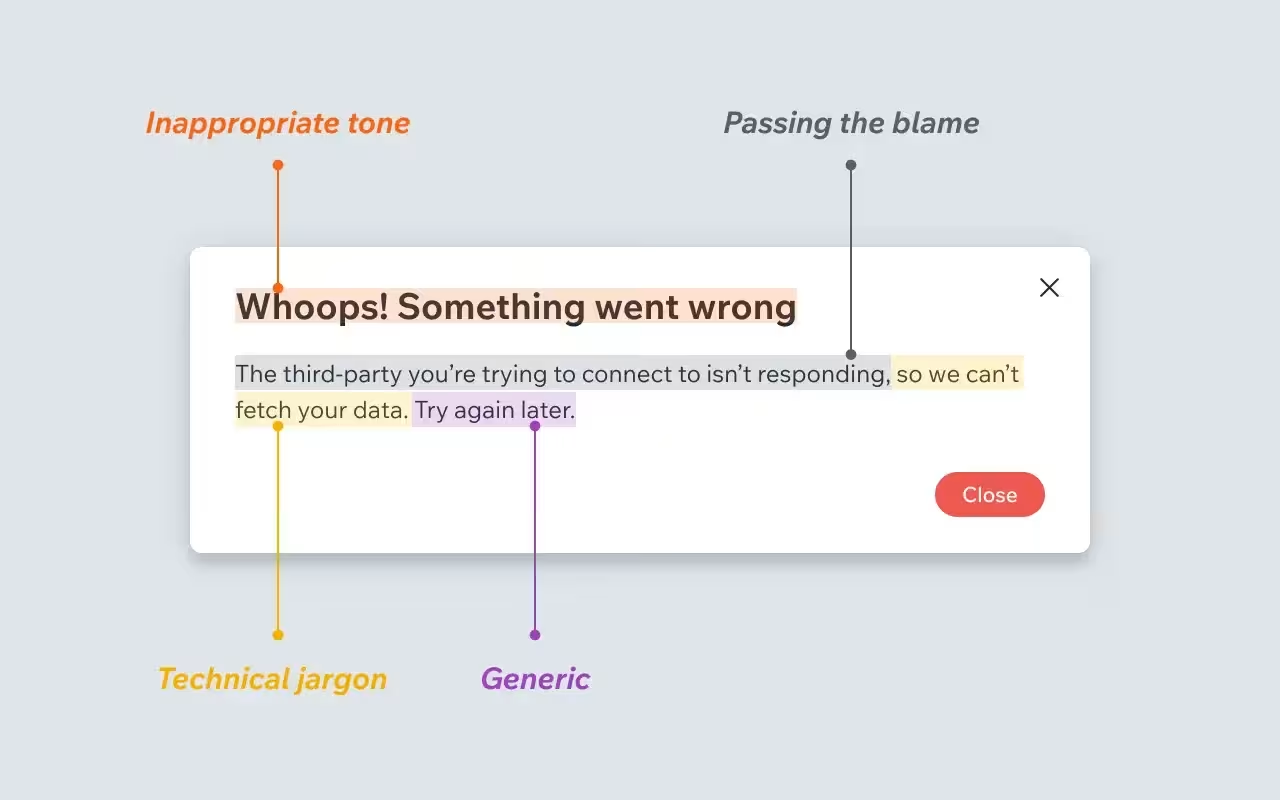
While there’s technically nothing “wrong” with this message, that doesn’t make it right. Here’s what makes it weak:
- Inappropriate tone. There aren’t many scenarios people want to hear “oops,” so why is it in your important messages? We love clever 404s and gamified Easter eggs here and there, but no one is smiling if they lose their data, time, or patience.
- Technical jargon. People don’t care about the technical stuff unless you are providing a solution as well. So try to keep it out of the error notice unless it’s relevant.
- Passing the blame. Focus on the issue instead of blaming the user, the action used in error, or other forces like integrations gone wrong.
- Generic non-solution. Sometimes we don’t know what caused the error, and that’s understandable. But when you know the cause and leave it ambiguous, you’re not giving users any solutions, options, or confidence.
So let’s make good on your messages:
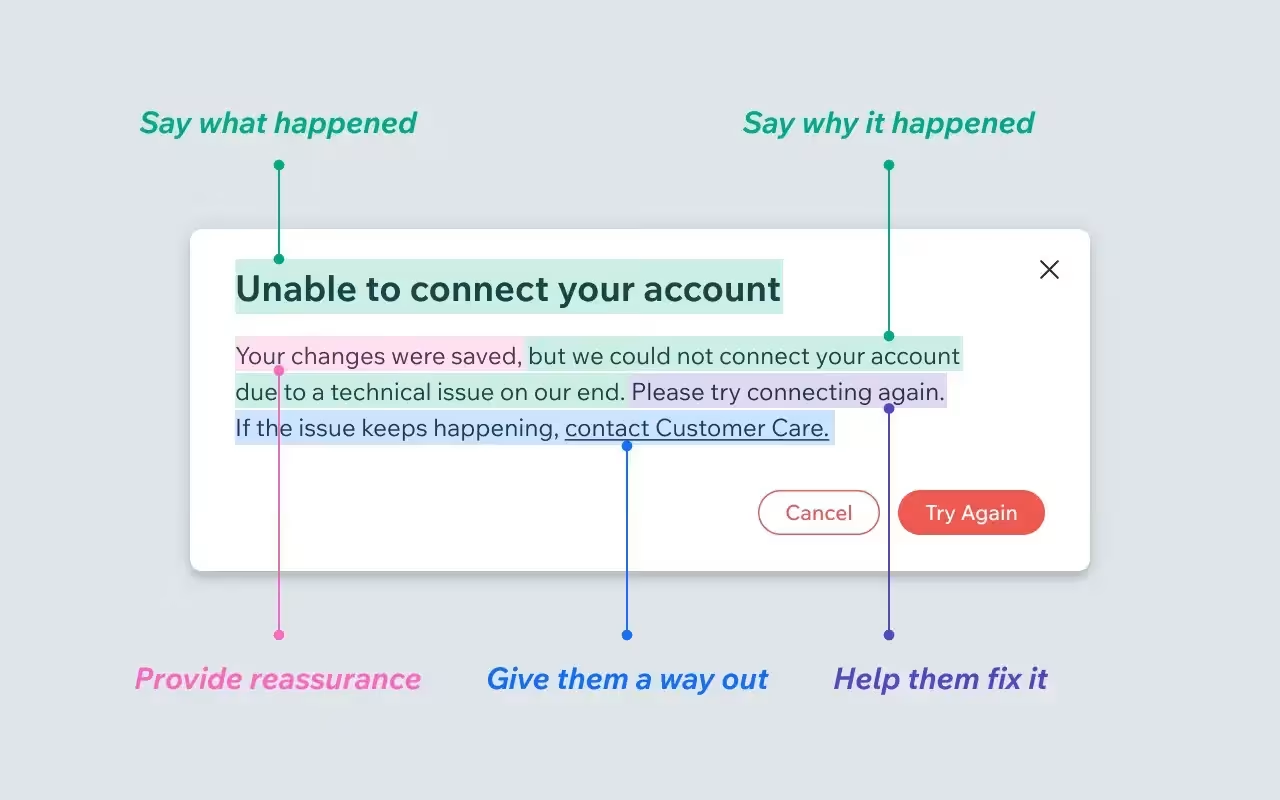
Here’s what makes this example better:
- Say what happened and why. Be clear on what did or didn’t happen. Use images if you have to, too. Then be sure to explain, when possible, why they are receiving the error message.
- Provide reassurance. Where possible, let them know what was NOT affected by the error. This is especially true for recovered or auto-saved data.
- Be empathetic. “Please” can go a long way in a stressful situation.
- Help them fix it. Tell them exactly what to do for solutions to the issue. Sometimes that can mean a simple direction, sometimes it’s linking knowledge base articles.
- Always give a way out. Don’t leave them hanging if they can’t fix the problem, or if it’s possible the issue could keep happening, provide them with a way to reach out.
Check out the full post by Wix to see more examples and data behind improving your error messages.
Best Corporate Gifts for Employees in 2022
DECEMBER 7, 2022We asked you guys a little while back if you wanted gift guides and the results were pretty close between gifts for employees, gifts for clients, and gifts for yourself (ya bunch of Grinches). The winner was gifts for employees so here we are with your gift guide for your coworkers, colleagues, and teams.
So buckle up, because TeamBuilding.com put together the ultimate list for remote teams, employee appreciation gifts, and ideas for holiday gift exchanges.
Top Gift Shops
We don’t know your coworkers, but there has to be something for everyone on one of these top sites for gifts large and small.
- Bespoke Post
- Snack Nation
- Uncommon Goods
- Snappy
Holiday Gift Ideas
- Heated Coffee Cups – For the people you really like, check out Ember or Cauldryn mugs.
- Baskets of Goodies – It’s just a tried and true gift to put together the best snacks and sweets you can think of, especially local favorites.
- Subscription Boxes – If you know someone’s passion or hobby, fuel that fire!
Gifts For Remote Employees
- WFH Survival Kits – It can be as simple as a desk accessory, daily inspo, or something for comfort.
- Noise Cancelling Headphones – For anyone looking for some deep focus, or just peace and quiet.
- Custom Message Donuts – ‘Nuff said.
Thank You Gifts
- More snacks – Like we said, it’s tried and true because everyone loves some sort of munchie.
- PTO – This isn’t on TeamBuilding.com’s list, but we see it all the time as the most appreciated bonus to employees (besides an actual monetary bonus).
- Event Tickets – For the team that would appreciate a baseball outing or ticket gift cards.
Still stumped? There is always gift cards to Starbucks or your local coffee shop.
Check out the full list that includes retirement, birthday, and work anniversary gift ideas, too.
What You Need to Know About Reddit Marketing
DECEMBER 6, 2022Reddit is a unique forum with niche communities, high standards of moderation, and highly engaged community. But because of those reasons, marketing on it is not the same as other platforms.
User-Generated Content on Reddit
There are over 100,000 active communities on Reddit that can have text-based discussions, links, photos or videos, and other users are then able to comment on the post. Posts and comments related to the post are then upvoted or downvoted by other users.
According to Reddit, 90% of users trust the platform as a place to learn about new products and brands from other users. Reddit users are generally well-informed consumers, and they are likely to recommend the products and brands they love to others.
Marketing on Subreddits: Authenticity Rules
A great way to tackle brand marketing on Reddit is finding the right subreddits to join and either posting from a branded account, or getting a team to drum up organic conversations that include the brand. But name dropping isn’t the way to go about it. You have to genuinely contribute to the discussion above all else.
Advertising on Reddit
So there is engaging on the platform, then there’s straight up advertising on it as a strategy. Reddit has many advertising options available that helps brands to target communities. Just be warned that it doesn’t work the same way as other social media platforms like Facebook or LinkedIn advertising and may take much more testing to find what Subreddits work.
Check out the full post on CMSWire for more tips and examples on marketing on Reddit so you can see if it’s the right move for you brand.
4 Tips To Boost Your Google Business Profile Visibility
DECEMBER 5, 2022Previously called Google My Business, your Google Business Profile (GBP) listing is your opportunity to get your local business found. Just like a website, you have to optimize it to compete with other listings.
Here are a few tips to get you ahead of other GBPs:
- Encourage Reviews. Reviews are one of the best ways to grow your GBP because it can boost your ranking. It shows Google that users are engaging with your business outside of search, directions, and calls. Do some outreach to happy customers to get them to leave reviews through communications or review-management platforms.
- Avoid Spammy Tactics and Stay Honest. We can all admit that Google is smarter than us, right? Google is definitely smart enough to know when someone is trying to cheat the system. They know when you’ve paid some service to provide fake positive reviews. They’re worse than Santa because Google probably knows when you’re sleeping and when you’re awake, too.
- Speaking of Reviews…Respond to Negative Ones. While you should of course try to avoid anything negative from the start, be sure to respond to any bad reviews that do come through. Be understanding, address it directly, and try to make a situation happy. Having responses public looks good to outsiders looking in, too!
- Leverage GBP Features (hint, hint, POST). Google has plenty of tools and resources for its own creation. The Google Marketing Kit allows you to create free stickers, posters, and social media posts for advertising your business’s promotions and events. Google Posts let you advertise new coupons, deals, and events in creative ways, right at the source of someone discovering you in a SERP. Even better, you can schedule your GBP posts with some social media scheduling platforms.
Check out the full post by Search Engine Journal to see other ways you can optimize your GBP.
How to Grow on Social Media – Without Showing Your Face!
DECEMBER 4, 2022It’s a well-known social media tip that the more personal your content is, the more likely it will perform well. So it’s ideal to speak right to your followers by showing that beautiful face…right?
Not everyone is a natural behind the camera. We get it. Luckily, not all brands have to have a figure representing them and your social media content doesn’t have to suffer because of it.
Here are 5 tips for growing your social media without a face behind the camera:
- Start with the right niche. As we said, sometimes it’s not appropriate for a brand to have humans representing it. When your brand follows subject matter in a niche, it can be best to let that industry or topic speak for itself without an added personality to show it off.
- Use content types that work for you. Storytelling will always be your friend in the world of content. If you aren’t the face behind that story, you have to find ways to storytelling that bring your audience back to you. That can be through amazing photography, using prop-style videos, screen demos, or purely sound.
- Make it visually stunning. One of the benefits of having casual, personal videos is that the production value doesn’t have to be super polished. If you don’t have that personal touch, you need to grab attention with well-made and attractive videos. That can be through editing, animation, or just great camerawork. Remember to aim for quality over quantity.
- Study other faceless accounts. As always, see what your competitors are doing. If there are similar brands in your industry with faceless content that is working for them, take notes. Is it their graphics, information, style, or something else?
- Utilize the comment section. It is becoming a habit for social media users to peep the comments before paying attention to the video. Take advantage of this natural curiosity and leave information pinned there. Definitely interact with comments as much as you can.
When it comes to social media, it’s all about trial and error. Who knows, you may discover that showing your face if it’s a missing link in your content success.
Check out the full YouTube video by Modern Millie for more tips on creating faceless content.
Insights
View AllStrategy7 MIN READ

The AI SEO Checklist: How to Stay Visible in the Age of AI Search
Ana Toigo
Marketing5 MIN READ

Top Marketing Tools That Offer Nonprofit Discounts (2026)
Rich O'Donnell
Strategy4 MIN READ

Sharpen Your Core Skills: Listening, Remembering, and Note Taking
Rich O'Donnell
Uncategorized4 MIN READ
Dialogues: Kimberly Bailey, Head of Marketing at Alpaca
Shannon Sankey
Content2 MIN READ
Know Your Audience: Avian & Saurian Edition
Rich O'Donnell
Content3 MIN READ

Which comes first, the copy or the design?
Rich O'Donnell
Content4 MIN READ
How to Speak Like a Customer—Not Your CEO
Rich O'Donnell
Content4 MIN READ

The New Search Paradigm: How Marketers Can Prepare for SGE
Shannon Sankey
Content2 MIN READ

5 Tips for Marketers Who Hate Writing
Shannon Sankey