The Daily Carnage
The savvy marketer's hub for industry news, insights, resources, and culture.
Today’s Issue
Issues
View All
12 of the Scariest Things for Marketers
OCTOBER 27, 2021Based on true stories…
Spooky season is in full swing. And what better way to celebrate than to talk about the things that make marketers wake up in cold sweats and quiver in fear? For the most part, we are strong freaks of nature that can handle tight turnarounds in an always-changing industry. But we can still get the scaries.
Here are the top horrifying things marketers are afraid of:
- Unreasonable Asks: Clients or bosses that ask for the impossible (on tiny tiny budgets).
- The EOD Deadline: It’s so far, yet so close…
- Internet Issues: Please, we are begging for mercy.
- Failed Jokes: You win some, you lose some.
- The Red Pen: Getting your work thrown to the slaughter with copy changes.
- Shifting Directions: “Back to the drawing board” can make anyone scream internally (or out loud).
- Social Media Comments: Did you know the comment section is actually a circle of Hell?
- Missing Data: Messed up data tracking? We hope you’re not afraid of being in the dark.
- The Budget: The scary dollar signs that disappear like ghosts in the night.
- Zero Conversions: A nightmare you wish wasn’t real.
- Grammar: Unless you have a copy editor with mad skills, grammar is terrifying.
- The Witching Hour: Late-night emergencies make us shudder.
What are your biggest fears? Propelrr’s list came with some spooky gifs and examples, so check it out!
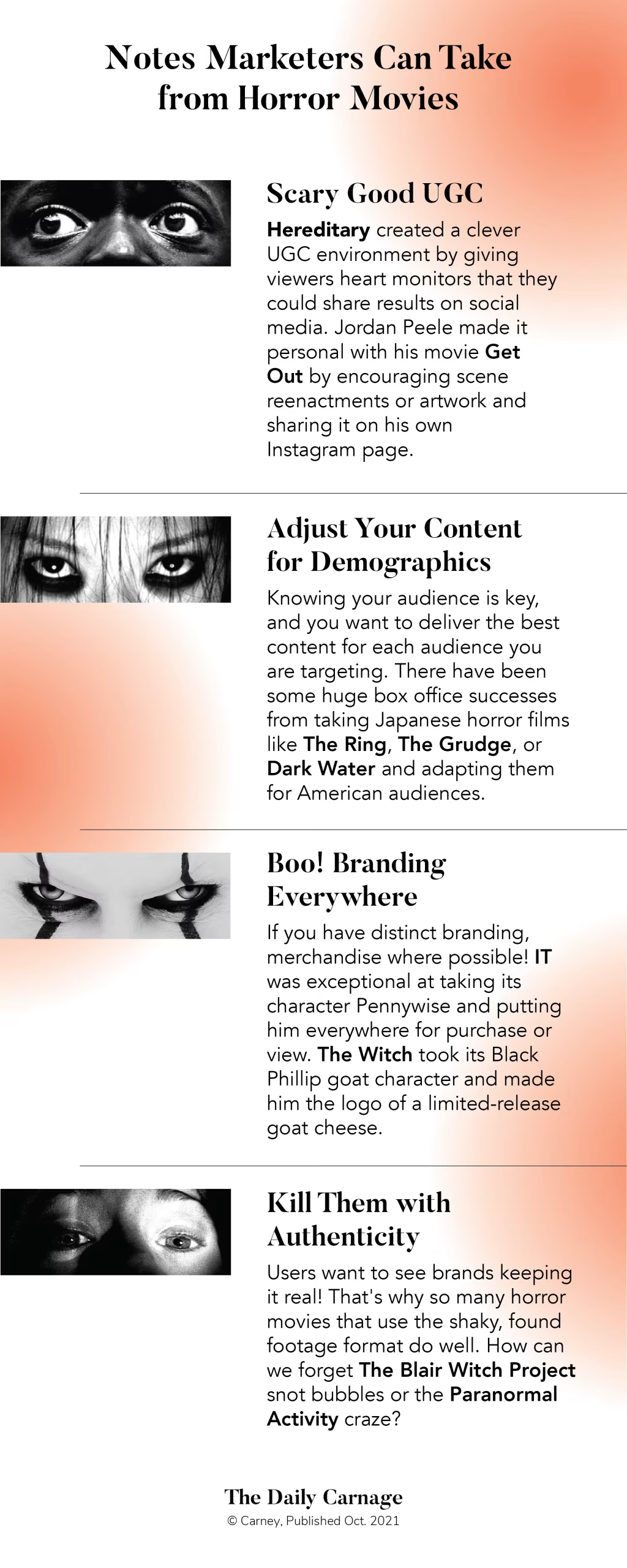
Notes Marketers Can Take from Horror Movies
OCTOBER 26, 2021Movies teach us a thing or two. They’re huge sources of entertainment and are marketed like crazy. Horror movies especially are prime examples of products with a super-saturated market, so they have to think outside the box to attract attention.
Here are strategies used by horror movies to learn from to build killer content of your own.
SHARE IT: bit.ly/carnagehorror
A Guide to Effective Marketing Campaigns
OCTOBER 25, 2021Semrush has put together a FULL how-to guide on all things marketing campaigns. If you don’t know where to start, we’re taking it step by little step. Here ya go:
Start with the Strategy:
Objective + Purpose + Target Audience + Team + Budget + Timeline + KPIs
Next, Identify the Campaign Components:
Tactics + Tasks + Roles + Deadlines + Budget + Metrics
OR
Ask These Big Q’s:
- What’s Your Objective?
- Why This Objective?
- Who Do You Want to Connect with Along the Way?
- Who will Help You Get There?
- How Much will It Cost to Get There?
- When Do You Plan to Get There?
- What Does Success Look Like?
- What Needs to Be Done?
Now it’s Time to Make the Decisions:
- Choose your distribution channels to focus on: Owned, Earned, Paid, and Shared.
- Choose the type of content like blog posts, email, paid ads, video, infographics, webinars, press releases, testimonials, podcasts, etc.
- Start developing messaging and CTA’s.
- Map out the steps of your customer journey (this will go hand and hand with the content and channel decisions).
- Make it look goooood. Design the look and feel of the campaign.
- Assign roles and deadlines to your team.
- Decide on the metrics that matter to you the most.
This is the skeleton framework to get your campaign started. The rest is up to your brand goals for where you want to take it. Check out Semrush’s full post for more examples and tips on efficient marketing campaign planning.
7 Benefits of GA4
OCTOBER 24, 2021Google Analytics is essential to anything involving websites and links. But the next generation of GA is here, and it’s bringing in some new features for tracking data. Let’s get into the distinct benefits of the new GA4 over Google Analytics Universal Analytics.
- App + Website Data Collating: GA4 lets you use the same GA property for all of your website, app, and mobile traffic so you can get the whole view of your data.
- Easier Tracking, Less Set Up: GA4 reduces the amount of manual tracking you have to set up with predesigned actions and events. There’s no longer any need to set up cross-domain measurement code.
- Enhanced Data Visualizations + Reporting: “Real-Time” visualizations have been enhanced. The “Analysis Hub,” includes a template gallery with different types of charts (funnel analysis, exploration, segment overlaps, path analysis, etc.).
- It’s Ready for a Cookie-Less World: In an upcoming cookie-less world, GA4 still allows you to track users on your website. Fill the gap from the removal of cookies through the use of machine learning and AI.
- A Focus on the User Journey: The new GA4 has a stronger focus on users and user interactions, not sessions like in GA UA.
- Improved ROI: Get more reliable data concerning your ad spend ROI. GA4 automatically joins together the app and website journeys carried out by the same visitor instead of recording them as separate visits.
- Getting the Best of Both Worlds: Now, it’s still under the best practice to keep your GA UA in addition to a GA4 property. Currently, it’s not possible to track historical data using GA4.
Check out ReadWrite’s full post for more details (and some of the disadvantages) of GA4.
Marketing to Generation Alpha
OCTOBER 20, 2021(note: we’re not in charge of what generations are named.)
Even if you don’t have a full grasp of Gen Zers, you have to start thinking of Generation Alpha, too. Generation Alpha are kids born from 2010 through 2024. And by 2025, they will have numbers in the billions…the largest generation in the history of the world.
Why they matter/are going to matter:
- They’re raised online and by millennial parents.
- They’re weaned on TikTok, Amazon, and in-app purchases.
- They’re going to (inevitably) have a lot of influence.
The big thing to know is that they are pre-consumers with major household influence, as kids often do.
What do marketers need to know about Generation Alpha?
- They’re visual in how they consume content.
- They’re gonna be global in their outlook and perspective.
- They’re gonna know influence for change can start online.
- They’re gonna be big fans of sustainability and social equality.
Some other demographic tid-bits:
- They’ll be more likely to go to college.
- They’ll be more likely to grow up in a single-parent household.
- They’ll be more likely to be surrounded by college-educated adults.
Wanna know more about the kids of the future? Check out the full Axios article!
Trendspotting: Why All the Market Leaders Are Doing It
OCTOBER 19, 2021“If you can’t beat ’em, join ’em.” It’s a sentiment that rings true for a lot of marketing initiatives and trends. Seeing trends before they are happening is a marketing superpower, so let’s get into how to be a trendspotter hero.
First thing’s first: Following trends and trendspotting are NOT the same. Trendspotters identify the upcoming trends and capitalize on them early (like the hipsters of strategy, they do it before it’s mainstream).
The 3 types of digital trends often found:
- Fleeting trends that burn bright and fade fast.
- Consolidative trends happen when smaller trends merge over time, creating a bigger, wide-reaching trend.
- Macro or society-shaping trends that can span multiple audiences, demographics, or cultures.
We are gonna note that trendspotting is a little different than traditional market research. Here’s a visual:

Where trendspotting fits into your digital strategy:
Now that you have the definitions down, how do you get it done? Keeping your eyes and ears open on top of your daily grind (we know, that’s easier said than done). Monitor market behavior
- Monitor market behavior – This is where data tracking is gonna be your bestie. The best snapshots are usually found in YOY trends, but spotting trends ahead of time means knowing that data well and seeing monthly changes, too.
- Analyze search trends within an industry – now it’s not very often you’ll discover a major trend across the whole wide world of marketing. Get granular and pay attention to industries and the sub-businesses within an industry. For this, that means throwing yourself deep into something. After all, where did TikTok come from? A niche app called Musical.ly.
Check out Similarweb’s full article for more trendspotting advice and resources.
The Netflix Effect in Effect
OCTOBER 18, 2021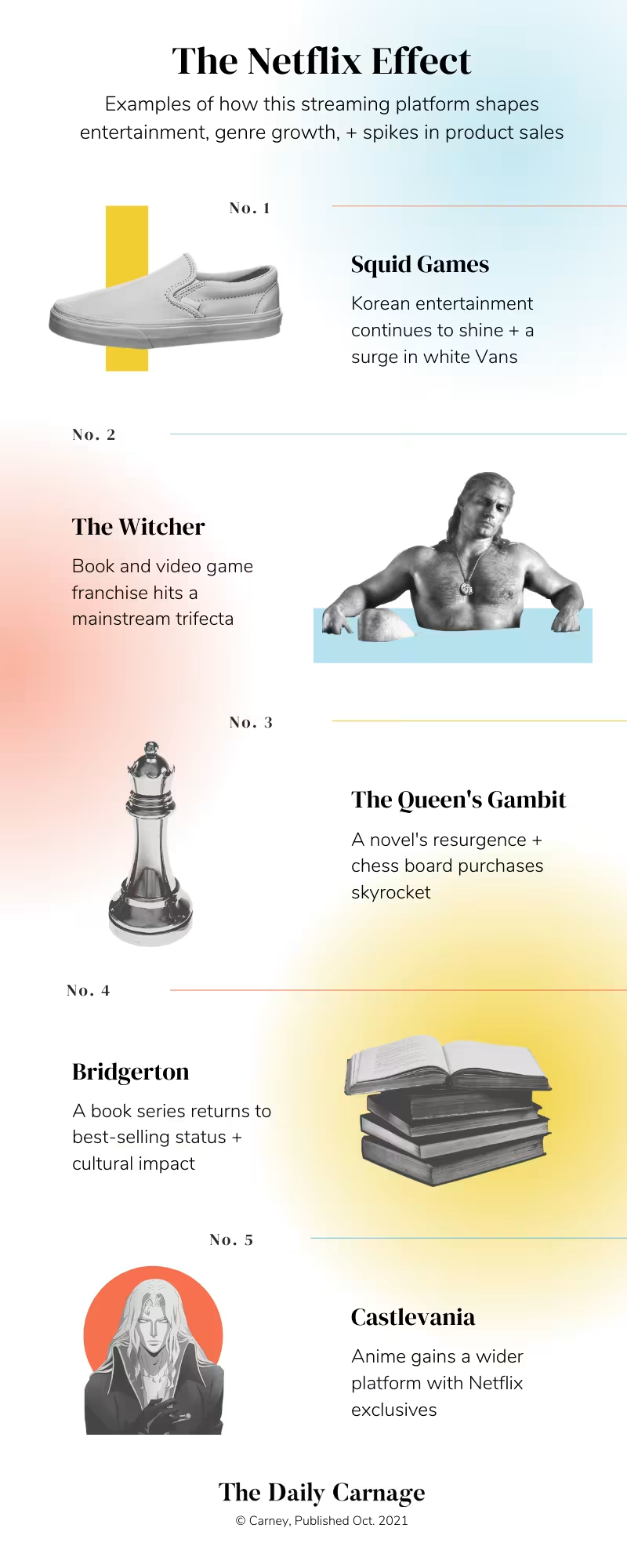
- Back at it Again with the White Vans: What happens when you have an absolute hit show that features a simple wardrobe staple around Halloween? You get shoes flying off of shelves. Case in point: Squid Game’s influence on a 7,800% spike in white slip-on Vans sales. READ MORE
- The Witcher Multi-verse: Nerds rejoice! The Witcher is an adaptation to the video game series, which is an adaption of a book series. Upon the Netflix series release, a new wave of interest in the franchise came about just in time for a surge in Witcher 3 video game sales. READ MORE
- A Whole Gambit of Sales: How does one of the oldest board games become one of the hottest selling Christmas gifts of 2020? Netflix. The show created a phenomenon in retail, online game forums, and the original novel of the same name. It makes you wonder what else Netflix can influence if it can boom something like chess. READ MORE
- All is Fair in Love and Binges: Book-to-streaming adaptations are expected to boost book sales. Bridgerton was no exception as people flocked to the novel series. What the Netflix show also helped was pop culture obsessions over the romantic genre and, more importantly, social discussions around representation. READ MORE
- Amplify the Vamps: Castlevania was an otherwise obscure video game before being adapted by Netflix. Now Reddit threads are everywhere trying to find the game. This is also an example of Netflix influencing its own sales possibilities. Boosting the subculture around Anime, Netflix can bolster merch and additional content. READ MORE
Download the examples for yourself or check out the INTERACTIVE VERSION.
12 Brands and Their 12 Strategies on TikTok
OCTOBER 17, 2021TikTok is growing more and more, especially for brands trying to make good content. But who is doing it right? Let’s get into brands that are working with TikTok to their advantage and what strategies to use.
- Flighthouse Media Company, the GOAT: Flighthouse is a media company with an approach around quantity.
- Netflix, the UGC champs: Netflix knows their users based on what they watch, making it pretty easy for them to make challenges users want to join. Their bios are 🤌
- Dunkin’, the ambassadors of ambassadors: UGC comes naturally to this brand with a big subculture. Dunkin’ wins points for their strategic use of endorsed content from TikTokers like Charli D’Amelio.
- e.l.f. Cosmetics, the trendsetters: These guys can get out-of-the-box with pop-culture-themes, gaming cross-overs, and creative collections. E.l.f.’s strategy is to go all out with TikTok.
- P&G, the sponsors: Procter and Gamble doesn’t do much for creating content. Instead, their strategy is to sponsor content and hashtags.
- Amazon, the hashtag kings: Amazon uses a well-rounded paid strategy of influencers and ad campaigns. Where they excel is well-made hashtags.
- Red Bull, the entertainers: Red Bull maintains its brand image of extreme sport-loving sponsors by posting stunts and bloopers. Their strategy is just to keep followers’ attention.
- Gymshark, the OGs: These guys were an early brand on TikTok and their strategy is similar to Flighthouse’s by being consistent. The difference is they aren’t trying to make viral TikToks, just helpful ones.
- Blue Diamond Almonds, the late bloomers: It’s never too late to join TikTok! Blue Diamond doesn’t have a unique strategy other than they aren’t sleeping on TikTok.
- Marc Jacobs, the duet masters: The company advertises on TikTok by launching Branded Hashtag Challenges that uses the duet feature.
- DICK’S Sporting Goods, the experimenters: DICK’s is all about TikTok ads trying out the whole suite of options the platform gives advertisers.
- Chipotle, the content kings: These guys are TikTok pros and they love “content-only” campaigns and it works for them.
See the TikToks for yourself on Mediakix’s full post.
11 Top Digital Marketing Youtube Channels in 2021
OCTOBER 13, 2021We are so thankful for all the educators out there that make it easy on us by making a video content disgestible.
Here are the 11 YouTube channels that do it best:
- Ahrefs – You probably know Ahrefs for their software, but these guys also have a YouTube channel on backlinks, keywords, SEO research, and how to get the best out of their software
- Backlinko – Backlinko knows link building! Well, Brian Dean does. The founder of Backlino runs this YouTube channel, too.
- Digital Marketing Institute – On top of having certifications and courses, DMI has a YouTube channel that covers everything from case studies to current how-to’s for all things marketing.
- GaryVee – Gary Vaynerchuck is the Chairman of VaynerX and CEO of VaynerMedia, but on top of all that he’s a public speaking master.
- Google Analytics – C’mon, how could Google, the ultimate go-to for EVERYTHING and owner of YouTube, not be on the list? Get your tips right from the source.
- Kimberly Ann Jimenez – Kimberly is the founder of The Business Lounge and her YouTube channel has tips and coaching on productivity, blogging, and sales strategies.
- Moz – Another SEO Titan on the list! They have a Whiteboard Friday series and some of the best how-to’s around.
- Pat Flynn – Pat is a digital marketing coach with content all about content, audiences, and especially passive income. Need inspo for your hustle? He’s your guy.
- SEMRush – On top of having amazing SEO software, their channel is all about the best way to use marketing tools.
- Unbounce – Unbounce is a landing page platform with a Youtube channel covers all things digital marketing and web design.
- Brandastic – Brandastic is a digital marketing and advertising agency with a YouTube channel for strategies and tips.
Brandastic also wrote up this list! For more online acaemdies from some of these channels, check out their full blog.
Insights
View AllStrategy7 MIN READ

The AI SEO Checklist: How to Stay Visible in the Age of AI Search
Ana Toigo
Marketing5 MIN READ

Top Marketing Tools That Offer Nonprofit Discounts (2026)
Rich O'Donnell
Strategy4 MIN READ

Sharpen Your Core Skills: Listening, Remembering, and Note Taking
Rich O'Donnell
Uncategorized4 MIN READ
Dialogues: Kimberly Bailey, Head of Marketing at Alpaca
Shannon Sankey
Content2 MIN READ
Know Your Audience: Avian & Saurian Edition
Rich O'Donnell
Content3 MIN READ

Which comes first, the copy or the design?
Rich O'Donnell
Content4 MIN READ
How to Speak Like a Customer—Not Your CEO
Rich O'Donnell
Content4 MIN READ

The New Search Paradigm: How Marketers Can Prepare for SGE
Shannon Sankey
Content2 MIN READ
5 Tips for Marketers Who Hate Writing
Shannon Sankey