Does Content Marketing Actually Work? The Data Says Yes

There’s no need to look under rocks for content. These days, content gets right up in your face from the second you wake up… literally.
From email inboxes to Facebook pages, companies are utilizing every which way there can possibly be to get content out into the world.
But, does it actually work? Is it being seen by consumers? What does content marketing mean for companies in the long run?
For the answers, we gotta look at the data from ProfitWell. We’ll explain it here, but the blog post itself has tons of visuals…
Customer acquisition costs (aka CAC) are going up.
Content CAC is about 15% less than paid CAC, but content CAC is is growing at a quicker rate than paid CAC. That could be due to how expensive it is to produce content these days.
Let’s break this down even further:
Almost 50% of buyers will view up to 5 pieces of content before engaging with a sales rep, companies that keep blogs can get up to 67% more leads than those that don’t, AND inbound marketing close rates are still 8 to 10 times higher than outbound efforts.
Bottom line is, content marketing = a better chance of being seen and engaged with. Content also adds to your brand identity and trust from your possible future consumers.
If you’re not convinced of the true power of content marketing yet, we’ll leave you with this:
Companies that create content are experiencing about 30% higher growth rates than those not using content marketing. *cue mic drop* 🎤
We’ve barely scratched the surface of this one. Take the jump for more…

A few newsworthy and noteworthy bites…
- Hubspot just released their 2019 Social Media Holiday Calendar. You might wanna mark down National Taco Day now…
- LinkedIn is taking a page from Facebook and launching an Events feature.
- Twitter is FINALLY thinking about adding an ‘edit’ button.
How to Create a Black Friday Social Media Strategy

If you have the mindset that Black Friday isn’t around the corner, we hate to break it to ya: it’ll be here next week. No lie. 😱
While you’re still trying to wrap your head around how it’s basically time to set the table for a giant turkey, it’s also time to solidify your Black Friday marketing strategy.
But have no fear, Sprout Social will show ya how it’s done.
1) Do Your Homework
Time is of the essence here!!! Plan ahead and utilize different ways to engage your audience earlier than the day itself.
Don’t be afraid to ~get creative~ and hint at Black Friday deals on your social channels and even in your newsletter ahead of time.
Also, make sure your profiles are all set to go the day of. Finalize any photos and graphics you’ll be using and that links take customers to the correct pages.
2) Be Different From the Rest
These days, you have to get SUPER creative to stand out from the sea of Black Friday ads. Capitalize on your brand’s voice and get creative with what you’re promoting.
(For a creative list of 💯 examples from the past, hit that “Read Now” button below).
3) Cyber Monday Is A Thing
If you’re reading this, you’re already thinking ahead (snaps for you). BUT, think even more ahead by utilizing Cyber Monday, aka the day that the internet is likely to break (more than once).
Cyber Monday is almost as big of a draw for customers as Black Friday; create Cyber Monday-specific deals and ads for consumers to act on alllllll weekend long.
If you’re loving this Black Friday advice, there’s no way you’re not hitting that “Read Now” button 👇

“Part of mastery for any platform in the social space is just testing, testing, testing.”
Nathan Chan
Ads from the Past
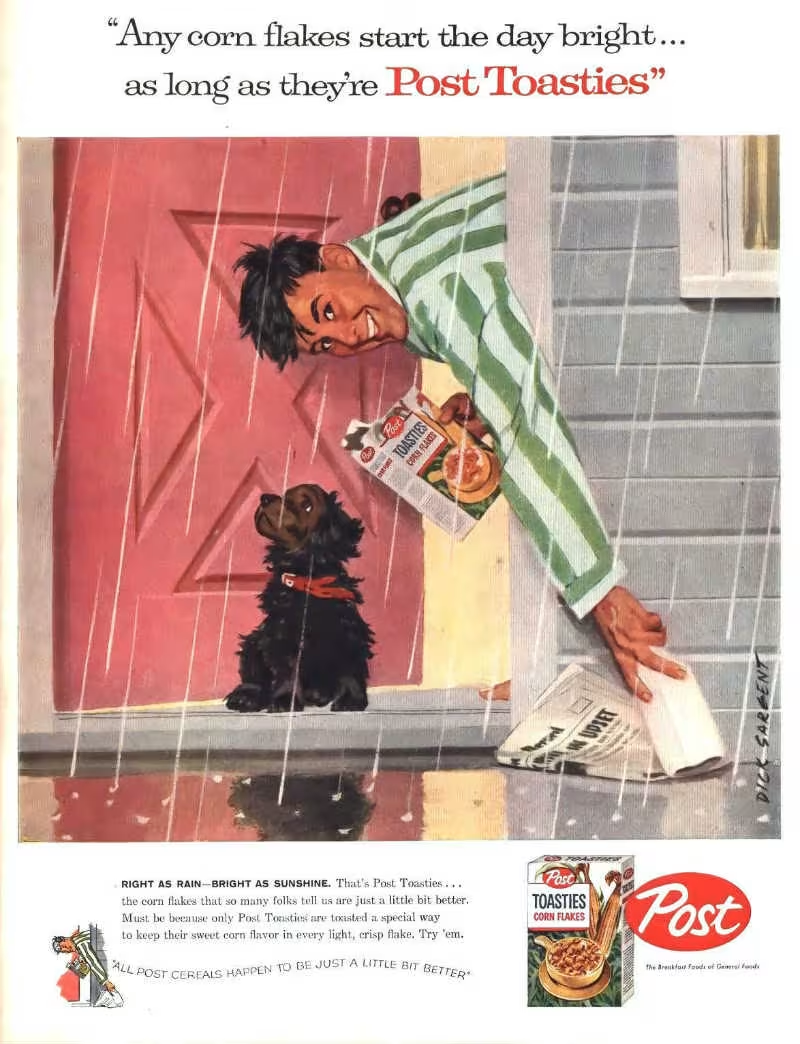
Can’t imagine any modern brand would advertise themselves as marginally better than their competition. But, that’s what Post did in the ’50s.