Be in The Know
🎮 Can GTA VI teach men to be better partners?
🔎 Google brings more personalization to AI search
🤖 Meta expands its Muse AI experience to the UK
🏈 Every Super Bowl 61 ad announced so far
🎈 Macy’s Thanksgiving Day Parade celebrates its 100th anniversary
🏆 The biggest sports marketing trends of 2026

Let’s See Those Art Director Skills
You’d definitely catch that design mistake at work. Right?
Play Can’t Unsee and pick the better of two almost identical designs.

Before AI Can Cite You
AI search has created an entirely new vocabulary for marketers. GEO, AEO, AI visibility, citation optimization. Every week seems to bring another framework promising to make brands more discoverable in AI-generated answers.
But how different is AI search from the SEO we’ve been practicing for years?
In an article for Hobo Web, SEO consultant Shaun Anderson argues that many AI search optimization techniques still depend on familiar information retrieval principles. His proposed “3 Laws of AI Search Motion” challenge the idea that marketers need to abandon traditional SEO to compete in generative search.
Here are the three principles behind his argument and what marketers can take from them:
- Make your content discoverable. Anderson’s first principle, the Gatekeeper Law, emphasizes retrieval. In AI systems that retrieve external documents before generating answers, content needs to be accessible and selected before it can be used as a cited source.
- Optimize the whole document. His Single-Document Law argues against making changes solely to appeal to AI-generated answers when those changes could weaken the page’s relevance or usefulness in traditional search.
- Improve the signal-to-noise ratio. The third principle favors clear structure, relevant facts, and specific information over unnecessary length and repetitive language.
- Keep technical SEO in the picture. Review crawlability, indexing, internal links, and content accessibility before investing heavily in specialized AI search tactics.
- Prioritize useful information. Give readers clear explanations, credible evidence, and details that genuinely answer their questions.
- Be skeptical of guaranteed visibility. Test new GEO techniques before investing significant resources. No framework can promise that an AI platform will retrieve or cite a particular page.
Anderson presents these principles as mathematical laws, but that interpretation is his own argument, not an established industry consensus.
The practical takeaway is simpler: AI search may change how people discover information, but that doesn’t make established SEO practices irrelevant.
Head to Hobo Web to explore the full argument.
Q for You
Would you sacrifice Google rankings to show up in AI answers?
Siteliner
Your website might have more duplicate content than you think.
Siteliner scans your site for duplicate pages, broken links, and other issues that can affect content quality and SEO. It also highlights internal linking patterns, page sizes, and load times, giving you a clearer picture of what’s happening behind the scenes.
You can compare your results with other websites, too. Pretty useful when your content library keeps growing and you want to catch problems before they pile up.
Job Opportunity
Love a good workflow?
Inteleos is hiring a Marketing Operations Program Manager to streamline content approvals in Asana, run marketing automation in Dotdigital, and build dashboards that show how campaigns perform. You’ll need a bachelor’s degree in a related field, 5–7 years in marketing ops, automation, or martech, and hands-on experience managing an automation or CRM platform.
Join The Carnage Community 🤝
Let’s take this party outside of the inbox, Carnies!
Connect and network with our community to get (and give) advice, feedback, support, and LOLs.
- 💬 Join r/TheDailyCarnage on Reddit
- 👍 Join The Daily Carnage Facebook Group
😎 See ya there.
Become a Friend of The Daily Carnage
The Daily Carnage reaches decision-makers at brands, agencies, SaaS companies, and startups who are actively researching solutions, evaluating vendors, and making purchasing decisions every day.
Now, we’re opening up a limited number of Friends of The Daily Carnage partnerships for brands that want to build a consistent presence with our audience, not just run a one-off ad.
Friends get discounted sponsorship inventory, priority booking, first access to unsold placements, bonus opportunities, and performance reviews throughout the year.
Partnership levels include dedicated newsletter features, premium placements, podcast pre-rolls, classified ads, social promotion, and more.
Past sponsors include Canva, HubSpot, Salesforce, Mailchimp, Marketing Brew, and dozens of other leading brands.
Interested in reaching marketers who actually click? Reach out to get started!
Now Streaming
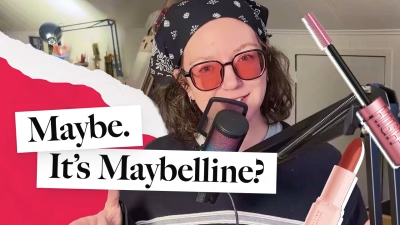
Don’t miss the latest episode of The Daily Carnage Show, in this episode of The Daily Carnage Show, we’re breaking down Maybelline’s controversial new tagline, featuring Miley Cyrus and a reimagined version of its iconic slogan: “Maybe. We’re born with it. Maybe. It’s Maybelline.”
The brand says the changes reflect a more inclusive vision of beauty and a new platform built around self-expression and infinite possibility. But consumers aren’t exactly convinced.
We’re looking at why the original tagline became such a powerful piece of brand equity, what’s behind Maybelline’s rebrand, why the new messaging is getting roasted online, and what marketers can learn from the backlash.
🎙️ Plus, catch up on Season 2:
- Instagram Wants to Compete With YouTube (12:07)
- States vs. Social Media (10:40)
- Apple’s Secret Ad Tech Blocklist: What Marketers Need to Know (11:04)
- AI Is Killing Entry-Level Marketing Jobs (12:55)
- Microdramas Are Taking Over Marketing (10:43)
- Reddit Is Changing SEO & AI Search (10:55)
- Dissecting the Brand Apology (11:35)
- Google Image Search is… Pinterest? (9:26)
- Sony & The Death of Physical Media (8:57)
🎙️ Now streaming on Youtube, Spotify, Amazon Music, and Apple Music.

Finding the Words
Telling someone you have a crush on them is nerve-racking enough. Imagine doing it when every word is a struggle.
Google India’s new short film follows Aditya, a college student with a stammer who’s trying to confess his feelings to a classmate. Unsure how to express himself, he turns to Google Search’s AI Mode for help, practicing his speech through vocal exercises, reading aloud, and rehearsals in front of the mirror.
Directed by Shoojit Sircar, the two-minute film builds toward a sweet confession in the pouring rain, giving a familiar love story a surprisingly modern twist.
Ads from The Past

Honeycomb, 2001