The Daily Carnage
The savvy marketer's hub for industry news, insights, resources, and culture.
Today’s Issue
Issues
View All
The Streaming Wars: Everything Marketers Should Know
OCTOBER 12, 2021If you say you aren’t streaming entertainment in some form, we might have to call you a liar. Streaming platforms are everywhere and that means so are the advertising opportunities.
While some platforms are ad-supported, many don’t run commercials. That doesn’t mean advertising isn’t possible on them, it just takes a little bit of creativity (more on that later). Luckily, AdAge gave the rundown on everything marketers need to know about advertising with streaming services. Let’s get into it.

Who is Who?
Like we said, streaming is everywhere. Over the past decade, more and more networks and platforms are choosing to stream content. The biggest 3 players currently are Netflix, Amazon Prime Video, and Disney+.
What is What?
For the most part, 30-second or 60-second TV commercials can be utilized for streaming platforms. But remember when we mentioned getting creative with it? Brands are getting more in-depth with their advertising making sponsored talk shows, pause screen ads (that appear when a user hits pause), binge ads (that appear after several episodes in a row), and sponsored content spots within apps.
Why?
Streaming platforms are not going anywhere, so you can’t ignore them as a channel. While the lines of traditional TV and streaming platforms are blurring (meaning they’ll likely be transforming soon), there’s no denying that streaming is the where to turn.
Want to learn more streaming lingo and ad examples? Check out Ad Age’s full post!
Graphic Design to UI/UX: A Comprehensive Guide to Transitioning
OCTOBER 11, 2021We’ve talked before about designers expanding their skillset. But like, how do you do that? There’s a lot of overlap in the design world when it comes to visual and product design.
The thing is there are a lot of nuanced skills involved with aspects of UI and UX. How do you transition to a completely different set of design skills? Designer up has the full guide of how to do it.
The big differences between Design and UX:
Graphic designers and visual designers usually deal in static visuals, they are concerned with color, texture, shadow, shape, and light. They don’t instinctively think in terms of movement, action, and tasks. UI/UX designers are always thinking in terms of user actions and components for a design. But one of the biggest differences is the reliance on user data and feedback has on UX and product design.
Where to Expand Your Disciplines:
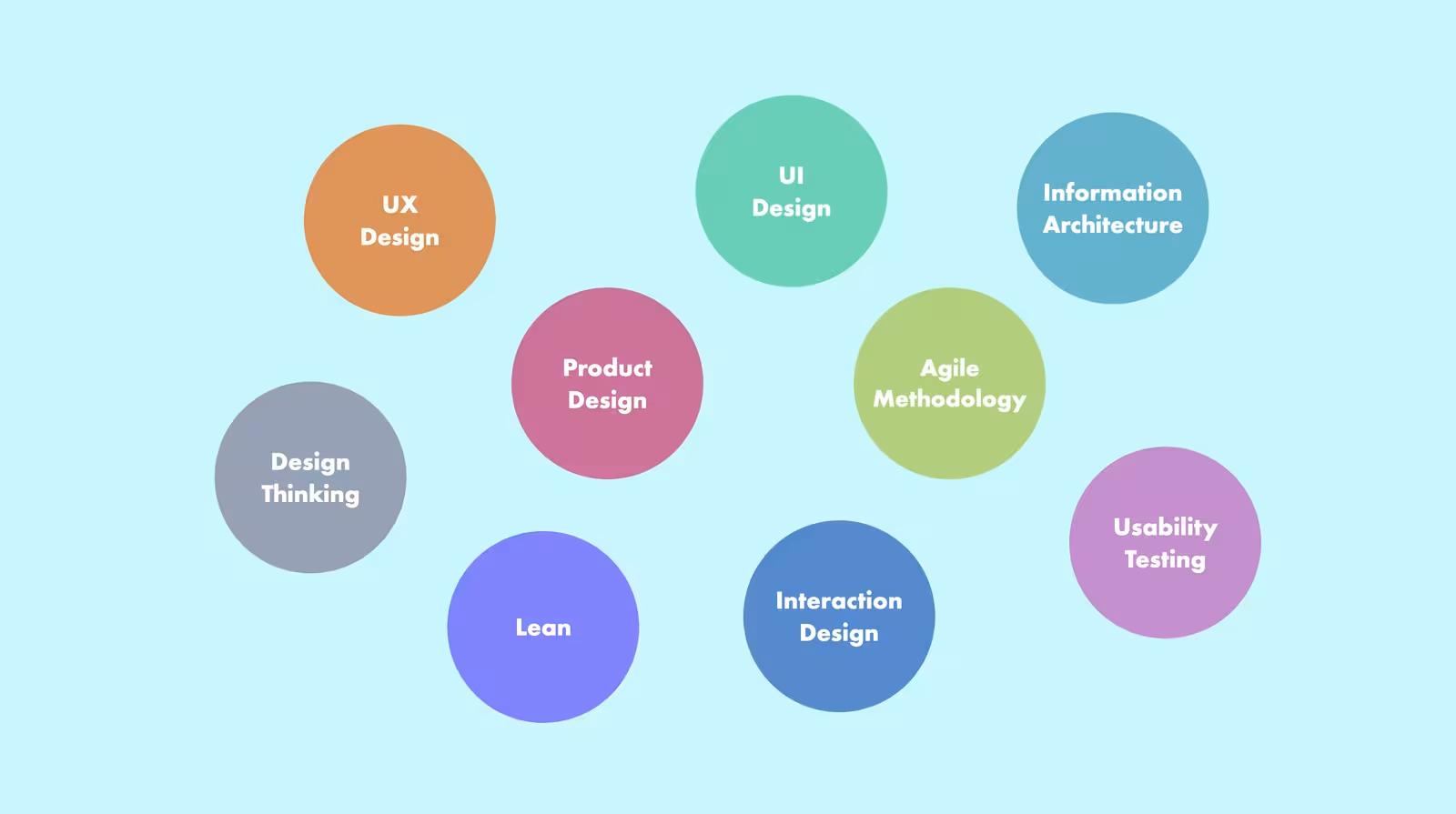
Focus on the thinking process and techniques for these disciplines:
- User Research
- User Experience Design
- Information Architecture
- User Interaction Design
- Usability Principles
- User Interface Design
Once you play in these areas, you can begin honing in the skills you are strongest in. When it comes to UI/UX design, you don’t want to label yourself as a generalist. Find your niche!
Portfolio Time:
UI/UX designers have to put on their marketing hat when it comes to presenting their work. It’s not just about creative eye and execution. It’s about product performance. Designers making a transition should focus on selling outcomes and the ROI they can bring to digital projects. It’s important to track your work as you go rather than all at once when you think to build out your portfolio.https://designerup.co/blog/transitioning-from-graphic-design-to-ui-ux/
Check out DesignerUp’s full guide to how you can take your design career into the thick of UI and UX design.
5 Ways to Prepare for the Cookieless Future
OCTOBER 10, 2021Maybe it’s a not-so-welcome reminder, but we’re just giving the people what they want!
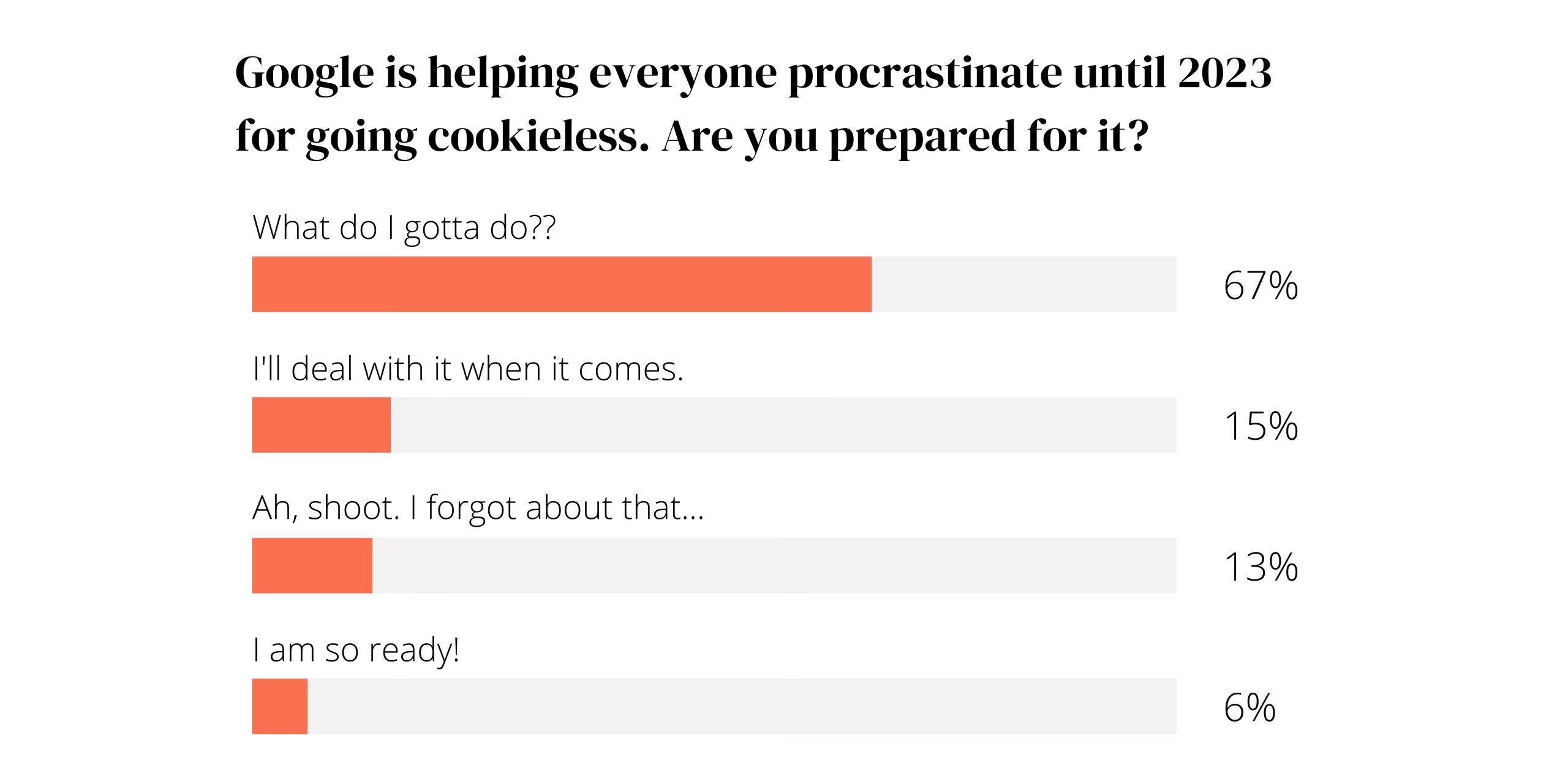
So we’ve covered some of the big changes coming to privacy from Apple and Google. To summarize: Google is going to phase out third-party cookies as online tracking tools. And Apple plans to make its mobile device ID opt-in only, meaning cross-application tracking of site visitors is out the window.
But are you ready for the cookie-pocalypse?
Don’t worry, they won’t be completely dead. Google just wants us to shift the strategy to first-party data use. A lot of companies are rolling with these punches and waiting until the 2023 deadline set by Google. But how do you shift to that strategy? Forbes has those five steps:
-
- Create A Data-First Strategy for Real People: Data and insights should be at the core of every decision marketers make, but being reactive is the kicker. This way you can be delivering relevant personalization instantly.
- For the 300th Time, Build a First-Party Data Strategy: Create your own people-based identifiers that don’t depend on third-party data. This can come from all of your channels, so maybe it’s time to see how each one is doing, or add new ones.
- Build Partnerships with Trusted Data Providers: So marketers need to be collecting more of their own audience data, AND extend their connections to high-quality first-party data providers. A great place to start is with CRM systems.
- Diversify Your Digital Marketing Toolkits: Spread out your marketing approaches. Forbes suggests account-based marketing (ABM) and contextual marketing. ABM is a personalized approach used to drive results for specific accounts. Contextual marketing is where marketers target their messages to audiences based on the context, content, and meaning of the user’s environment.
- Get Yourself a Strong Measurement Partner: Expand the coverage of your advertising-effectiveness measurements and keep user privacy secure. Test your measuring partner (or yourself) with this question: how much of the overall digital ad spend be measured?
See the full Forbes article for more details on the full 5 things you can do to prepare.
Urgent Matters Facing Design (From 32 Experts)
OCTOBER 5, 2021What in the world is going on?! Fast Company interviewed over 30 professionals to give a pulse on what’s important to product design, UI, architecture, and making a difference through design.
There were some interesting answers and overlapping topics, so here are some of the standouts that made us think:
- Climate and Conversation: Sustainability is growing to be one of the fundamentals of all design. More brands are also being mindful of the growing climate situation, sparking green- and community-focused agendas. As Céline Semaan put it – “Waste is a design flaw.”
- Data, Data, Data: Everything is run by data. And while that might not always be the best thing for creativity, data fluency from designers is essential for creating the best possible designs. Data quality is at the core of everything. However, between privacy and inaccuracy, data barriers are becoming more prevalent.
- Throw-Away Culture: Designing “for the now” can be problematic. Convenience over longevity plus immediacy in all aspects of life (especially consumption) make for disposable design. It pulls from individuality and can stifle creativity.
- Digital Overload: Our society is always-on, always-connected. Designers must help to create great products and services while also supporting healthy digital lives. Designing with mental health in mind is a great step towards this.
- Equity and Inclusion: Design decisions can reveal disparities and sometimes you have the approach design from unique case instances first. As always, accessibility should be at the forefront of every design.
Check out Fast Company’s full list of incredible interviews about design challenges. We would like to add that the headshots are *chef’s kiss* lovely.
The Ultimate Spam Filter for Google Analytics
OCTOBER 4, 2021Your Google Analytics data is supposed to be your guiding light for what’s working on your site. But when that data is muddied up by bots, how are you supposed to get a true analysis? Time to make the GA spam filter of all filters!
To get started, you’ll need Google Analytics*** and Google Tag Manager.
Let’s get into it:
STEP 1: Set a Custom Dimension Within Your UA Variable in GTM:
- Create a User Defined Variable for your Google Analytics property ID. Go to “Variables” in the left-hand navigation, select “Google Analytics Settings” in the Utilities section, then add your Universal Analytics Tracking ID (UA-XXXXXXXXX-X) in the “Tracking ID” field.
- Set a Custom Dimension for Container ID in Your User Defined Variable. Your GTM container ID should look like this: GTM-XXXXXXXX. Set a custom dimension within the user defined variable. Hit the “Custom Dimensions” button, use “1” as the Index number (if this is the first custom dimension you’ve created). In the “Dimension Value” field, add {{Container ID}}.
STEP 2: Register Your New Custom Dimension in Google Analytics
- Set Your Custom Dementions in GA UA. Go to the Admin section, Within the Property settings, hit “Custom Definitions,” click on “Custom Dimensions,” then, hit the “New Custom Dimensions” button. Create a hit-scoped dimension with the name “Container ID” using the sameindex you used in GTM.
STEP 3: Create The Filter!
- (Create this filter first in a Test View!)
- Go to the GA Admin section. Hit “Filters,” then hit “Add Filter,” hit “Include” for the filter type, and set “Container ID” as your Filter Field, add your GTM container code as the Filter Pattern.
Boom! You’re on your way to more accurate traffic. Check out Root & Branch Group’s full post and easy video tutorial all about this spam filter!
***NOTE: You will need the Universal Analytics (UA) property type for this to work. GA4’s current limitations on filters can’t do it.
The “WTF Does That Mean” Podcast Glossary
OCTOBER 3, 2021pod·cast | noun – /ˈpädˌkast/
a digital audio file made available on the internet, typically available as a series, new installments of which can be received by subscribers automatically.
So you wanna advertise on podcasts, huh? It can be one of the best channels for reaching audiences at their full attention and with specific targeting. But planning, assessing creative, tracking, and measurement for advertising on podcasts comes with its own set of rules and jargon.
SXM Media made the “podcabulary” glossary to give you all the industry essentials and pro vocab.
Back to basics. Types of podcast ads:
- Host-read ad – When a host talks about an ad in this native podcast ad experience using talking points from a brand.
- Announcer-read ad – An “announcer” voice is cast to fit the podcast to create an ad to run seamlessly across multiple networks and/or shows.
- Client-provided ad – A brand can provide their own podcast ad based on a platforms parameters.
- PE (personal experience) – When a host uses a product or service and shares their personal experience.
- Types of ad breaks – pre-roll ad, mid-roll ad, post-roll ad
Here are some of the specific terms to know for podcast advertising:
- Cross-platform packaging – This is a plan to distribute an ad across audio-based platforms like streaming music or satellite radio.
- Dynamically inserted ad – Inserting ads, either client-provided, announcer-read, or host-read, at the time of download. So different listeners would be hearing different ads as opposed to baked-in ads.
- Vignettes – This combines a host read ad with storytelling. These 2 to 3-minute produced spots are dynamically inserted and run in the mid-roll position.
- Transcription targeting – Ad technology that transcribes audio from episodes into text, then sorts them into categories. This means you can target (or anti-target) content at the episode-level.
Check out the full glossary from SXM Media for more podcast pro lingo!
Have You Heard?
SEPTEMBER 28, 2021Listen up! If you aren’t advertising on streaming platforms by now…why not? They’re engaged and targeted and full of options. Today, the Carney team wants to break down the two main types of Spotify ads for ya.
Read it and weep:
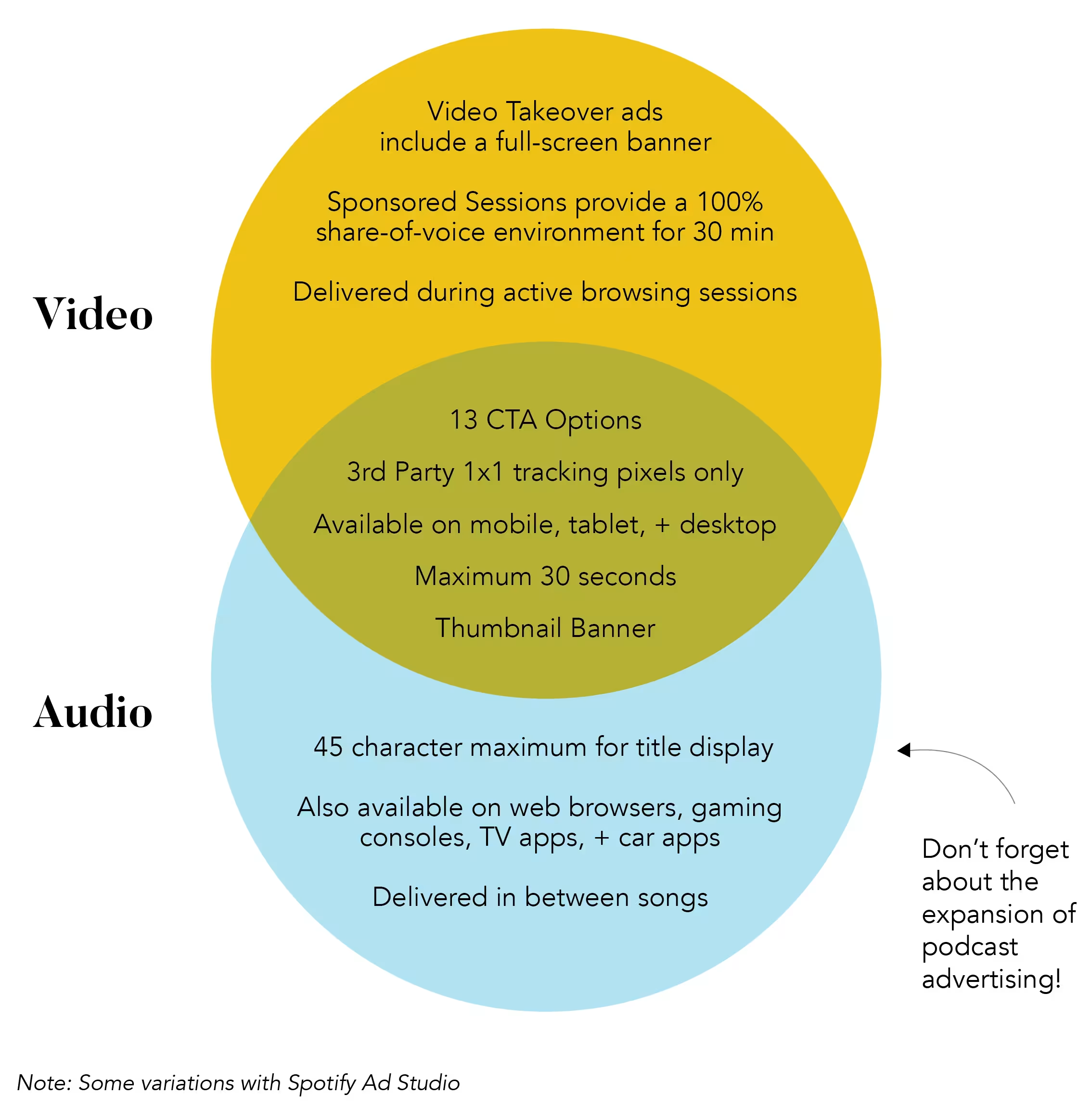
2021 stats for the major streaming platforms:
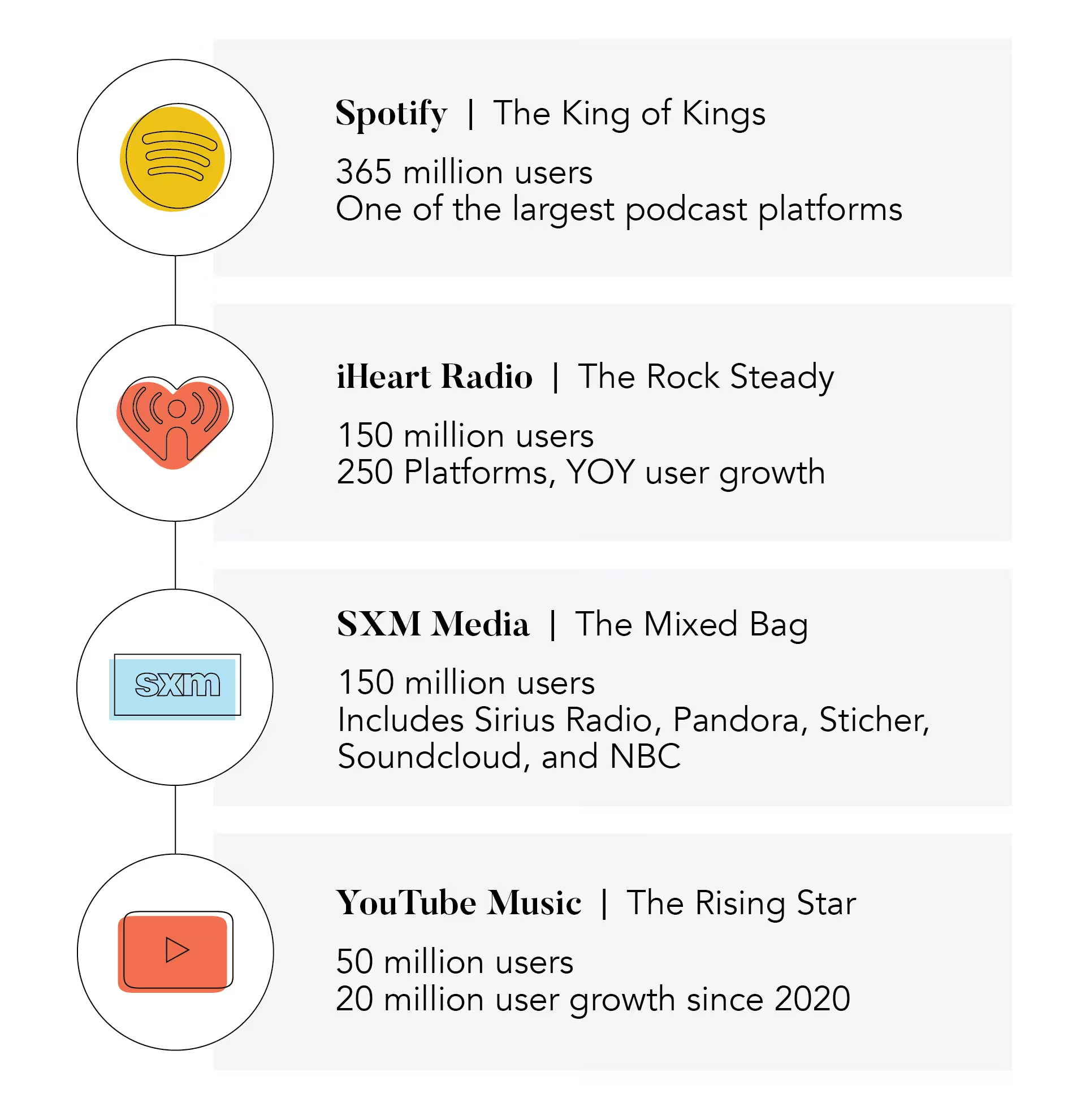
Like what you see? Grab the cheat sheet for yourself!
Download it or share it with: bit.ly/carneyaudioads
NFTs and What They Mean for Marketers
SEPTEMBER 27, 2021Non-fungible tokens…Heard of ‘em? They’re kind of all over the place right now, but what the heck are they? Well, let’s give ya the crash course from Medium.
What are NFTs?
Non-fungible tokens (NFTs) are a type of cryptographic token that represents a unique digital asset. It is based on blockchain technology, like cryptocurrencies. Basically, while both are are blockchain-verified, cryptocurrency is treated like dollar bills (non-unique), and NFTs are treated like pieces of art (one of a kind). NFTs, though, are not mutually interchangeable.
Who Cares?
Well, there have been some crazy NFT sales out there that have the attention of investors piqued. For brand marketers, the rise of NFTs brings a whole world of new marketing possibilities. Let’s get into some of the big NFT marketing ideas:
- Creating Scarcity: DLC for video games and in-app purchases are familiar examples. NFTs make that DLC more exclusive or collectible. We’re seeing this on a commercial scale with the console wars and system-exclusive games. Creating digital goods to be rare is where NFTs come to play.
- Rethinking Monetization: Today, most digital content is being monetized via platforms, like Facebook, podcasts, or Hulu, as ad middleman. NFTs shift the ownership back to creators. As Apple continues to shake up traditional digital advertising, NFTs might be the new remedy.
- Tokenizing Access: Gated content, experiences, and services can all be individually made NFTs. For brands, that means a new way to think about access management, again without third parties.
What’s Next?
Dunno! There are several industries like retail and entertainment most interested in NFTs. Experimentation and new media models are happening now, but one of the biggest roadblocks is going to be that NFTs are in a wild West as far as regulations.
Check out Medium’s full piece for examples of brands already breaking into NFTs!
Understanding Keyword Matches for Your Google Ads Strategy
SEPTEMBER 26, 2021Ch-ch-ch-ch-changes! The world of advertising with Google is always changing. Ready to play some catch-up? Here’s your Google advice straight from the horse’s mouth: Use broad match paired with Smart Bidding. This strategy makes you more likely to hit relevant searches as well as higher conversions.
But let’s get into why that is a good strategy. Here are three things to know about matching keywords for your Google Ads strategy:
- What are your intentions? Much of Google’s updates in the past few years have all been about user intent. Now, can we read minds? No. Can models and algorithms come close to it? You betcha. But sometimes long or complex searches can have hard-to-translate intentions. Broad match keywords can match to a variety of queries and relate keywords to each other for results that are more relevant to a user’s intent.
- Matchy matchy keywords. Now Google doesn’t always give up the secret formula, but they do give us ingredients here and there. The Google ranking truth to know here is that an exact match keyword that is identical to a query is now always preferred as long as it’s eligible to match. That goes for both phrase and broad match keywords as well!
- Group Mentality. Now, this isn’t so much about keyword matches, but an organizational reminder. For the sake of tracking and improving your ads, Google reminds advertisers that grouping your ads thematically, then breaking down a group depending on how it performed is your best starting point for optimizing keywords.
In general, Google has also simplified the keyword matching process when building ads. But, Google always suggests experimenting in your Recommendations Page with drafts and exploring Smart Bidding keyword suggestions.
Check out Google’s full keyword announcement for specific cases and examples of keyword matches.
Insights
View AllStrategy7 MIN READ

The AI SEO Checklist: How to Stay Visible in the Age of AI Search
Ana Toigo
Marketing5 MIN READ

Top Marketing Tools That Offer Nonprofit Discounts (2026)
Rich O'Donnell
Strategy4 MIN READ

Sharpen Your Core Skills: Listening, Remembering, and Note Taking
Rich O'Donnell
Uncategorized4 MIN READ
Dialogues: Kimberly Bailey, Head of Marketing at Alpaca
Shannon Sankey
Content2 MIN READ
Know Your Audience: Avian & Saurian Edition
Rich O'Donnell
Content3 MIN READ

Which comes first, the copy or the design?
Rich O'Donnell
Content4 MIN READ

How to Speak Like a Customer—Not Your CEO
Rich O'Donnell
Content4 MIN READ

The New Search Paradigm: How Marketers Can Prepare for SGE
Shannon Sankey
Content2 MIN READ

5 Tips for Marketers Who Hate Writing
Shannon Sankey