
The Daily Carnage
The savvy marketer's hub for industry news, insights, resources, and culture.
Today’s Issue
Issues
View All
YouTube Tests 6 New Shorts Features
AUGUST 15, 2023YouTube has introduced new creator tools to help you harness the energy of a platform with over 2B logged-in monthly users—and to keep up with TikTok and Reels. Check it out:
- Collab: The Collab feature lets you record a Short in a split-screen format with other videos (like a Duet).
- Effects and Stickers: Try dozens of new Shorts effects and stickers, like “Q&A,” which lets you collect answers to a question directly in your comments.
- Go Live: YouTube is currently testing a mobile-first vertical live experience that will be mixed in to the Shorts feed for maximum discoverability.
- Suggestions: This new feature bundles the audio and effect from a Short so you can quickly recreate and remix trends.
- Playlists: You can save Shorts to playlists right on YouTube, which is handy if you want to bookmark effects for future use, too.
- Recomposition: YouTube is testing features that will let you transform horizontal videos into Shorts by adjusting the layout, zoom, and crop of video segments.
Find out more about these new features and when they’ll be rolled out at YouTube.
MrBeast’s YouTube Formula for Success
AUGUST 14, 2023YouTuber Aprilynn Alter shared her insights after 7 days of studying MrBeast’s success—and cracking his infallible formula—on YouTube. MrBeast is an American stunt YouTuber with over 290 million subscribers across his channels. Here’s his secret:
First 5 Seconds
- First sentence matches the title
- First shot matches the thumbnail
First 20 Seconds
- Provide context: What do viewers need to know to understand?
- Introduce the stakes: Why should viewers watch until the end?
- Create a curiosity gap: Don’t give away all the information.
Video Body
- Cut to B and C cameras and employ other visual dynamics every 3 to 5 seconds.
- Incorporate side narratives and contrasting formats to keep it fresh.
- Alternate cycles of high and low energy every 2 to 4 minutes.
Video End
- Reveal the payoff.
- End on a high note: dramatic, wholesome, or funny.
Post-Production
- Ask friends for feedback.
- Watch people watch your video: When do they get bored and pick up their phones?
Intrigued? Check out the infographic and the full thread on X.
Brandformance = Strategy + Brand Building
AUGUST 12, 2023TikTok’s holistic “brandformance” strategy leverages creativity, entertainment, and targeted advertising in one campaign to generate growth. Here’s how:
- Use entertaining content ads to join trends, generate demand, attract new customers, and increase earned media visibility.
- Embrace a full-funnel approach by shifting focus from short-term metrics to long-term returns.
- Leverage the power of sound and storytelling to drive brand recall in a competitive environment. Ads that use sonic brand cues are 8.53x more likely to be high performing.
Check out The Drum for the full scoop.
Google’s Guide to Responsive Search Ads
AUGUST 9, 2023Google recently released a guide to understanding the role of artificial intelligence in optimizing Responsive Search Ads. Here are the key takeaways:
- More assets is better. Use tools like asset suggestion, recommendations, and automatic assets to provide as many headlines and descriptions as possible. This way, Google can test and deliver the most relevant combinations.
- Use Ad Strength. Ad Strength can help you optimize your ads before they are served. Aim to have at least one responsive search ad with a Good or Excellent rating per ad group.
- Measure the right metrics. Evaluate performance according to your business outcomes—remember that conversions matter more than just clicks.
- Focus on high impact areas. Make the most of your time by using asset performance ratings and ad variations to improve ads after they’ve collected enough data.
- Use Smart Bidding and broad match. When used with responsive search ads, these AI tools can help show the right message to the right audience at the right time.
Check out the complete guide at Google.
New ChatGPT Features
AUGUST 8, 2023OpenAI is enhancing productivity and efficiency with these simple but consequential ChatGPT updates:
- Prompt examples. Everyone wants to know: what prompts are you using? Now ChatGPT will offers some recommendations to opening a dialogue.
- Suggested replies. Now, you can converse in one click, making it faster and easier to find the answers you’re looking for.
- Code Interpreter beta. ChatGPT Plus users will now be able to upload 10 files for data analysis, such as keyword research data.
- Stay logged in. You won’t be kicked out after 2 weeks anymore. Plus, the login page is more user-friendly.
- Keyboard shortcuts. Find a complete list of shortcuts by pressing ⌘ (Ctrl) + /.
Check out the full list at Search Engine Journal.
Optimize Content for AI-Generated Search Results
AUGUST 7, 2023It’s crucial for marketers to optimize content for AI-generated answers because these will appear above traditional search results in Google’s Search Generative Experience.
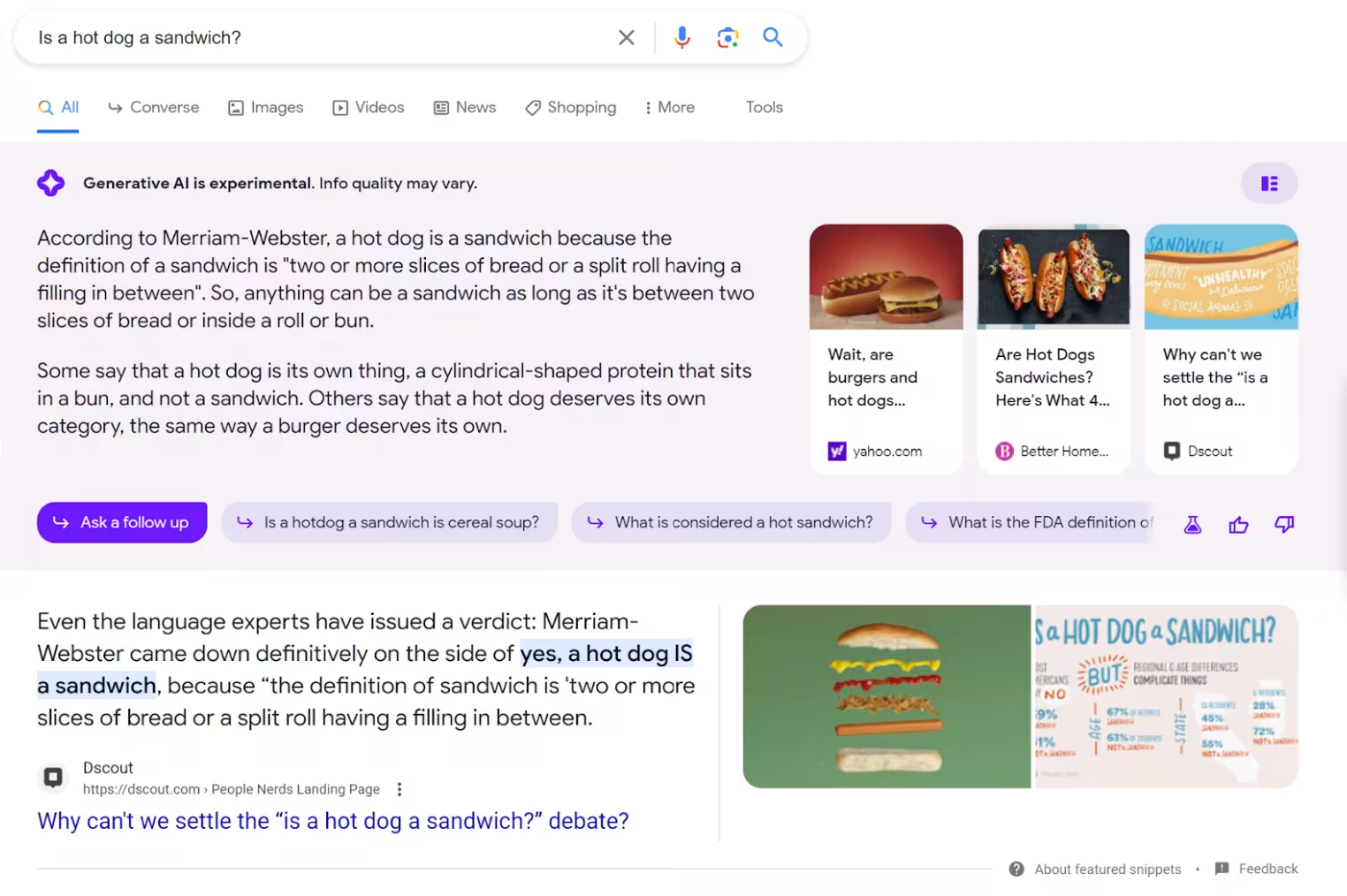
Google cites the websites it uses to generate answers, so focusing on creating high-quality, authoritative content will be paramount. Here’s how:
- Use AI-friendly formats like bullet points, lists, tables, and snippets—with headings and subheadings—which are more likely to be used by AI systems to generate responses.
- Deliver clear and concise answers to queries with FAQ pages and question-based headings in articles.
- Leverage structured data markup to help search engines understand your content better and enhance the visibility of ratings, reviews, and product details.
- Optimize for Featured Snippets by using clear headings, bullet points, and tables.
Learn more about the new search paradigm at the Carney blog.
A Closer Look at Google’s Search Generative Experience
AUGUST 5, 2023Google’s Search Generative Experience (SGE) is still in development but poised to radically change the future of search.
Google is killing the 10 blue links in favor of synthesizing hyper-relevant and accurate information generated by AI in a conversational tone.
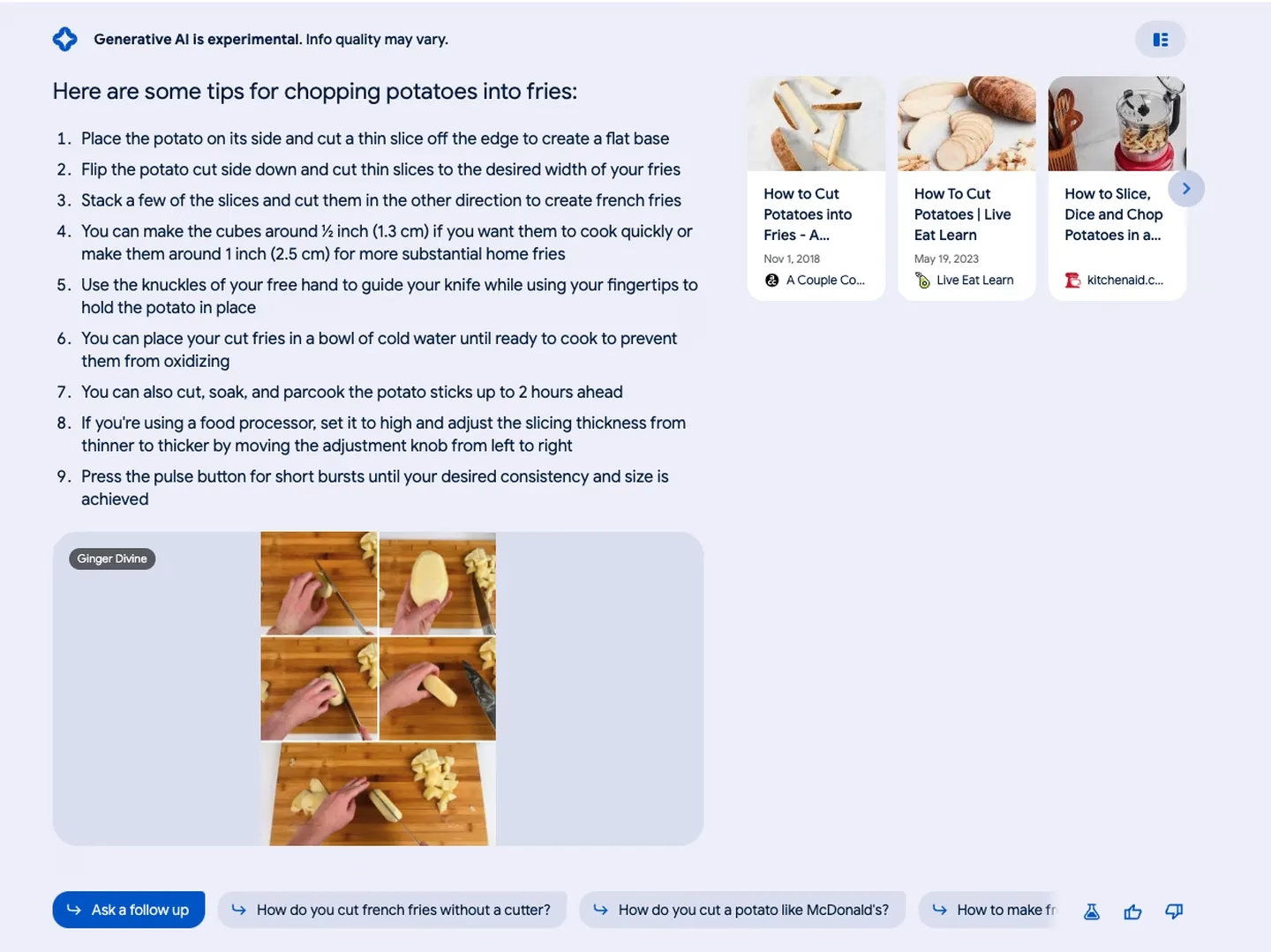
Here’s what users who enable SGE in Search Labs can expect:
- A colorful, multimedia box at the top of your search results.
- A more personalized, AI-generated response to your query with the potential for in-line links.
- Three relevant article links with publication dates to the right.
- The option to ask a follow-up question or select from additional queries at the bottom.
- Below the summarization, four sponsored links are displayed with featured snippets, if applicable.
- After sponsored links, the four-question dropdown menu for “People Also Ask” appears.
- Finally, organic search results are displayed.
Clearly, conversational search will have dramatic implications for marketers and SEOs. Check out The Verge’s update for more info.
Text-Only Content is Dead
AUGUST 2, 2023If your content is solely text-based, you won’t have a shot at beating the competition in an increasingly complex and competitive search landscape.
Visual content: Mix in original graphics and stock photos, videos, presentations, data visualizations and infographics, GIFs and memes, and even AI-generated images.
Podcasts: Promote brand awareness and take advantage of this growing channel’s impressive retention rate.
Interactive experiences: Explore brand-relevant quizzes and polls, surveys, calculators, image sliders, games, as well as interactive infographics and videos.
UGC: Reshare user-generated content (with permission) on your site, on social, in your email outreach, throughout long-form content, in your podcast and webinars, etc.
Livesteaming: Announce when you’re going live on social and via email, run paid ads and retarget customers, and authentically engage with users in a livestream.
In summary, the traditional blog isn’t going to cut it anymore. Take a closer look at Search Engine Journal.
How to Leverage Human Experience for SEO
AUGUST 1, 2023Google’s Search Generative Experience, which uses AI to provide conversational, personalized search results, prioritizes individual perspectives, insights, and first-hand experiences.
Late last year, Google added an additional “E” to its E-E-A-T credibility guidelines, to include: Experience, Expertise, Authoritativeness, and Trustworthiness.
In order to build trust and establish authority, marketers will need to:
- Collaborate with industry experts to create and expand your brand’s presence through their expertise.
- Build expert profiles to highlight the expertise and credentials of individuals within your organization who have valuable insights to share.
- Leverage user-generated content to bring images, reviews, testimonials, and feedback into your SEO strategy.
- Utilize real stories and case studies to demonstrate the impact and value of products or services.
- Use video and social media to showcase real human experiences.
- Actively engage in conversations with your audience across channels.
Learn more about how SGE is expected to reshape SEO strategies on the Carney blog.
Insights
View AllStrategy7 MIN READ

The AI SEO Checklist: How to Stay Visible in the Age of AI Search
Ana Toigo
Marketing5 MIN READ

Top Marketing Tools That Offer Nonprofit Discounts (2026)
Rich O'Donnell
Strategy4 MIN READ

Sharpen Your Core Skills: Listening, Remembering, and Note Taking
Rich O'Donnell
Uncategorized4 MIN READ
Dialogues: Kimberly Bailey, Head of Marketing at Alpaca
Shannon Sankey
Content2 MIN READ
Know Your Audience: Avian & Saurian Edition
Rich O'Donnell
Content3 MIN READ

Which comes first, the copy or the design?
Rich O'Donnell
Content4 MIN READ
How to Speak Like a Customer—Not Your CEO
Rich O'Donnell
Content4 MIN READ

The New Search Paradigm: How Marketers Can Prepare for SGE
Shannon Sankey
Content2 MIN READ
5 Tips for Marketers Who Hate Writing
Shannon Sankey