The Daily Carnage
The savvy marketer's hub for industry news, insights, resources, and culture.
Today’s Issue
Issues
View All
7 Essential Tips for Subject Lines
SEPTEMBER 27, 2022Your email strategy falls short if no one opens them. So to get past that hurdle, you have to have a subject line that entices your reader. These are the essential tips to keep in mind when writing a subject line. Including all 7 is great, but even just having one or two of these in play can create more engagement.
- Keep It Short + Sweet: Make your words count without a crazy word count.
- No Spam, Ma’am: Stay away from words that give the same vibes as a shady used car lot. “Bargain” and “No hidden costs” are some that come to mind.
- No Fibs Here: If you do have a free offer or deal, mention it, but don’t mislead anyone with subject lines if you don’t. Even as a joke, that’s a surefire way to end up in spam and damage your reputation.
- Ask Qs: A great way to do this is to frame a question around how your content solves a problem.
- Include Urgency: Deadlines are a great way to put a fire under a pointer finger to click. Just beware of those spammy vibes we gave. Only give a deadline if it’s a true one.
- Personalize: We’re not just talking about “Hello, Firstname.” Think about geographical terms and individual events (that means you better be segmenting your list appropriately).
- Show Them the Numbers: People can be naturally drawn to organized lists or numerical offers.
Check out the full post by Mirabel’s Marketing Manager for more tips and examples.
15 Deadly Email Mistakes 💀
SEPTEMBER 25, 2022Everybody makes mistakes. Everybody has those days.
When it comes to email marketing, mistakes can add up in a bad way. You could be damaging your sender reputation, stunting your audience growth, or even getting yourself in some hot water with the law. See these 15 big mistakes that you could be making:
- Not making emails accessible. That includes proper color contrast, font size, and alt text, to name some features.
- Not authenticating. Check that you have authenticated your sender server with a Sender Policy Framework, set up DKIM to protect your emails from being tampered with, and set up DMARC for additional verification.
- Not warming up your domain. Don’t start sending email marketing unless you have already proved your domain has some history first.
- Not complying with email laws. Be sure to follow email laws such as CCPA, CPRA, GDPR, and PECR (Luckily most ESPs will help you avoid unintentional misdeeds).
- Using a no-reply email ID. No-replys discourage trust and engagement. Only use them when an inbox has no interaction.
- Sending bulk emails without any strategy. Not only does it reduce your marketing effectiveness, but it can also raise the likelihood of being flagged for spam.
- Not making your emails responsive. Your emails should be able to reach your audience no matter what device they are using.
- Not sending welcome emails. Without a hello, people could forget ever signing up for your email list and mark you as spam.
Check out the other 7 mistakes you could be making with all the details and examples on the Mailmodo blog.
19 Email Best Practices We Do in The Daily Carnage
SEPTEMBER 21, 2022We’re doing it. We’re having ourselves a little bragging moment. A few months ago, Moosend put us in its crosshairs for creating a scannable newsletter and broke down the best practices we do every day in The Daily Carnage.
19 Things Done by The Daily Carnage:
- We gave it a cool name.
- We offer accessibility options.
- We don’t forget to mention the team (Carney) behind the newsletter.
- We love us some bullets, checklists, and numbered lists.
- We use distinct colors for links.
- We organize our content with categories.
- We try to keep overviews of content concise and compelling.
- We make our buttons pop.
- We drive engagement with polls and quizzes.
- We add breaks between sections.
- We make have options for sponsors and partners.
- We use strong language and CTAs.
- We invite our audience to speak with us, too.
- We serve content relevant to our audience.
- We entertain when we can with some fun content instead of being all biz.
- We created a referral program (that cool sharing section at the bottom of the newsletter).
- We are always down to collaborate or partner up.
- We give more contact options and proper email info.
- We let our audience members manage their profiles and subscriptions.
The Daily Carnage is our labor of love to deliver you the freshest marketing content around. We don’t do it for the praise, but we will take this as a little pat on the back. Check out the full post for a visual breakdown as well!
6 Reasons It’s Time for a Rebrand
SEPTEMBER 19, 2022It can be a hard decision to change a brand’s imagery or identity. There are times that it’s not worth losing the brand equity you already have, but there are other times that the new look or feel is warmly welcomed. So how do you know it’s time? Let’s start with a few questions:
- Have you grown?
- How does your branding feel?
- Does your brand stand out?
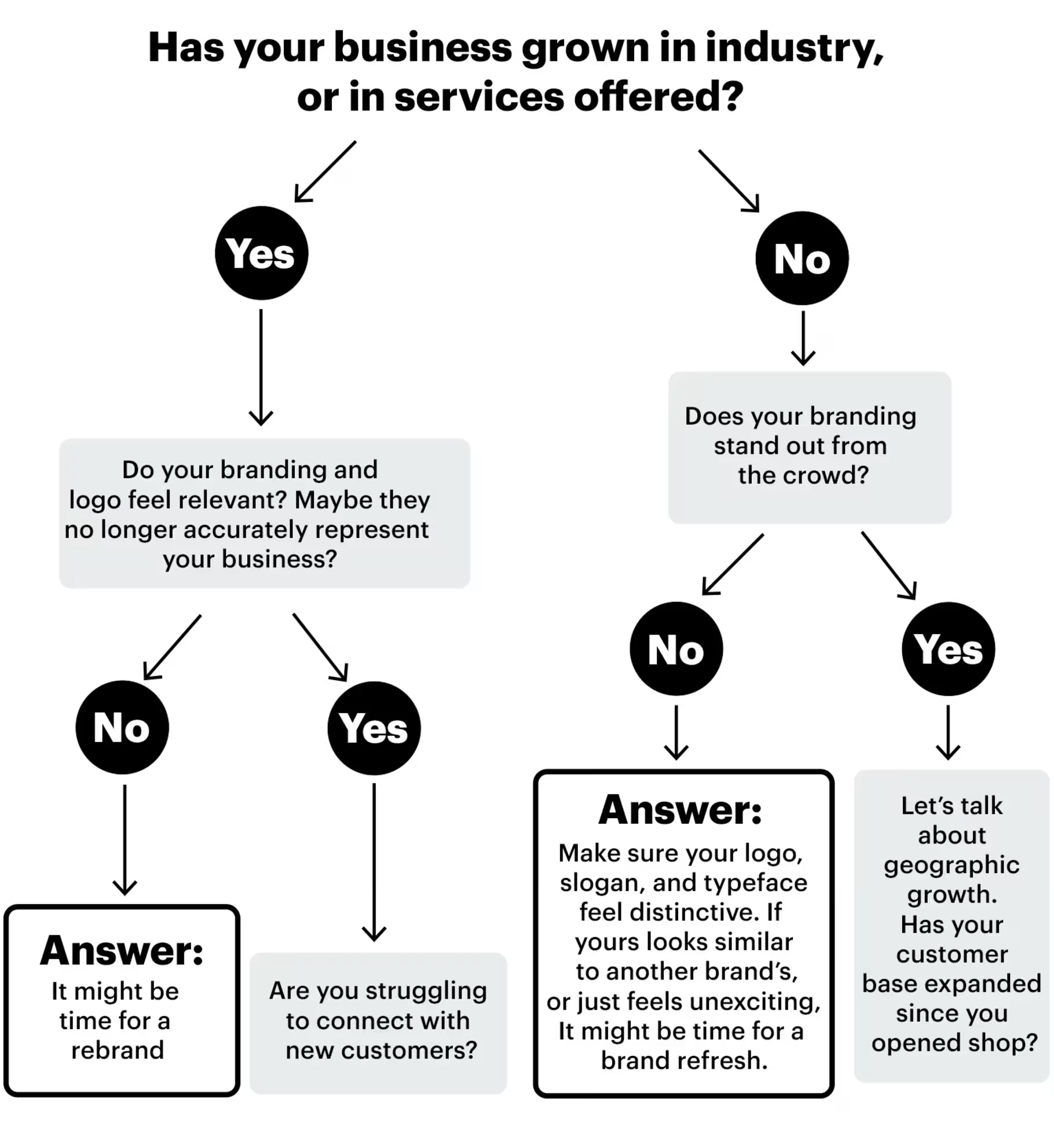
The top 6 reasons to reband:
- Your offerings have changed. If your current branding puts you in one lane, but you are operating in others, it might be time to update your logo to reflect your new offerings.
- You want your business to be evergreen. Great branding can be tested with time. Does your branding have an enduring image of your business?
- Your logo feels outdated. On the topic of withstanding time, logos are often made with contemporary design trends and it can age your brand quickly. Focus on modernizing your logo strategically while being careful not to just trade in yesterday’s trends for today’s.
- Your branding doesn’t stand out. Industries can often follow each other’s leads for color, typography, and style. You should think about redesigning if you look like everyone else in the pack.
- You’re struggling to attract new customers. Sometimes it takes a rebrand to find new audiences that have pre-judged your old branding. Just be sure that your current customers still know where to find you by communicating your rebrand to them.
- You serve a different geographic area. If your audience has grown, you may need to review your branding from a broader lens (i.e. regionally, nationally, or even internationally).
Check out the full post by Vistaprint for more examples and rebranding tips!
How to Use Ethical AI
SEPTEMBER 18, 2022Automation and artificial intelligence (AI) processes are becoming more and more common in organizations and marketing tools. Ethical AI, or explainable AI, considers the full impact of AI usage on all stakeholders, from customers and suppliers to employees and society as a whole. Ethical AI helps look for potentially “bad, biased, and unethical” uses of AI.
Two Big Reasons Ethical AI Matters:
- Consumers now expect companies to use their data in an ethical and unbiased way.
- Ethical AI can lead to changes that improve performance.
How to Start Implementing Ethical AI:
- Assess you current AI situation. Conduct a thorough audit to see how machine learning (ML) and AI are being used to make decisions across the marketing organization. This includes: audience targeting, segmentation, modeling, promotions, content, and creative. A trickier audit is looking for potential bias in the media buying process.
- Evaluate your data. Now that you’ve identified areas for potential bias, see if there is anything funky going on with your data. Compare your data set to the general US population to see if there are any outliers in terms of distribution. The goal is to understand where there is deviation so that you have the knowledge and the transparency to see bias in the data and make changes to eliminate it.
- Make changes to your AI use. When you can see where bias exists and what that bias is, you can make decisions to eliminate it. A big portion of that means developing a thorough process and ongoing plan to continually evaluate your data and AI for bias.
AI, automation, algorithms, and machine learning are all powerful tools in marketing today. Making it good for consumers means it needs to be understood, transparent, and free of harmful bias. Check out the full blog post by Merkle for more best practices in Ethical AI.
6 Key Steps for Designing a B2B Email Campaign
SEPTEMBER 13, 2022Getting your ducks in a row for email marketing can be made easier when you have action items to check off your list. Here are some key things to keep in mind when it comes to B2B emails of all kinds.
STEP #1: Profile Your Target Customers. It’s an exercise many brands skip, but when targeting a particular B2B company, you’re really targeting that company’s buying center. Set up an ideal customer profile (ICP) for each group in a buying center such as:
- Initiators – the first people at a company who become aware of and interested in you.
- Users – the people who will be using your product day-to-day.
- Buyers – the people who handle the logistics and administrative aspects of a potential purchase.
- Deciders – the people who ultimately decide whether or not to approve the buyers’ purchase.
- Gatekeepers – the people who control the flow of information to and from other groups.
- Influencers – the rest of the possible users within an organization.
STEP #2: Think Like a Buyer. Put yourself into the mindset of each member of your target customer’s buying center in order to better understand what kinds of emails fit each role. The more customized your emails are to your targets’ actual needs, the more effective they’ll be.
STEP #3: Use Email Segmentation. So you did the legwork in the first two steps to understand custom messaging and separating your product information … make sure to send emails appropriately. Utilize email segmentation tools to send content that’s customized to their interests and needs.
STEP #4: Plan Your Campaign in Stages. By planning your campaign around the stages of the customer journey, you can ensure that your emails are relevant not only to who your target is and where they are at in a journey. To review, those basic stages are: awareness, consideration, decision-making, retention, and advocacy.
STEP #5: Use Templates. We’re not talking about pre-built templates from your email platform. Build a library of distinct templates for each type of email you send using the same brand elements across them. Building high-quality templates is a labor of love, but it’s worth it for your email-building process.
STEP #6: Save time by automating. If you did Step #3 correctly, the automation portion of your email marketing should have everything it needs to work effectively. With a robust tagging system, you can target hyper-specific audiences.
Check out the full article by Zapier for helpful graphics on these strategies, landing page advice, and stellar email examples from other brands.
How to Manage Your Social Media During a Tragedy or Global Crisis
SEPTEMBER 12, 2022For anyone managing a brand’s social media presence, being in tune with news and events can stop your messaging from being completely innocent to unintentionally offensive.
But what about world events that everyone is talking about? The recent passing of the Queen of England has sparked a whirlwind of posts honoring her, criticizing her, and everything in between. While it doesn’t make sense for many brands to speak on the matter, many have chosen to pause their content for the sake of news saturation.
Here are key tips to keep in mind for your brand’s social media use during tragedies and otherwise:
- Dance as if the world is watching. No matter the actual size of your company, anything your brand does can get noticed.
- Lead with empathy. You never know who may be affected by an event. See your audience as people first before customers or clients.
- Follow the 80/20 rule. 80% of your content should be helpful, informative, or educational. 20% should inform your audience about brand awareness like what you stand for, how you can help them, why you exist, etc.
- Use your social channels for good. Share helpful resources and inspiring stories when you can. When it’s genuine, express what your brand stands for (but again, only when it’s genuine).
- Beware of “set and forget” marketing. Scheduled posts and marketing automation can be a lifesaver. But your content can be at risk of being inappropriate. Have a strong process in place if you need to pivot or pause.
In The Daily Carnage Facebook Group, there are often posts reminding SMMs to pause social because of a tragedy or political event to avoid any accidental tone-deafness.
How do you respond in times of crisis? Sometimes saying nothing says more than saying something for social values. Regardless, unless your brand has a direct tie to an event, it should avoid placing any unwarranted input into a discussion. But what about personal branding (a.k.a., yourself)?
Check out the full post at the Social Media Butterfly blog for more tips and action items you can use for your personal LinkedIn management.
Inspiration for Your Next Lead Magnets [Infographic]
SEPTEMBER 11, 2022Looking to attract and track more leads? Play with some magnets.
A lead magnet is something of value to your audience that is given in exchange for something. They can be used for any number of goals (subscriber growth, warming potential customers, brand awareness, etc.). They are primarily used within your sales pipeline, but also a chance for broader content marketing and demonstrating thought leadership.
Think you just have to gate some sort of download? Expert Market did the leg work to research the best forms of lead magnets and all the tips that go along with gathering leads with them.
Types of Lead Magnets
As this helpful infographic shows, the most popular and effective types of lead magnets can be found in these forms:
- eBook
- Checklist
- Guide
- Discount
- Webinar
- Course
- Infographics
- Video
- Free trial
- Other gated content like a tool, consultation, or result

Check out the full guide by Expert Market to creative lead generation (and more helpful infographics).
5 Email Marketing Automation Workflows to Build Today
SEPTEMBER 7, 2022Email can be a powerful thing. With how technical it has become, email has given brands every chance to nurture, impress, respond, or engage with a user. Automation does all that in a timely, personalized, and relevant way.
So are you automating in the best possible way? Here are some workflows that might inspire your own automated email marketing flows.
Email Marketing Basics (+ Musts):
- Personalization wherever possible.
- Write with readability and scannability in mind.
- Segment your list in ways that you can manage it.
- Split testing is your friend.
5 Email Marketing Automation Workflows:
- The Sign-up Workflow. When someone subscribes to your blog, newsletter, or whatever, woo them a little more. Give them an enticing offer to subscribe to your list. The basic steps after they sign up is to thank them, point them towards content, and promote sharing.
- The Usage Workflow. When someone wants a free trial, demo, account, or download, this is an opportunity for you to demonstrate the value of your brand. Also know as a lead nurturing workflow, it’s all about guiding them towards a common goal or two. It can include a wide variety of content but they should all contain CTAs and the last email is all about onboarding.
- The Conversion Workflow. When someone purchases your product or service, see how you can increase that customer’s lifecycle with your brand. Demonstrate appreciation, request for feedback and/or review, and see if there is an opportunity for personalized upselling suggestions and returning discounts.
- The Personal Event Workflow. When there is a special day like a birthday or anniversary, celebrate it! Send a personal note to celebrate milestones. It’s a great way to nurture trust and connections with customers outside of the usual transactional emails.
- The Re-Engagement Workflow. When X number of days pass since someone’s last interaction, you have to put in some razzle dazzle. Alert returning customers new products, services they may not know about, promotions, or ask for feedback.
Check out the full post by Search Engine Journal for all the workflow deets!
Insights
View AllStrategy7 MIN READ

The AI SEO Checklist: How to Stay Visible in the Age of AI Search
Ana Toigo
Marketing5 MIN READ

Top Marketing Tools That Offer Nonprofit Discounts (2026)
Rich O'Donnell
Strategy4 MIN READ

Sharpen Your Core Skills: Listening, Remembering, and Note Taking
Rich O'Donnell
Uncategorized4 MIN READ
Dialogues: Kimberly Bailey, Head of Marketing at Alpaca
Shannon Sankey
Content2 MIN READ
Know Your Audience: Avian & Saurian Edition
Rich O'Donnell
Content3 MIN READ

Which comes first, the copy or the design?
Rich O'Donnell
Content4 MIN READ
How to Speak Like a Customer—Not Your CEO
Rich O'Donnell
Content4 MIN READ

The New Search Paradigm: How Marketers Can Prepare for SGE
Shannon Sankey
Content2 MIN READ

5 Tips for Marketers Who Hate Writing
Shannon Sankey