The Daily Carnage
The savvy marketer's hub for industry news, insights, resources, and culture.
Today’s Issue
Issues
View All
56 Email Content + Copywriting Tips For 2022
APRIL 20, 2022Tips, tricks, tactics, and tools. That’s what we love in The Daily Carnage. You know the phrase “more than one way to skin a cat” (we’re not saying we like it)? Well, same goes for emails. There are a lot of different approaches you can take for copy and your email content.
It’s all about finding balance. Here is what happens if you don’t have friendliness, personalization, and facts working together:
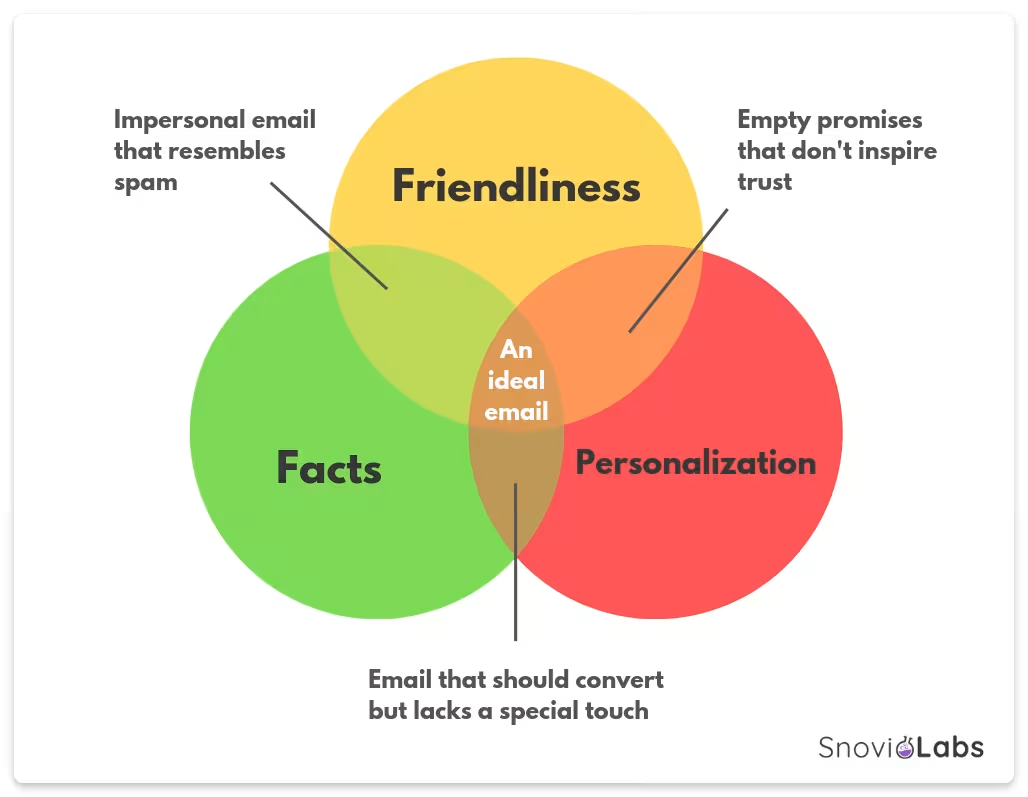
Snov.io is a CRM-focused tool that also has a pretty cool blog for leads, conversions, and email. They put together 56 tips on writing email copy! That’s a big list, so we wanted to give you our top 5:
- Write how you talk: Always read your copy out loud, use colloquial language, and imagine that you are talking to the person face-to-face to make it read more genuine.
- Use questions: This is a proven method to catch attention, increase engagement, and push the recipient to read more.
- Play with punctuation: See if your message can be broken up so your eyes and brain can easily get through the text by reading with visual interest throughout.
- Always think positive: Replace potentially negative words with alternatives like “other” instead of “wrong” or “pocket-sized/compact” instead of “small.”
- Use others’ words: Stats, case studies, testimonials, and reviews are powerful things. Use them where you can!
Check out the full list on Snov.io’s blog!
7 Effective Retargeting Ad Ideas
APRIL 19, 2022On average, retargeting ads are 76% more likely to be clicked on than a regular display ad.
But there’s more finesse to retargeting than recycling ads. Here are some ideas to get more out of your retargeting campaigns:
- Use Copy to Combat Sales Objections: While imagery is great for brand awareness and attention, you need to hook them with copy. Address common objections or pain points your audience might make to reduce doubt ahead of time.
- Showcase The Goods (Dynamically): People love the window shop. Use Dynamic Remarketing to feature the products that someone has viewed during their last site visit. Then sweeten the deal for them to keep them from walking away again.
- Always Use Some Urgency: The whole point of online shopping is the instant gratification. But with every yin comes a yang. If you have visitors leaving carts for later or browsing certain pages, sprinkle in the FOMO with timed deals.
- Offer Discounts and Coupons: Speaking of deals, they’re a tip all on their own. Even for someone less familiar with your particular brand, seeing a special offer can reignite their interest.
- Encourage Check-Out Process Completion: Sometimes all someone needs is a little reminder to convert after abandoning products they liked.
- Cross-Sell to Existing Customers: This is especially key for service-based brands that may want a deeper partnership with clients that are unaware of other services. For products, advertise complementary items to promote more sales.
- Remind Your Fans Why They’re Fans: Happy customers already know and trust your brand, so they usually require less convincing than a new lead. Keep your brand in their thoughts with any new offerings.
These tips were heavily geared towards eCommerce brands, but the retargeting journey can appeal to service-based brands, too. Check out Word Stream’s full post for more examples.
How to Track Conversions from TikTok
APRIL 18, 2022TikTok has become one of the top platforms for advertisers. Like every other paid channel, marketers need to be able to track ROI.
Before we dive into tracking, let’s start with the two big marketing categories for TikTok advertising:
- TikTok Ads platform
- Influencer campaigns through TikTok creators
How to track TikTok Ad performance:
TikTok allows marketers to use TikTok pixel tracking or a custom tracking solution. If you’re familiar with Facebook Ads, TikTok uses a similar pixel process. For custom options, there is no universal solution for TikTok, but that may be a better option for your tracking needs.
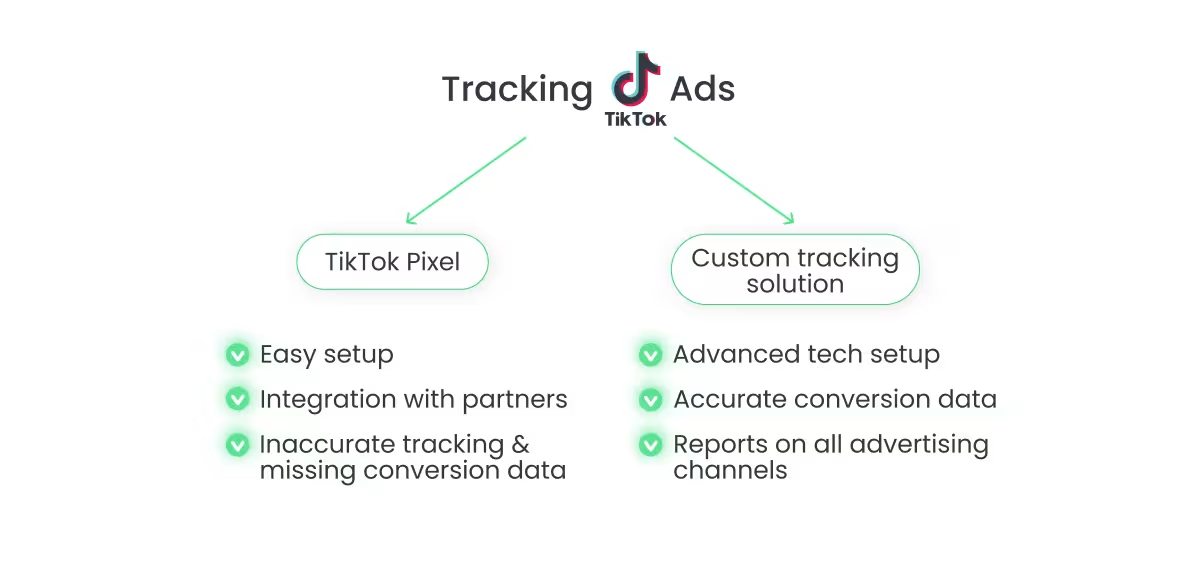
Benefits of using a TikTok pixel:
- Conversion tracking of sales from TikTok after you place the pixel on your website.
- Customization for events, audiences, and retargeting
- Ongoing optimization all within TikTok’s platform.
How to set up a TikTok tracking solution:
So since pixel tracking is becoming obsolete on many platforms, you may want to use an alternative for more first-party data preparation. Here’s the gist of setting one up:
- Create a TikTok pixel as a data source.
- Connect your software via API with TikTok and connect that data source.
- Create a campaign within your tracking software.
- Launch a new campaign on TikTok with the advertising objective “Conversions.”
How to track a TikTok Influencer campaign:
For these, you have a choice between tracking links or promo codes associated with the creators you are working with. The big takeaway for any influencer campaign is to make things easy to read with memorable promo codes and UTMs using link shorteners.
Check out the full article by the Hero Blog for more TikTok tracking tips!
Hook, Story, Offer: The 3-Step Method For Selling Online
APRIL 17, 2022Copywriting is essential to your marketing materials. If you are struggling to catch people’s attention in a way that converts, use this simple formula for your copy: Hook + Story + Offer.
The Hook:
Everything starts with a hook. This is a headline and subheading that grabs your target market’s attention. It’s something that should make them want to keep reading. Sometimes it’s a headline, sometimes it’s a relatable GIF.
Good places to start for a hook: Something that sparks curiosity, something that relays empathy, or something that makes a promise.
The Story:
Next, tell an interesting and compelling story! Everyone loves a story so here is your chance to expand on how the product you’re selling changed a life (be it your own or someone else’s).
Tips for a good story: Tell a story that looks to the future, keep things concise, and remember to keep using “hooks” throughout your copy, not just at the beginning.
The Offer:
You’ve brought your reader this far, so it’s time to give them an offer. If you’ve done your storytelling correctly, they’ll want to know how it can happen to them, too. Your price/value ratio should be so compelling that your target market can’t say “no.”
Tips for creating your offer: Create a sense of urgency so your readers can’t procrastinate, make sure your perceived value is high before you reveal the deal, or add a “risk-reversal” as well with a free trial or guarantee.
Some of this applies to longer-form copy or multiple message approaches, but the Hook, Story, Offer formula can still apply to your ads, social media posts, and CTAs. Check out the full Click Funnels post for real-world examples!
How to Choose the Right Colors for Effective Email Marketing
APRIL 13, 2022We’re on a color kick! We talked about what color can mean to your landing pages, but what about your emails?
Your Color Psychology Recap:
- White: Typically positive meaning, like purity.
- Black: Often used for elegance and luxury.
- Red: It’s pretty bold and can evoke a sense of urgency (or negativity).
- Yellow/Orange: These are energetic and typically happy colors.
- Blue: Often used for trust and calmness but is overall a very popular brand color.
- Green: Can signify growth.
Best Practices for Using Color in Email:
- Develop a consistent palette: After considering color psychology, choose colors that work with your existing brand. Tie them in consistently as part of your own brand recognition. (Ideally, you would have picked brand colors based on what feelings colors evoke beforehand).
- Don’t use too many colors: 3-4 colors are usually enough. You don’t want to make it too busy.
- Use contrasting colors: Remember to use contrasting colors to improve email accessibility. Ideally you want one main color for your CTA and links to stand out.
- Hyperlinks need more attention: Even if your colors are contrasting enough, if something is blind to a specific color, they may still need formatting to differentiate hyperlinks.
- Test on every level: Accessibility and dark mode conversion are really important in your design and testing phases. Then you’d ideally want to A/B test your CTAs with different colors as well.
Check out the full post by Email on Acid for accesibility tips and email examples.
8 Ways to Use Color to Increase Conversions of Your Landing Page
APRIL 12, 2022We are naturally inclined to process visuals and colors much faster than text. Color psychology can have a huge impact on the way your potential customers react to your products. Mention pulled the stats on it!

Here are 8 suggestions when using color for landing page conversion:
- Use Blue for Trust: Blue is considered a cool color, the color of trust, responsibility, honesty, and loyalty, making it great for trust-building pages.
- Use Red for Urgency: The color red has the potential to increase someone’s heart rate and blood pressure and evoke feelings of urgency. It’s been tested to increase conversions by 20% when used in place of green.
- Use Yellow + Orange for Optimism: These colors are both great for instilling feelings of happiness, confidence, friendliness, and caution. Just be wary as they are notorious for being difficult for visual accessibility.
- Use Green for Growth: The color green tends to convey the message of growth, harmony, vitality, fertility. It’s often used in landing pages for a sense of balance.
- Use Black for Prestige: Careful! On one end black can symbolize luxury, on the other it symbolizes death and mystery.
- Use Tons of White Space: Now that you know some color feels, don’t wanna overdo it. White space lets your content breathe and makes it easier to direct focus.
- Choose Your Colors With Data: Choose your colors based on your particular brand needs and content performance. Leverage A/B testing while doing so.
- Take Psychological Color Associations Seriously: Visitors can make up their mind up about bouncing from a page in the first few seconds. Start with your tailored content then use psychological color association to push your best stuff forward effectively.
Check out the full post by Mention for all the colorful stats and real brand examples.
The Process for Developing a Go-to-Market Strategy
APRIL 11, 2022Even for the most amazing product or service, a poorly-planned go-to-market strategy could cause it to flop. No one wants that! You have to introduce something and attract business with a game plan. That’s where a go-to-market (GTM) strategy is essential.
Here’s how to get it done with a GTM!
Qs before a go-to-market strategy:
- Product-Market Fit: What problem(s) does your product solve?
- Target Audience: Who is experiencing the problem that your product solves? How much are they willing to spend to solve it? What are their pain points?
- Competition and Demand: Who already offers what you’re launching? Is the market oversaturated?
- Distribution: How will you sell the product or service?
Steps for a go-to-market strategy:
HubSpot’s article goes into 14 steps on building out a strong business plan. We wanted to cover the first half that focuses on breaking into markets with a product.
- Identify your buying groups and create some customer personas.
- Craft a value matrix to help identify messaging about your product.
- Test your messaging with a small advertising sample.
- Optimize your ads based on the results of these ads before scaling your marketing.
- Understand your buyer’s journey including how they could discover and consider your product.
- Choose a sales strategy that best fits your needs.
- Build brand awareness and demand generation with both inbound and outbound methods.
- Create content to get more organic inbound leads.
Once you get those steps handled first, you can begin to deep dive into your metrics to reduce your customer acquisition cost and increase your conversion rates. While a GTM strategy isn’t guaranteed to prevent failure, it is a great start. Check out the full HubSpot article for more tips (and even handy dandy templates).
4 TV Advertising Trends to Know
APRIL 10, 2022Thanks to digital marketing, it’s hard to focus time and budgets on something as big as an investment as TV commercials. TV providers are determined to stay in the game.
So let’s break down trends marketers should know about TV.
- Harnessing Mobile and Multiscreen Environments: 94% of people who watch TV in the US keep their phone in hand. By using attribution analytics, marketers can get insight regarding when users are watching TV, on which network, and which mobile channels they use.
- TV has Evolved Into Advanced TV: When we talk about TV, that includes “Advanced TV” like over-the-top (OTT) devices such as smart TVs, Chromecasts, and game consoles. It helps with that attribution analytics we mentioned earlier.
- Programmatic TV Advertising Is Becoming Mainstream: Programmatic TV advertising is great for automating previously really hands-on decisions like timing and placement. It also helps gather more complete metrics like how many times ads are clicked, the cost of each click, and the direct ROI.
- The Emergence of Interactive Advertising: Media strategies have adapted to be more streaming friendly. Interactive TV ads have emerged to counter traditional commercials. Hulu and Amazon are platforms that champion this type of ad (and have a lot of resources for brands to break into them).
TV advertising has changed A LOT to keep up with consumer habits and compete with the digital ad world. While every organization’s journey with media buying is unique, it all comes down to reaching your best audience (not the most people possible).
Check out the full post by Marketing Evolution for more TV stats and details!
Catering Your Emails for Dark Mode Compatibility
APRIL 6, 2022Dark mode is growing to become one of the more standard viewing modes for emails, especially on mobile. It’s a great viewing option to give your eyes a rest from contast screen time. You might even be using it right now to view The Daily Carnage.
But is your brand taking dark mode into account when designing your emails? If not, you might be surprised by the color shift your branding can take.
Here are some helpful dark mode design tricks to keep in mind when designing your email:
- Stick to transparent PNG images so when your background color inverts, you won’t end up with mismatching blocks.
- Add a white stroke around dark images to avoid something being black-on-black when in dark mode. Logos and icons are notorious for this.
- Design as if you are in dark mode by testing your work on a black background.
When it comes to coding stuff, there are a couple ways to add dark mode styles. Here’s a helpful cheat sheet (for both non-developers and developers alike):
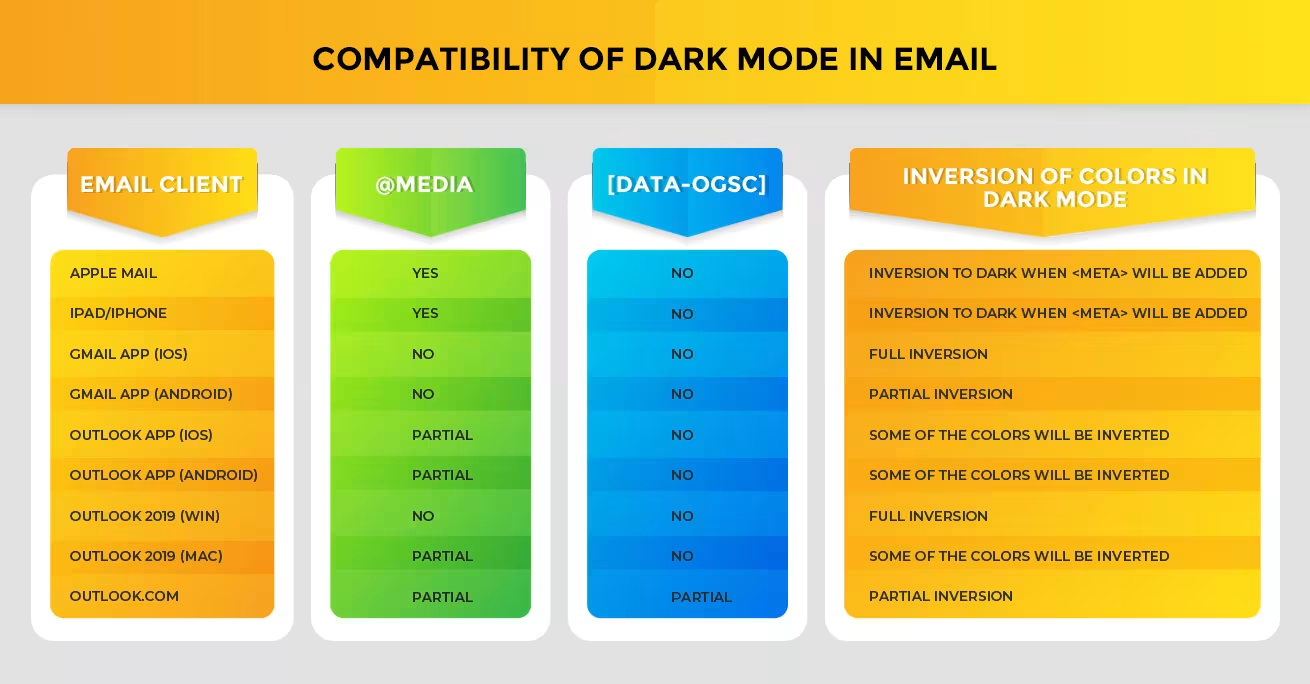
Dark Mode is supported in all the latest email clients and devices but each OS provides Accessibility and Display setting options a little differently.
Check out the full post by Email Uplers for specific dark mode tips!
Insights
View AllStrategy7 MIN READ

The AI SEO Checklist: How to Stay Visible in the Age of AI Search
Ana Toigo
Marketing5 MIN READ

Top Marketing Tools That Offer Nonprofit Discounts (2026)
Rich O'Donnell
Strategy4 MIN READ

Sharpen Your Core Skills: Listening, Remembering, and Note Taking
Rich O'Donnell
Uncategorized4 MIN READ
Dialogues: Kimberly Bailey, Head of Marketing at Alpaca
Shannon Sankey
Content2 MIN READ

Know Your Audience: Avian & Saurian Edition
Rich O'Donnell
Content3 MIN READ

Which comes first, the copy or the design?
Rich O'Donnell
Content4 MIN READ

How to Speak Like a Customer—Not Your CEO
Rich O'Donnell
Content4 MIN READ

The New Search Paradigm: How Marketers Can Prepare for SGE
Shannon Sankey
Content2 MIN READ

5 Tips for Marketers Who Hate Writing
Shannon Sankey