
The Daily Carnage
The savvy marketer's hub for industry news, insights, resources, and culture.
Today’s Issue
Issues
View All
What is a Sitemap, and Why Does Your Website Need One in 2022?
JANUARY 19, 2022Websites have a lot going on behind the scenes and something that can be both in the background and front-and-center at the same time is a sitemap.
What is a Sitemap?
Simply put, a site map is a list of pages of a website within a domain. It is a file where you provide information about the pages, videos, and other files on your site. It also tells search engines which pages on a site are important, helping with ranking.
Types of sitemaps:
- An XML sitemap is the most common and usually automatically generated by your CMS or plugins like YoastSEO. XML stands for Extensible Markup Language and these sitemaps are in a textual data format.
- An HTML sitemap is an HTML page on which all subpages of a website are listed. They usually resemble a site’s navigation bar.
- A news sitemap helps search engines to parse and understand news content on your site.
- A video sitemap helps search engines understand your site’s video content.
- An image sitemap assists search engines in finding the images hosted on your website.
Why Do Sitemaps Matter?
- Sitemaps serve as a reference point for identifying relevant internal linking opportunities.
- They’re a ‘pathway’ between your site’s content, which is how Google locates and understands it as a whole.
- Helping you fill any gaps in your site’s content catalog, or identify older pages that need updating.
How Do I Make One?
As mentioned, most website builders and CMS will generate one and even submit your sitemap to the search engine for you. But you may also use plugins, online generators, or build one from scratch. Building one yourself might take some advanced tech know-how.
Wanna learn more about sitemaps and how to use them? Check out the full WebBuilderExperts article.
How to Prevent Emails from Going to Spam Folders
JANUARY 18, 2022Email is changing in the marketing world as far as goals. A lot of it comes from the shift in privacy and tracking (we’re looking at you, iOS 15). But as far as best practices go, there is a lot you can do actively and behind the scenes to avoid going into junk folders.
No. 1 – Get Technical
Ensure that you have the technical fundamentals down to increase your email deliverability. Things you can do to fine-tune your email:
- Use domain extensions like “.com,” “.io,” and web address abbreviations used in your country.
- Treat your domain name like a real name in some cases (“FirstName.LastName@CompanyName.com”).
- Use identification protocols for email service providers: SPF (Sender Policy Framework), DKIM (DomainKeys Identified Mail), and DMARC (Domain-based Message Authentication, Reporting & Conformance)
- To secure your reputation from the actions of other email marketers, set up a custom tracking code and URL.
No. 2 – Your List Means Everything
The lists that you send emails to influence your sender reputation. So here’s how to ensure your lists are clean, reputable, and likely to be active:
- Gather more than an email address. Have a subscriber or lead provide their first and last name as well, making it easier to tell if it’s fake from a bot. There are tools to help source this if needed. The more relevant contacts, the better.
- “Risky” and undeliverable addresses should be deleted often. Use a spam tester or manually remove your bounces (you want to shoot for less than a 2% bounce rate overall).
No. 3 – Creating “Non-Spammy” Content
Content that shines can all depend on your industry and audience but here are ways to avoid “spammy” content:
- Keep it personal but straightforward.
- Use reliable, secure, HTTPS links.
- Don’t rely solely on visuals.
- Keep preferences easy to find.
Check out the full how-to from Folderly, especially to learn more about email protocols.
10 Social Media Trends That’ll Be Huge in 2022
JANUARY 17, 2022Later is a pretty cool content scheduler and they know their stuff about social media. To help marketers out everywhere, they put together a helpful list of where they think social media trends are at and where they are going in 2022.
- The Creator Economy Will Boom: Many platforms have already heavily invested in creator marketplaces and creator tools.
- More Streamlined Social Commerce: 2021 saw e-commerce tools pop up on every platform, and it’s gonna get easier from here.
- Short-form Vertical Video Is Here to Stay: And we’re excited to see the new ways of creative editing that come with it.
- An Emphasis on Mental Health & Burnout Prevention: We all know that breaks are important, but more brands are driving that home.
- A Renewed Focus on Accountability & Diversity: The past two years brought reflection on important social issues. 2022 is a time to revisit those promises of change.
- Memes, Memes, Memes: Can’t stop. Won’t stop. And they’re only growing thanks to TikTok and Reels memes from audio.
- Social Media Posts as Currency: Remember when it was a simple “like for like”? Now you could get a free burger for a TikTok (aka intimate brand awareness).
- Rise of the LinkedInfluencer: WFH culture gave LinkedIn a resurgence, and it’s showing.
- The “No Filter” Feed Takes Over: We’ve known for years that people want content that keeps it real. Dedicate your feeds to real stuff only.
- Brands Let Loose on TikTok: It’s a chaotic content playground and chemistry lab – and brands are ready to get weirder with it this year.
Check out the full blog post by Later for all the social media deets. They even put together this helpful infographic:

How to Apologize for an Email Marketing Mistake
JANUARY 12, 2022It’s something that gives marketers nervous sweats – email mistakes. Human error will always be a thing, and there’s no undo button for a sent email. As a daily newsletter, we’re no stranger to goofs. We get it.
So what do you do if you make a big email mistake? You have to apologize. The best formula is to acknowledge the mistake, take full responsibility, and make it right. Here’s how to do it:
- It all starts with the subject line: Make sure the tone is right. If it’s one of those mistakes people can laugh at, laugh at it, too! Be mindful if you need to be more formal.
- Personalize it: Receiving an apology email from a no-reply inbox might not cut it. Sometimes you gotta get personal and specific.
- Acknowledge your mistake: Admitting is the first step, and it’s essential to a genuine, clear apology.
- Clarify any intention: Let your audience know that it was not your intention to cause offense, confusion, or distress.
- Empathize with your audience: For some mistakes, you may have to show some empathy and make your audience feel valued.
- Keep it positive!: No one wants to see someone put down, so try to explain things in a positive light. It also helps to explain what you will do to prevent future mistakes.
- Add some humor (when appropriate): If you think there is a possibility that making a joke could make things worse, don’t test it. But like we said about subject lines, some mistakes can be laughed off.
- Make it up to your audience: Because who doesn’t like a little incentive to help forgive?
Check out the full post by MailerLite for subject line ideas, real brand examples, and instances where you don’t have to apologize. They even provide a template for you (just in case).
16 Brands That Are Killing It With Brand-Driven Storytelling
JANUARY 11, 2022Storytelling is always at the forefront of content creation and brand messaging. Sometimes that can be hard to deliver if you don’t know what that looks like. So let’s learn from brands doing it best.
Sujan Patel is a digital marketer with a great blog on branding and growth strategy. He gave a list of 16 companies that are killing it with brand-driven storytelling.
We can’t fit all of them, so here are our top 3 from the list (and why we love them):
Warby Parker sees the people:
- These guys are champions of being a fun brand for an otherwise straightforward retail industry of eyewear.
- Their goal is to offer designer eyewear at a great price while simultaneously being a socially-conscious business.
- They keep people (customers and employees alike) at the core of their decision making and that extends to their stories and services.
Burt’s Bees uses their philosophy:
- Burt’s Bees has had a grassroots story since their origin. In 1984, the stars aligned when its founders Roxanne (an artist) and Burt (an avid beekeeper) met during a chance hitchhiking encounter and started making wax candles together.
- Their philosophy has held strong as creating natural products, maintaining company transparency, and loving the heck out of bees.
- That philosophy has run through the veins of their taglines, content, educational initiatives, and, of course, their products.
Chobani doesn’t stay in their lane:
- Sometimes you have to take a product that is a small part of a large industry and use it as the main character of a bigger picture.
- Chobani does this well by not just focusing on a singular path for their yogurt like health benefits.
- Choboni positions itself in everything! Multiple uses and multiple lifestyles, plus a whole lot of video content to facilitate it.
Check out the full post for brands big and small telling their stories to get inspiration for content channels and how-to in different industries.
What’s the deal with Google Data Studio?
JANUARY 9, 2022Business intelligence (BI) tools are essential to marketers. While many marketers are familiar with Google Analytics, not everyone knows that Google also has a data tool called Google Data Studio (previously Google Data Studio 360). Let’s break it down!
What is Google Data Studio?
Google Data Studio is a free data visualization and reporting tool that allows marketers to build interactive dashboards and generate insightful, customized reports. It can pull from other sources (on top of Google products like Search Console, of course).
Why does it matter? It helps marketing teams save time and money by creating and sharing insightful reports quickly and conveniently.
The Benefits of Using Google Data Studio
- Multiple Data Sources: Google Analytics allows a maximum of 12 data sources, but Data Studio allows you to pull data from as many locations as you want.
- Access Unlimited Widgets: GDS doesn’t skimp! Google Data Studio lets you have as many widgets/graphs as you need.
- Easily Share Reports: Reports, you can export them to PDF, Excel, Google Sheets, email, and even embedded on social media. You can schedule automated email exports as well.
- Create more designed reports: Data Studio allows you to break down reports into up to 20 pages where you can alter fonts, colors, sizes, themes, and other design details. You can also annotate and brand your reports with text, images, and links as well.
And one of the best reasons to use GDS: it’s free! Check out more on Google Data Studio in this article.
5 On-Page SEO Factors To Check In Underperforming Content
JANUARY 5, 2022SEO tactics are constantly changing, especially when one of the biggest search engines, Google, likes to keep us on our toes. On-page SEO has changed to be more than just meta descriptions and copy.
It’s time for a refresher! Here are five on-page SEO elements to check if you have some underperforming pages.
- Written Content: Your content elements are one of the primary types of on-page SEO. Make sure that the content you write is making good use of your keyword strategy. Use HTML subheadings for structure and SEO support, too!
- Title Tags: The title tag is the “title” of your page and is the main element that search engines use to determine your page’s intent. The title tag should be focused on the exact keyword that your page is targeting to support ranking.
- Page URL: We all know that every webpage generates a URL, but you should be taking the time to make sure those contain your primary keyword, too. But don’t cram keywords into the URL willy nilly, because search engines might get confused as to which word you are trying to rank for.
- Image Alt Text: Visual elements are essential to making your site interesting, but many marketers still neglect their video and image alt text. If you don’t include your target keywords in your alt text, search engines won’t index your visual elements, which means they won’t show up if a user does a video or image search. Alt-text also ensures that your content is accessible. It’s a win-win!
- Both Internal And External Links: Internal links are links that point to other content within your website, and they help Google understand the context of a page. External links point to content outside of your website. You need to have a balance of both!
Check out Search Engine Journal’s full post for more on-page SEO resources and examples.
A Big, Fat, Long List of Marketing Tools to Use in 2022
JANUARY 3, 2022January is off to a hot and heavy start, especially if you didn’t already solidify your marketing tools budget for 2022. No platform does it all (but maybe one day), so you’ll need a collection of tools to get things done for analytics, social media management, customer relationship management, project management, email marketing, and your overall site management.
See if there are tools you haven’t heard of before and what combination of them you might need for your business:
Marketing Management Tools
- HubSpot for lead generation and automation
- Honeybook for CRM
- Monday.com for HR and brand management
- Wrike for project management and account-based marketing
- EngageBay for automation and account-based marketing
- Pipedrive for CRM and contact management
- Salesflare for CRM and account-based marketing
- Bitrix24 for appointment management
- Lusha for CRM and data extraction
- AeroLeads for lead generation
- Pardot for lead generation
- Sprinklr for marketing automation
- Smartsheet for general business management
- Trello for team collaboration and campaign management
- Airtable for content management and automation
- Asana for project management and campaign management
- OptinMonster for lead management
Social Media Marketing Tools
- Hootsuite for general social media publishing
- Sprout Social for social media marketing and publishing
- Buffer for general social media management
- Social Status for general social media management
- BuzzSumo for analytics and influencer trends
- Sixads for social media ad management
Data Analytics Tools
- Google Analytics for your web analytic essentials
- Semrush for SEO and ad analytics
- Coupler.io for data integration
- CloudTalk for lead data and communication solutions
- Outfunnel for customer data and marketing automation
- Ahrefs for SEO and keyword tracking
- Moz Pro for a full SEO toolkit
- Leadfeeder for website analytics
Website Design and Other Web Tools
- Hotjar for customer experience management
- Optimizely for A/B testing and personalization
- Unbounce for landing page optimization
- SE Ranking for link management
- Wix for fast website building
- Elementor for WordPress web design
- Venngage for simple graphic design solutions
- Omnilink for landing page creation
- ConvertFlow for landing page creation
- Squarespace for website building
- Google Search Console for keyword research and SEO
Email Marketing Tools
- Mailchimp for newsletters, email marketing, and automation
- Sendible for email and social media marketing and monitoring
- Constant Contact for email marketing with e-commerce
- Drip for personalized email and SMS
- Campaign Monitor for email marketing
- Marketo Engage for email marketing and lead management
- Kartra for email and affiliate marketing
- AWeber for email marketing
- Omnisend for email marketing
UnboundB2B broke down the key features, prices, pros, and cons for each one of these tools so check it out!
Understanding CTV vs. OTT Streaming Ads
JANUARY 2, 2022We all know traditional TV is on the outs in favor of digital streaming options. With that, advertising has had to adapt to our new media habits. So let’s break down the big differences and benefits to two streaming advertising methods: Connected TV (CTV) ads and Over-the-Top (OTT) ads.
Here’s your snapshot:
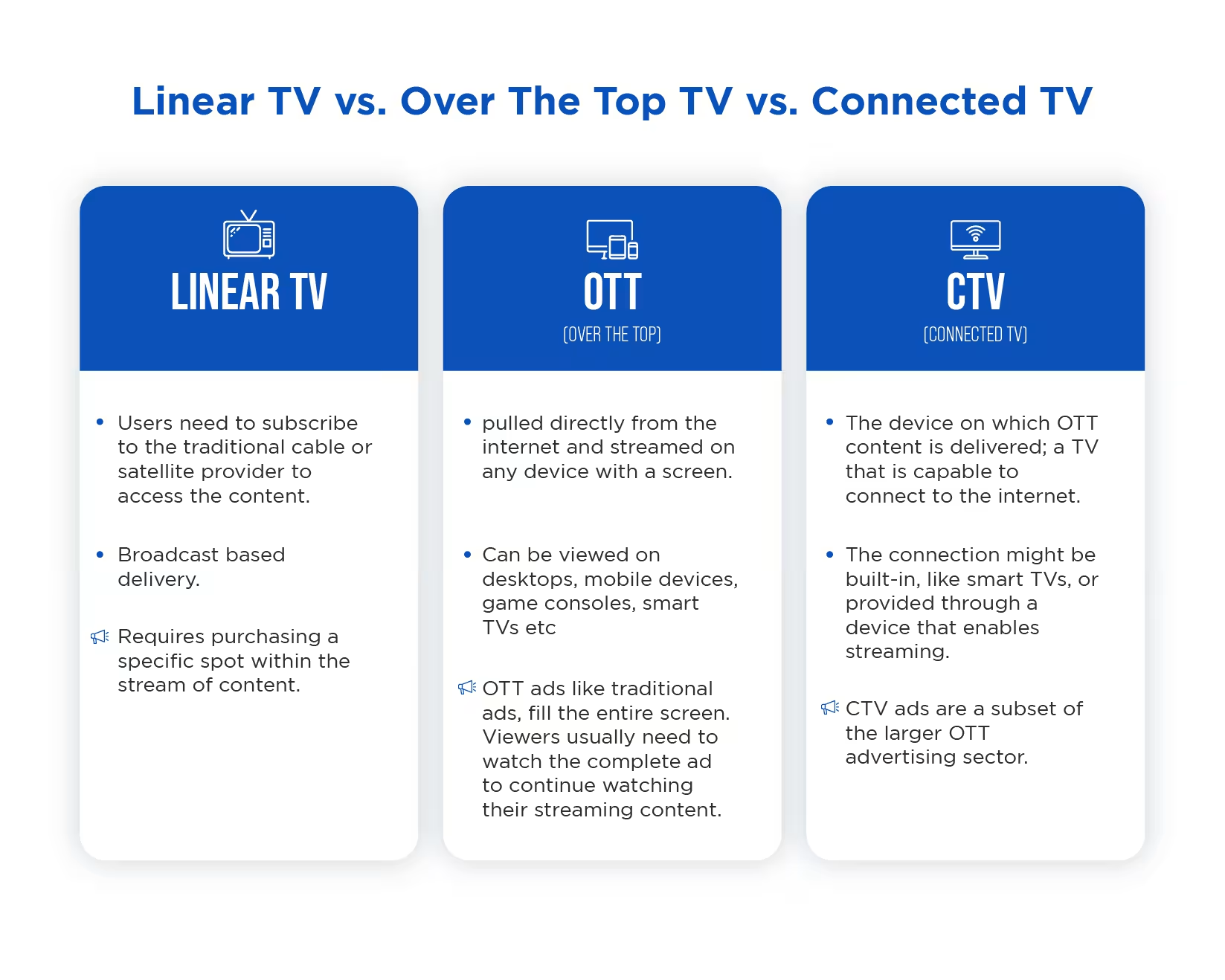
So let’s break it down even more…
- Digitilized TV Vs. Linear TV: First, what’s the difference between then TV types? Traditional, or linear TV, is broadcasting content live directly to the TV receiver and usually means subscribing to the traditional cable or satellite provider to access the content. Advertisers purchase specific spots for the content. Digital television is the streaming of television using digital encoding, and advertisers can instead purchase spots based on a user or group as well as content-specific spots.
- What is CTV? Connected TVs are TVs that are connected to the internet or devices (like Roku) that connect to internet-enabled apps. Connected TV (CTV) ads are often shippable ads that embed targeted advertising into user interfaces.
- What Is OTT? OTT or “over-the-top” content is pulled directly from the internet and streamed. OTT providers include Netflix and Hulu, but many networks are also launching their own OTT services such as Disney+.
- Understanding CTV Vs. OTT Terms: OTT is the content delivery method (like Netflix) and CTV is an internet-connected device (like Apple TV). Both of these can include things like in-stream video ads, interactive pre-roll ads, and home screen placement ads.
Here’s another snapshot on those platforms:
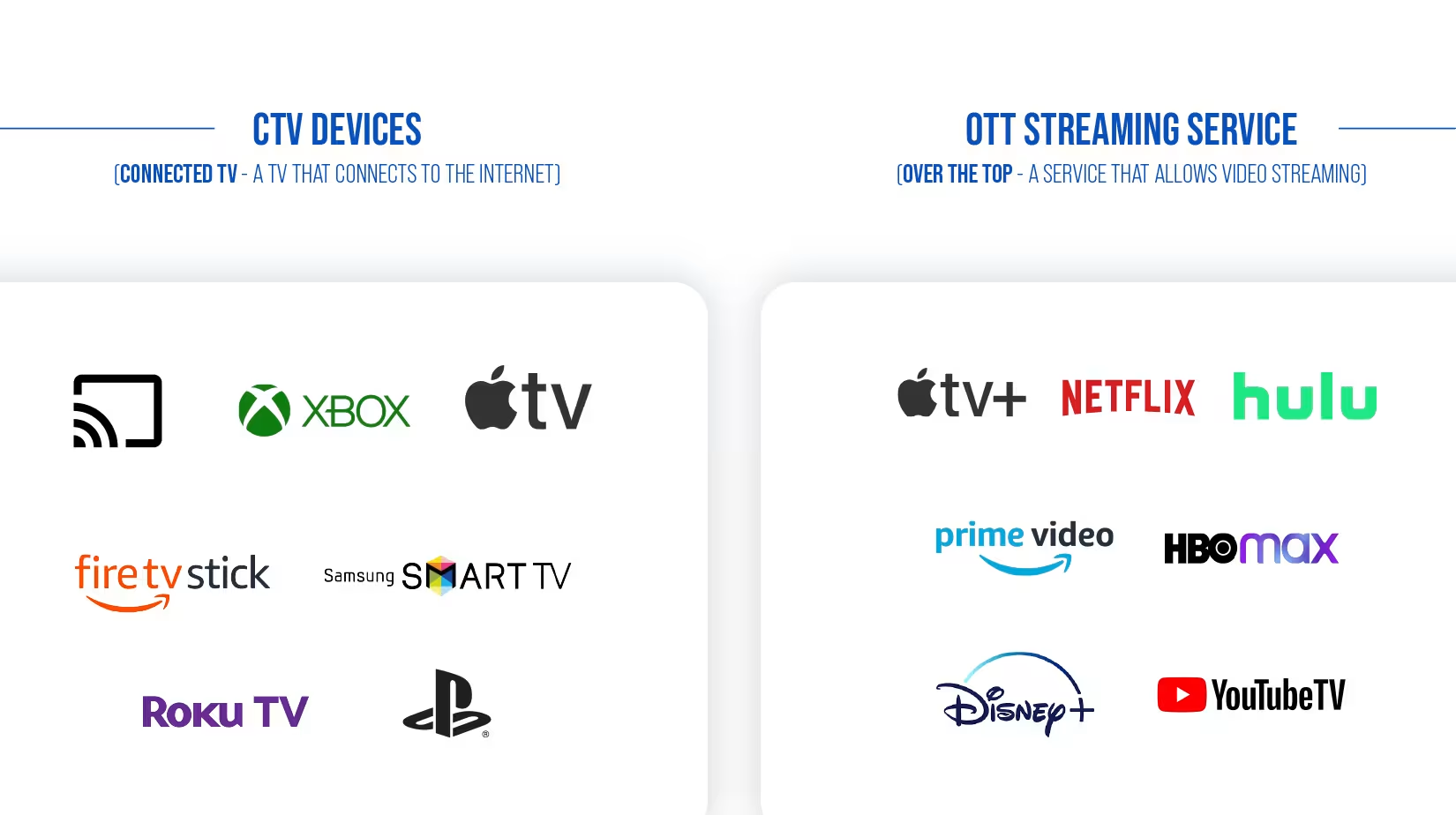
For more examples and details on streaming ads depending on platforms, check out Adcore’s full article.
Insights
View AllStrategy7 MIN READ

The AI SEO Checklist: How to Stay Visible in the Age of AI Search
Ana Toigo
Marketing5 MIN READ

Top Marketing Tools That Offer Nonprofit Discounts (2026)
Rich O'Donnell
Strategy4 MIN READ

Sharpen Your Core Skills: Listening, Remembering, and Note Taking
Rich O'Donnell
Uncategorized4 MIN READ
Dialogues: Kimberly Bailey, Head of Marketing at Alpaca
Shannon Sankey
Content2 MIN READ
Know Your Audience: Avian & Saurian Edition
Rich O'Donnell
Content3 MIN READ

Which comes first, the copy or the design?
Rich O'Donnell
Content4 MIN READ

How to Speak Like a Customer—Not Your CEO
Rich O'Donnell
Content4 MIN READ

The New Search Paradigm: How Marketers Can Prepare for SGE
Shannon Sankey
Content2 MIN READ

5 Tips for Marketers Who Hate Writing
Shannon Sankey