Be in The Know
🔍 Google announces its making it easier to identify AI-generated content globally.
🎮 Plus, Google rolls out Playground, a way to create custom games without coding.
💀 Liquid Death is building an “AI-native” marketing organization.
🧠 Report: Consumers are pushing back against algorithmic optimization.
🍎 Everyone’s talking about Apple’s secret blocklist.
Reaching Social-Averse Consumers
Social media burnout is changing the marketing playbook.
We’ve been posting more, advertising more, optimizing more. But consumers are getting tired of the social media treadmill and marketers are paying more to reach them.
47% of U.S. adults have deleted a social media app because of stress. Another 55% say they post less frequently than they did five years ago, while 51% say maintaining an online presence feels like too much work.
At the same time, Meta ad prices increased 9% last year and are already up another 12% in 2026.
That creates a problem for brands that have built their entire acquisition strategy around social. More expensive ads + less engaged audiences = diminishing returns.
Let’s stop treating social as the entire marketing strategy.
Here are three ways to adapt:
1. Make social content worth stopping for.
Instead of flooding feeds with promotional posts, create content that teaches, entertains, solves a problem, or demonstrates expertise. The goal is to give someone a reason to pay attention and eventually take action.
2. Look beyond the screen.
When everyone’s competing for attention on the same handful of platforms, offline channels can become surprisingly valuable. Direct mail, out-of-home advertising, podcasts, events, radio, print, and even traditional TV can reach people in environments where they’re less saturated with marketing messages. The important part is testing these channels and measuring whether they actually drive revenue.
3. Turn rented attention into owned audiences.
A social follower isn’t really your customer relationship. The platform controls the algorithm, the distribution, and ultimately the connection. Brands should use social and other channels to move people toward assets they actually own: email lists, customer databases, communities, and direct relationships.
Takeaway? Attention is getting harder and more expensive to rent. So, it’s time to diversify where you find people and focus on building relationships you can keep.

Q for You
Check in! Have you deleted a social app in the last 30 days?
Figma Agent
The Figma agent works directly inside Figma Design, helping with everything from generating new layouts to making edits, reviewing designs, and applying existing design-system elements.
Just select a layer, open the agent, and describe what you want changed.
The agent can generate new screens from a prompt, restructure layouts, adjust spacing and alignment, switch component variants, rewrite or translate copy, populate designs with realistic content, and even generate or edit images.
It can also provide design feedback, including accessibility suggestions, conversion opportunities, and critiques from different user perspectives.
Now Streaming
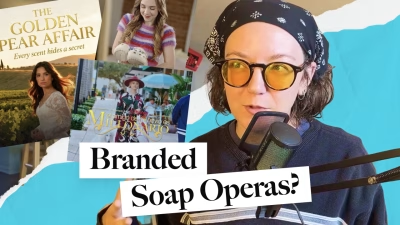
Don’t miss the latest episode of The Daily Carnage Show to find out why brands are spending big to turn TikTok scrollers into soap opera addicts.
Microdramas — short, episodic video series built around characters, cliffhangers, romance, plot twists and ongoing stories — are becoming a serious marketing format. And brands like Crocs, JCPenney, Bilt, P&G and Dr Pepper are already experimenting with them.
But there’s a big question: do microdramas actually drive business results, or are brands just buying views?
🎙️ Plus, catch up on Season 2:
- Meta Muse Will Change How We Use the Internet (11:53)
- AI CEOs Want to Slow Down. The AI Race Won’t. (11:39)
- Reddit Is Changing SEO & AI Search (10:55)
- The Creator Economy Rules Gaming (43:53)
- Dark Patterns Are Becoming a Legal Problem for Meta (12:06)
- Dissecting the Brand Apology (11:35)
- Instagram’s Controversial New Logo (10:34)
- Google Image Search is… Pinterest? (9:26)
- Sony & The Death of Physical Media (8:57)
🎙️ Now streaming on Youtube, Spotify, Amazon Music, and Apple Music.
Join The Carnage Community 🤝
Let’s take this party outside of the inbox, Carnies!
Connect and network with over 20,000 marketers to get (and give) advice, feedback, support, and LOLs.
- 💬 Join r/TheDailyCarnage on Reddit
- 👍 Join The Daily Carnage Facebook Group
😎 See ya there.
🕒 Agency Office Hours with Carney
Got a marketing problem you’re trying to solve? Need a second opinion? Wondering whether a new platform, AI tool, campaign idea, or strategy is worth pursuing?
Every Friday, we’re clocking in for Agency Office Hours sessions: 30-minute sessions for Daily Carnage readers to chat with the Carney team.
Bring your questions. We’ll bring our experience.
Whether you’re trying to improve performance, navigate industry changes, troubleshoot a campaign, or simply sanity-check an idea, we wanna hear what you’ve got going on.
No pitches. No obligations. No sales deck. Seriously.
Just a free 30-minute conversation with the team behind The Daily Carnage.
👉 Reserve your Office Hours session now.
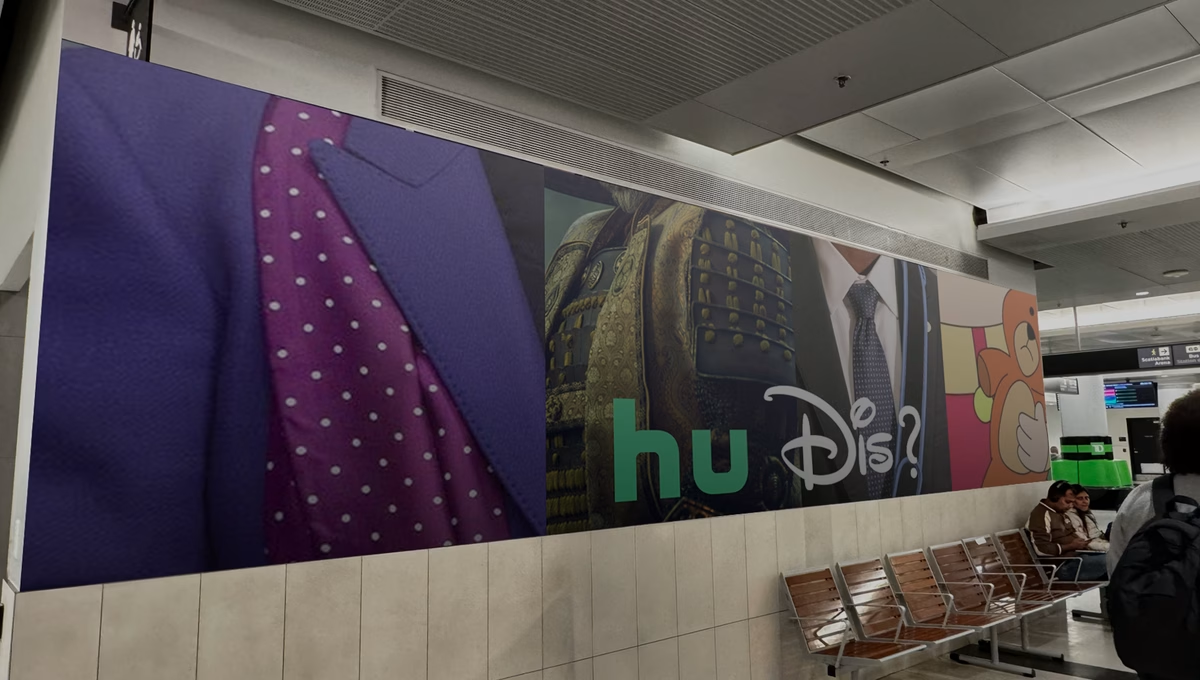
New Campaign, Hu Dis?
Created with agency Courage, the new Disney+ Canada campaign uses a clever mashup of Hulu’s “Hu” and Disney’s iconic “Dis” to promote the growing selection of Hulu content available on Disney+.
It first appeared as mysterious OOH placements across major Canadian cities, deliberately withholding the answer and using curiosity to get people to look twice.
Once revealed, the creative uses recognizable imagery from Futurama and Shogun to show audiences that Disney+ has more than the family-friendly entertainment it’s traditionally associated with.
Ads from The Past

Mars, 1955