Be in The Know
🤖 Goodwipes spoofs OpenAI’s Astra ad with an AI-powered bathroom twist.
🏢 Small agencies share how to build the right client roster.
🛒 Lowe’s CMO is taking on digital commerce as the CMO role keeps expanding.
🎵 Coach is taking its fall campaign on the road with Spotify.
📲 Meta is rolling out Meta One with new paid AI and business features.
🍺 BrewDog ads have been banned for being socially irresponsible.
🕶️ Meta is preparing camera-free smart glasses.
AI Has Cultural Defaults
AI might feel universal, but its answers aren’t always culturally neutral.
Ask an AI the same question in different languages or cultural contexts, and you may get surprisingly different answers. That’s because AI systems can pick up on cultural assumptions, preferences, and norms that aren’t always obvious to the person using them.
For UX teams, that matters. A product can technically work across markets while still feeling very different to different users.
Keep cultural context in mind when designing AI experiences:
- Test prompts and outputs across different languages and regions.
- Don’t assume a response that feels “normal” to one audience will feel the same everywhere.
- Look for hidden assumptions in recommendations, rankings, examples, and defaults.
- Give users enough context or control to understand why an AI system responded a certain way.
- Treat localization as more than translating the interface.
The goal isn’t to make AI completely culture-free. It’s to recognize where culture is shaping the experience — and design for it intentionally.
Head to UX Collective for more.

Q for You
What’s easiest to overlook when designing AI globally?
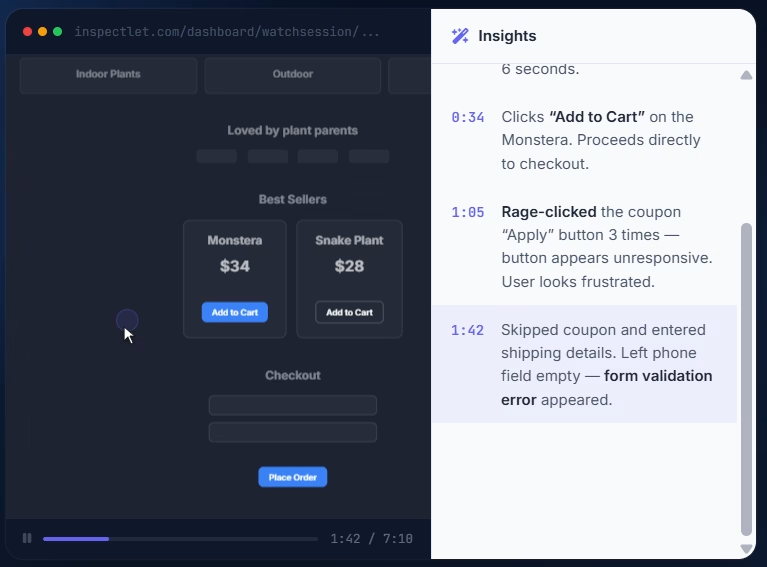
Inspectlet
Ever wish you could just watch what people actually do on your website?
Inspectlet records user sessions so you can see where visitors click, scroll, hesitate, rage-click, and eventually give up. You can also use heatmaps, form analytics, funnels, and error logging to figure out where the friction is hiding.
The fun part is that you’re not just staring at numbers trying to guess what went wrong. You can watch the actual journey and see exactly where things start to fall apart. Basically, a little window into what your analytics dashboard can’t tell you.
Join The Carnage Community 🤝
Let’s take this party outside of the inbox, Carnies!
Connect and network with over 20,000 marketers to get (and give) advice, feedback, support, and LOLs.
- 💬 Join r/TheDailyCarnage on Reddit
- 👍 Join The Daily Carnage Facebook Group
😎 See ya there.
Pre-Roll Sponsorships Now Available ⭐
🎙️ The Daily Carnage Show is growing!
So, we’re excited to share a new sponsorship opportunity.
Book a Pre-Roll Ad at the top the episode with your preferred script, on-screen text, and link in description.
🎧 Podcast advertising is one of the highest-performing brand channels:
- 60%+ of listeners say they’ve searched for a product after hearing it on a podcast.
- Podcast ads consistently outperform display ads on engagement and recall.
- Pre-roll ads are among the most-heard placements, with the strongest completion rates.
🗣️ This is your opportunity to reach a highly engaged audience of marketers, creatives, and strategists when they’ve got their listening ears on.
Interested in sponsoring an upcoming episode? Reach out and let’s build something together.
Now Streaming

Don’t miss the latest episode of The Daily Carnage Show, here’s what we’re covering:
🔒 Apple’s secret blocklist: How Safari’s restrictions work and which ad tech companies have been affected.
📉 The impact on advertisers and publishers: Why disruptions to ad delivery and audience signals could affect campaign performance, publisher revenue, and programmatic advertising.
📊 The measurement problem: Why winning an ad auction doesn’t always mean an ad actually appeared on a user’s screen.
⚖️ Privacy vs. platform power: What happens when the company controlling the browser also operates an advertising business?
🛠️ What marketers should do next: Audit your ad tech dependencies, verify campaign delivery, strengthen your first-party data strategy, and ask vendors about their contingency plans.
Apple’s approach raises a bigger question for the open web: How do we protect user privacy while maintaining the infrastructure that supports digital advertising?
🎙️ Plus, catch up on Season 2:
- AI Is Killing Entry-Level Marketing Jobs (12:55)
- Microdramas Are Taking Over Marketing (10:43)
- AI CEOs Want to Slow Down. The AI Race Won’t. (11:39)
- Reddit Is Changing SEO & AI Search (10:55)
- The Creator Economy Rules Gaming (43:53)
- Dark Patterns Are Becoming a Legal Problem for Meta (12:06)
- Dissecting the Brand Apology (11:35)
- Google Image Search is… Pinterest? (9:26)
- Sony & The Death of Physical Media (8:57)
🎙️ Now streaming on Youtube, Spotify, Amazon Music, and Apple Music.
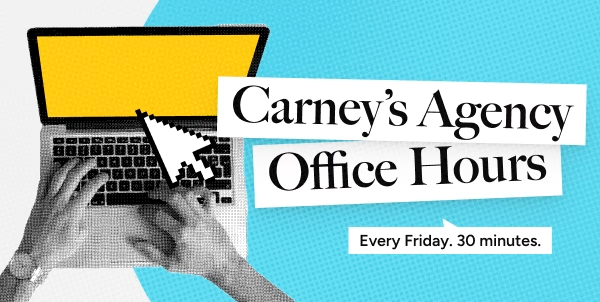
🕒 Agency Office Hours with Carney
Got a marketing problem you’re trying to solve? Need a second opinion? Wondering whether a new platform, AI tool, campaign idea, or strategy is worth pursuing?
Every Friday, we’re clocking in for Agency Office Hours sessions: 30-minute sessions for Daily Carnage readers to chat with the Carney team.
Bring your questions. We’ll bring our experience.
Whether you’re trying to improve performance, navigate industry changes, troubleshoot a campaign, or simply sanity-check an idea, we wanna hear what you’ve got going on.
No pitches. No obligations. No sales deck. Seriously.
Just a free 30-minute conversation with the team behind The Daily Carnage.
👉 Reserve your Office Hours session now.

Phew
Remember 2013? When getting groceries meant actually… getting groceries?
Uber Eats Australia is taking us back to the pre-delivery era in its new “Phew” campaign, where people are stuck in queues, making inconvenient shopping trips, and generally doing way too much to get everyday essentials.
With cameos from Troye Sivan and Redfoo, the campaign turns a very familiar kind of inconvenience into a nostalgic trip back to a time when pressing a button wasn’t an option.
Honestly, we’ve gotten pretty spoiled.
Ads from The Past

Ericsson, 1997